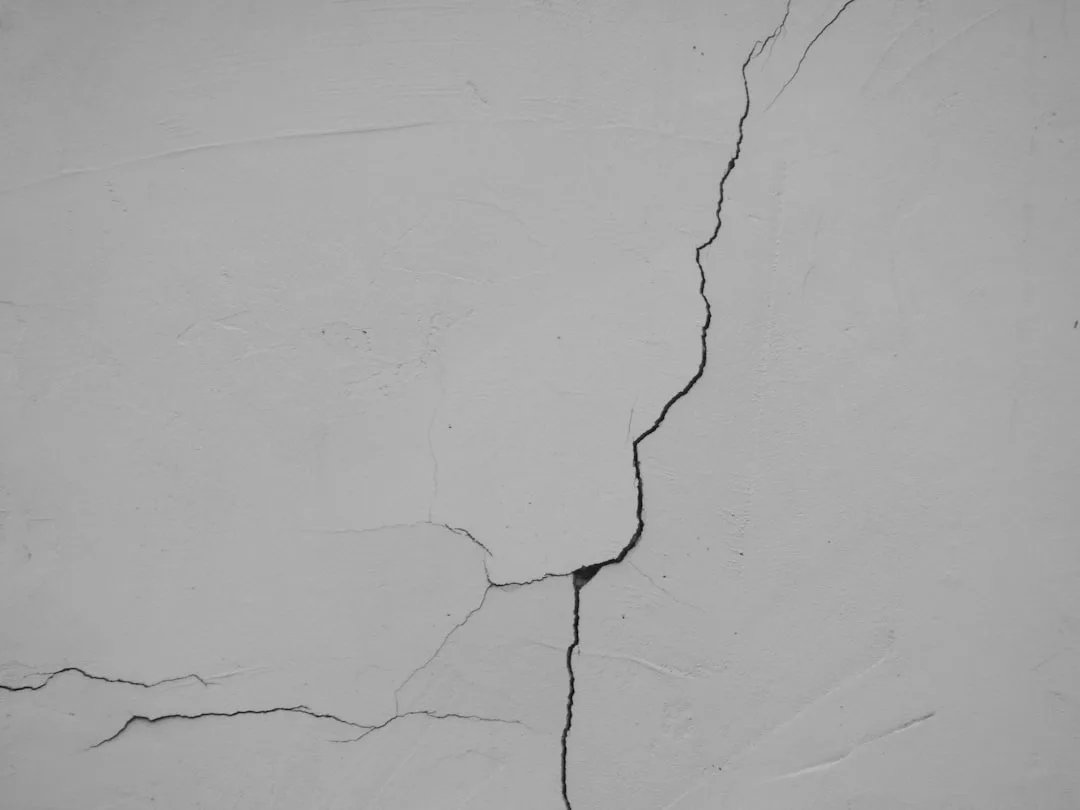
Expansion joint miscalculation is silent sabotage. A contractor measures a 50-foot facade run, allows 3/16 inch gap, and assumes the math is correct. Three years later, hairline cracks radiate from the joint, rendering fails, and water begins the slow journey into the foam matrix. The contractor is already paid and onto the next job. Field experience shows that approximately 7 in 10 installations use spacing or sealant specs that fail the fundamental physics of thermal growth in EPS foam.
The Physics 7 Out of 10 Contractors Skip
EPS (expanded polystyrene) expands and contracts with surface temperature, not ambient air temperature. Direct sun exposure creates surface temperatures 40–60°F higher than shade-side foam on the same facade. At night, that same foam can contract 70–80°F relative to its daytime state. Over a 40-foot horizontal run of continuous molding or cladding, this differential movement totals 0.3 to 0.6 inches. Most contractors allow 1/16 to 1/8 inch. The gap is simply too small.
Thermal expansion coefficient for EPS is approximately 0.00004 per degree Fahrenheit (or 0.00007 per degree Celsius). On a 50-foot facade section, a 60°F temperature swing produces roughly 0.43 inches of linear movement. Standard practice in wood construction and metal frameworks uses the formula: Gap (inches) = (Length in feet ÷ 12) × (Expansion coefficient) × (Temperature differential). Plugging in real numbers: (50 feet ÷ 12) × 0.00004 × 60°F = 0.01 inches additional movement beyond static tolerance.
But here is where contractors routinely fail: they forget to add the baseline joint width needed for installation tolerance (typically 1/8 inch) plus the sealant working range (the polyurethane caulk must not exceed 50% movement capacity of its original width, so a 1/4-inch joint only allows ±1/8 inch of movement before failure). The real formula becomes much larger.
Correct Calculation Within 10 Minutes
Start with your climate zone and facade orientation. In temperate North America (zones 5–7), assume a maximum temperature differential of 70–80°F between peak summer sun exposure and minimum winter conditions. For Mediterranean climates, increase to 85–100°F. For northern climates (zone 3 and below), 60–70°F is typical because snow cover limits extreme solar heating.
Step 1: Measure the linear run length in feet (horizontal or vertical section). Step 2: Apply the base code requirement: 1/6 inch per 10 linear feet (this is DTU and EN 13823 standard for ETICS systems). Step 3: Add thermal movement allowance using (Linear feet × 0.00004 × ΔT in °F). Step 4: Add sealant safety margin (add 50% more to account for caulk compression and cure shrinkage).
Example calculation for a 40-foot facade run in zone 6 (summer max 95°F, winter min 10°F, ΔT = 85°F):
Base code requirement: (40 ÷ 10) × 1/6 inch = 4 × 0.167 = 0.67 inches. Thermal expansion: 40 × 0.00004 × 85 = 0.136 inches. Sealant buffer (150% of thermal): 0.136 × 1.5 = 0.204 inches. Total minimum joint width: 0.67 + 0.136 + 0.204 = 1.01 inches (approximately 1 inch). Most contractors specify 1/4 inch.
Spacing for horizontal runs: place expansion joints every 12–16 feet maximum (some building codes allow up to 20 feet for low-movement facade types, but 12 feet is safer). For vertical runs, place one at every story or every 10 feet, whichever is smaller. Stagger horizontal and vertical joints to prevent cross-junction stress concentration.
Why Contractors Underestimate and What It Costs
| Error Pattern | Typical Spec | Correct Spec | Failure Timeline |
|---|---|---|---|
| Undersized gap (thermal ignored) | 1/8 inch | 0.75–1.25 inches | 18–30 months |
| Caulk spec inadequate (high-modulus silicone used) | Silicone sealant | ASTM C920 Grade A polyurethane | 12–18 months |
| Spacing too wide (stress concentration at joint) | One joint per 30+ feet | One joint per 12–16 feet | 24–36 months |
| No backup rod (caulk bulges inward or outward) | Caulk only, no rod | Closed-cell foam backer rod 1/2 inch diameter | 6–12 months |
| Joint not cut to foam depth (surface-only caulk) | Surface groove only (1/8 inch deep) | Full foam depth minus 1/4 inch for caulk | 2–4 years |
Contractor time pressure is the real culprit. Calculating and installing a properly sized expansion joint network adds 4–6 hours to a typical 2,000–3,000 sq ft facade project. Most contractors bid 0.5–1 hour for the task. They either skip the calculation entirely or use a generic 1/4-inch spacing from a template. Overtime from callbacks and failed caulk replacement eats into margins, but by then the foam is already damaged.
Cost difference is minimal: 1,000 linear feet of correctly dimensioned joint costs approximately $80–120 in materials (backer rod, polyurethane sealant) versus $40–60 for undersized work. Labor is identical. A contractor pricing a job at $12–18 per linear foot of molding installation already includes $0.10–0.15 per foot for joint material. Proper sizing adds negligible cost.
Field Technique: Installation That Actually Holds
Use a circular saw or oscillating multi-tool fitted with a foam blade to cut the joint channel after foam is adhered but before base coat and render are applied. Cut the full thickness of the foam (typically 2–4 inches for architectural molding sections), leaving 1/4 inch at the back face to maintain structural continuity. Width must match your calculation, minimum 3/4 inch for any installation in temperate climates.
Insert a closed-cell polyethylene foam backer rod (1/2 inch diameter, compression-fitted) into the channel first. This serves two purposes: it prevents caulk from squeezing too deep (a common cause of premature failure), and it creates a 3-sided bond line that allows the sealant to flex uniformly. Standard painters’ caulk or silicone should never be used alone; the backer rod is mandatory.
Apply ASTM C920 Grade A or Grade A-1 polyurethane sealant (not acrylic, not silicone). Brands like Tremco ExoShield, Dow Corning 795, or Sikaflex 2000 maintain elasticity at −40°F and extend to +160°F without degradation. Typical cost is $6–12 per 10.1 oz cartridge. Apply at 50–70°F ambient temperature; do not work in direct rain or temperatures below 40°F or above 85°F. Cure time is 5–7 days before rendering can be applied over the sealant.
Once sealant is cured, the base coat and finish render can be applied over the joint. Do not use mesh tape or pre-formed foam filler over the sealant—this traps moisture and causes sub-surface cracking. The sealant itself is the only crack-control element needed at the joint.
Why Site Conditions Matter and Most Specs Ignore Them
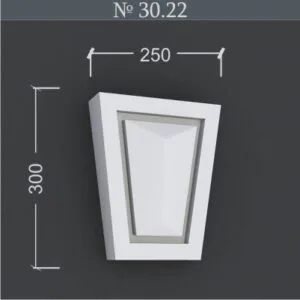
Exterior foam moldings are not created equal. Thin architectural profile pieces (keystones, cornices, quoins under 4 inches depth) experience less absolute movement than wide horizontal bands because the linear distance is shorter. A 3-inch-wide quoin over 12 feet of height experiences 0.2 inches of movement; a 24-inch-wide cornice run experiences 0.4 inches. Many specifications use one-size-fits-all joint widths, which is incorrect.
Sun exposure direction matters. South-facing facades in the Northern Hemisphere experience 15–25°F higher surface temperatures than north-facing runs, even with identical ambient conditions. In extreme cases (reflective cladding, glass-heavy facades, metal flashing), south-facing foam can exceed 140°F at the surface while north-facing sections hover at 90°F. This differential stresses the junction between sections and demands wider joints at transitions.
Substrate movement compounds foam expansion. If the underlying concrete or masonry is settling or shifting (even 1/4 inch over 5 years), the EPS expansion joint must accommodate both the foam growth and the structural movement. This is why EPS facades without vertical chaining crack top-to-bottom—the joints are not anchored to resist cumulative movement from multiple floors.
Real Code Requirements You Cannot Ignore
EN 13823 (European ETICS standard, adopted in Canada and increasingly in North America) specifies minimum 10 mm (3/8 inch) expansion joints for facades over 12 meters (39 feet) in any single run. DTU 36.5 (French technical standards) mandates 1/6 inch per 10 feet of length as a baseline, with additional allowance for thermal movement calculated via standard formulas. DIN 18195 (German waterproofing standard) requires joints every 6 meters (20 feet) maximum, with full foam-depth cutting mandatory.
U.S. building codes vary by jurisdiction, but the International Building Code (IBC) defers to ASTM E2914 (Standard Practice for Installation of Exterior Insulation and Finish Systems), which does not specify exact joint widths but requires movement accommodation per ASTM C1369. Insurance and warranty providers (EIFS makers, cladding contractors) typically impose a 1/8-inch-per-10-feet minimum, which is deficient. Written spec sheets from Dryvit, Sto, Wacker, and Rockwool all recommend 1/6 inch per 10 feet at minimum, and many recommend doubling this in extreme climates.
Ignoring these standards voids product warranty. If facade failure occurs and investigation reveals undersized joints, the manufacturer can legally deny coverage because the installation failed to meet published standards. Contractor liability insurance may also deny claims if the joint network does not comply with building code and DTU.