Why Corners Are the First Thing Experienced Eyes Check
Walk up to any renovated house and look at the building corners before anything else. Misaligned joints, cracked render, or bare edges without definition tell you instantly that the contractor cut corners — literally. EPS quoin corners exist precisely to solve this problem: they create a hard, defined edge that resists cracking, adds visual weight, and gives the facade a finished architectural character that flat render alone cannot achieve.
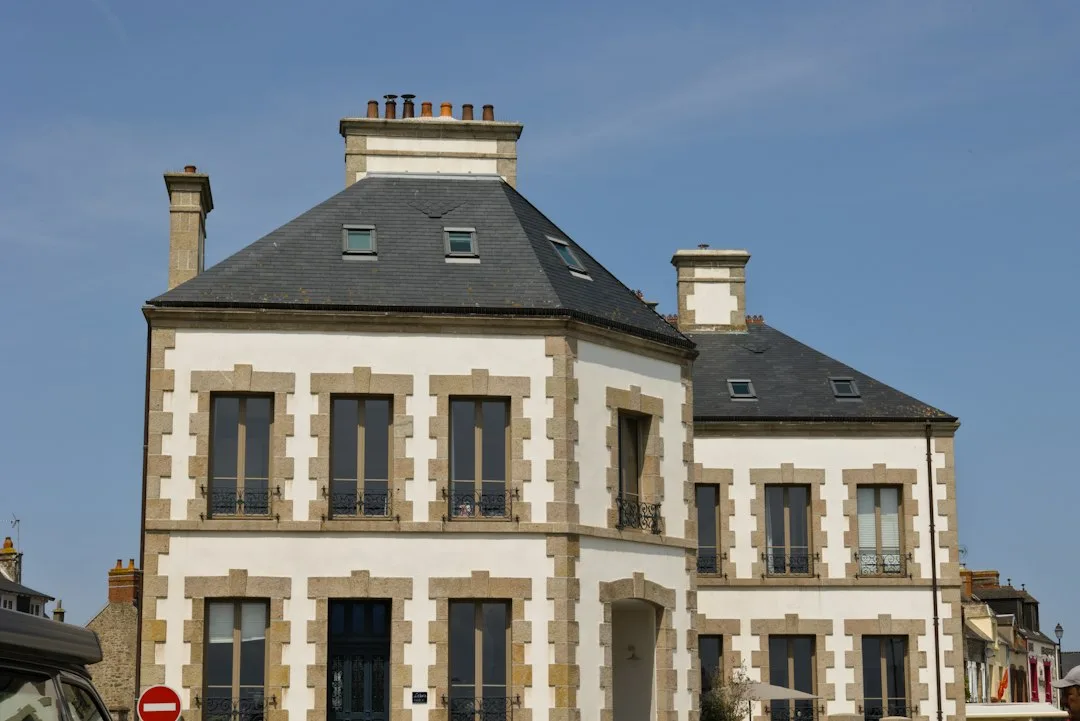
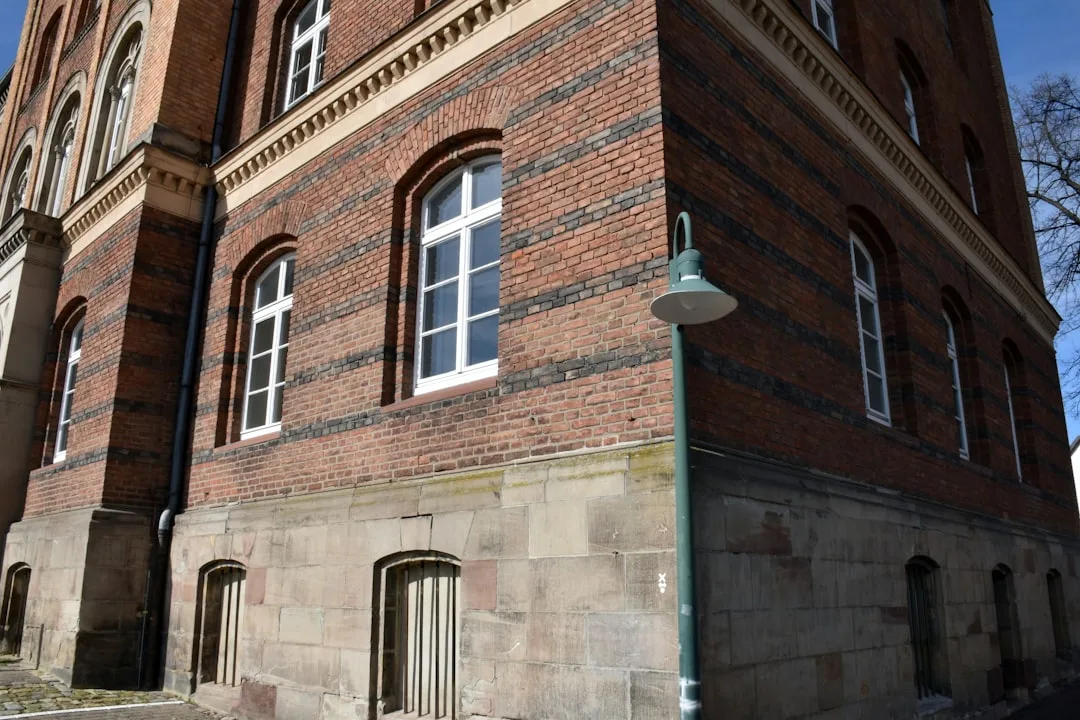
Historically, quoins — the alternating large stone blocks at building corners — signaled permanence and craftsmanship. On a modern ETICS or EIFS system, the same visual logic applies. A corner without a quoin profile looks unresolved, regardless of how well the rest of the facade is executed.
The Structural Argument for EPS Quoin Corners
Bare render corners on an exterior insulation system are a known failure point. Thermal cycling, mechanical impact from garden equipment or foot traffic, and moisture infiltration all concentrate at 90-degree edges. EPS quoin corners add a physical buffer: the foam absorbs minor impacts and the reinforced render coat distributes stress across a wider surface area.
On an EIFS finish, the standard base coat thickness is 3mm to 6mm. At an unprotected corner, that layer is under constant edge stress. Adding an EPS quoin — typically 30mm to 60mm projection, 200mm to 300mm face width per alternating block — effectively doubles the material mass at the most vulnerable point. This is not decorative logic; it is applied building physics.
For homeowners working within an ETICS specification, confirm that the quoin foam density matches or exceeds the wall insulation board density. Mixing 15 kg/m³ decorative foam against 20 kg/m³ wall boards creates differential movement that shows up as cracking within two to three winters.
EPS vs. Competing Materials at the Corner
| Material | Installed Cost (per lin. ft.) | Weight Impact on Facade | Lifespan with Maintenance |
|---|---|---|---|
| EPS Polystyrene Quoins | $8 – $25 | Negligible (0.3–0.6 kg/m) | 25–40 years |
| Cast Stone / Reconstituted Stone | $60 – $120 | High (12–18 kg/m) | 40–60 years |
| GRC (Glass Fiber Reinforced Concrete) | $40 – $90 | Moderate (4–7 kg/m) | 30–50 years |
| PVC Corner Profiles | $5 – $12 | Negligible | 10–15 years (UV degradation) |
| Brick Slips | $35 – $70 | Moderate (6–10 kg/m) | 30–50 years |
EPS wins on cost and weight by a significant margin. The only category where it trails is raw lifespan — but that gap closes entirely when you factor in render maintenance cycles that apply equally to all systems.
How to Install EPS Quoin Corners Correctly
The alternating block pattern is not arbitrary — it replicates traditional ashlar quoining where long and short faces interlock. Set your first course with the long face (typically 300mm vertical) on the primary elevation, then alternate to a short face (150mm vertical) on the return. This creates the visual rhythm that reads as genuine masonry from the street.
Adhesive application: use a notched trowel to apply EPS-compatible polymer adhesive to the full back face of each block, not just a perimeter bead. Full-contact bonding prevents the hollow-drum sound on impact and eliminates the moisture pocket that forms behind a poorly bonded element. Follow immediately with two stainless steel or plastic helical anchors per block, driven through the insulation layer into the masonry substrate.
Before rendering, reinforce all quoin-to-wall transitions with a 300mm-wide strip of 160g/m² fiberglass mesh, embedded in the base coat. This is the junction most likely to crack if skipped. Once the base coat cures (minimum 24 hours at 15°C), apply your finish coat to match the surrounding facade — silicone render is the preferred choice for water repellency over acrylic on exposed elevations.
Choosing the Right Profile for Your Facade Style
Rusticated quoins with beveled edges suit traditional, Georgian, or neoclassical facades. Smooth-faced, flush quoins with minimal projection work on contemporary renders where the contrast is purely geometric. Avoid over-scaled profiles: a quoin projecting more than 60mm on a single-story home looks costume-like rather than architectural.
If you are sourcing EPS quoin corners for a full renovation, order 10% extra to account for corner cuts and damaged pieces during shipping. Profile consistency across a single elevation matters — mixing batches from different production runs can result in visible color variation under raking light even after painting.
For homeowners extending the decorative language beyond the corners, pairing quoins with exterior foam moldings at window surrounds and base courses creates a coherent architectural composition rather than isolated decorative incidents. The corner defines the frame; the horizontal moldings complete it.
What Poor Installation Actually Costs You
A quoin corner installed without mechanical fixings typically begins to delaminate within three to five years on an exposed elevation. Remediation at that stage means cutting out the failed element, re-anchoring, and re-rendering a visible patch — a process that costs $150 to $400 per corner and is nearly impossible to make invisible. The upfront cost of doing it correctly — roughly $30 to $80 per corner in additional labor and fixings — is the clearest ROI in facade renovation.
Corners are load-bearing in a visual sense: they are where the eye travels first and lingers longest. A well-executed EPS quoin corner signals to every viewer — including future buyers — that the renovation behind it was done with the same discipline. That perception has measurable value at resale, where facade condition routinely influences offers by 3% to 7% on comparable properties.