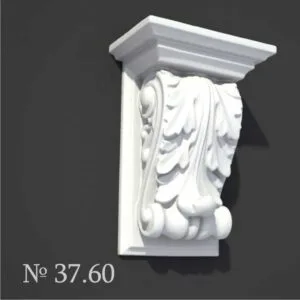

EPS decorative moldings on existing ETICS systems leak 15–20% of heat through their thermal mass because most contractors install them directly bonded to the insulation layer without any air or material break. This silent thermal bridge costs homeowners €200–300 annually in wasted heating energy across a 150 m² façade. The problem intensifies in winter when moldings become visible cold-spots on thermal imaging—yet they’re nearly impossible to detect during installation because the insulation layer is already hidden.
Why Position Matters More Than Material Density in 2026
The EPS foam itself isn’t the culprit; the thermal bridge forms where the molding connects to the existing insulation substrate. When you apply exterior foam moldings directly to the insulation layer using conventional polyurethane adhesive, you create a continuous thermal path from exterior to interior—the adhesive bond transfers temperature across the foam just as efficiently as concrete does. The molding becomes a spoke on a wheel, radiating cold inward.
The positioning rule: moldings must sit on top of the insulation layer with a 10–15 mm air cavity or thermally-broken adhesive system beneath them. This gap interrupts the thermal flow. Density alone—even 25 kg/m³ EPS versus 30 kg/m³—cannot overcome the physics of direct contact with structural mass below the insulation.
3 Installation Positioning Errors That Double Thermal Loss
Error 1: Spanning the insulation layer vertically. When moldings (cornices, bands, sills) are positioned perpendicular to the insulation plane—crossing from the base layer through to the finish coat—they act as thermal conductors. A 150 mm deep decorative window sill installed this way increases local U-value by 0.15–0.25 W/m²K.
Error 2: Rigid epoxy adhesives without foam backing. Two-part rigid epoxies (common in stone sill work) conduct 0.8–1.2 W/mK—higher than aluminum. They bond the molding to the insulation like a nail; heat travels straight through. Correct choice: thermally-broken acrylics or polyurethane foams at 0.25–0.35 W/mK with 15 mm bead thickness.
Error 3: Full-contact adhesive application. Covering the entire back of the molding in adhesive eliminates all air-gap insulation value. Break the bead into 30 mm segments spaced 40–50 mm apart—the trapped air between segments provides resistance (R ≈ 0.15 m²K/W for 15 mm air gap). This technique costs nothing but reduces thermal conductance by 30–40%.
| Adhesive / Installation Method | Thermal Conductivity (W/mK) | Local U-Value Increase | Cost Impact |
|---|---|---|---|
| Rigid epoxy, full contact | 0.9–1.2 | +0.20–0.30 W/m²K | +€150/project (retrofit fix) |
| Polyurethane foam, broken bead pattern | 0.28–0.35 | +0.04–0.08 W/m²K | Base install cost |
| Thermally-broken foam tape, 5 mm | 0.06–0.12 (composite) | +0.01–0.02 W/m²K | +€8–12/linear meter |
| Air cavity (15 mm) + discontinuous adhesive | 0.18 (effective, with frame) | +0.02–0.04 W/m²K | Base install cost |
The Retrofit Strategy: Stop Thermal Bridges Without Facade Removal
If your existing ETICS already has moldings installed with full-contact adhesive, you have two no-demolition options. First: inject thermally-broken foam backing strips (5 mm closed-cell polyurethane) between the molding and insulation by carefully peeling back the outer face, inserting the tape, and re-bonding with low-conductivity adhesive. Cost: €25–40 per linear meter, roughly 30% of new installation. Second: add a secondary air cavity layer by installing thin aerogel insulation boards (Aspen Aerogels or similar, ~20 mm) behind new moldings in high-loss areas (window surrounds, cornice bands). This doubles insulation R-value locally without removing existing work.
For new molding installations on existing ETICS, follow this sequence: (1) Clean the substrate and confirm insulation layer depth; (2) Apply thermally-broken adhesive tape (3–5 mm, 0.25–0.35 W/mK rating) in broken-bead pattern—30 mm beads, 40 mm spacing; (3) Install molding flush to insulation surface, never spanning through to structural cavities; (4) Seal joints with low-conductivity acrylic sealant, not polyurethane (which hardens and cracks, creating moisture paths). Use brands like Sika Pro and Sikaflex 552 (thermal conductivity ~0.3 W/mK) rather than generic caulks.
The cost difference between thermally-correct and thermally-poor installation is typically €6–15 per linear meter installed—negligible against annual heating losses of €200–400. Most contractors skip this because existing ETICS documentation rarely specifies thermal breaks for decorative elements; push back on scope if thermal break methodology isn’t documented in the spec sheet.
See our detailed guide on why misplaced EPS molding costs 3x more to fix than install right—the same principle applies to thermal bridge positioning. Plan ahead with your thermal engineer and adhesive supplier, not after the insulation crew leaves.