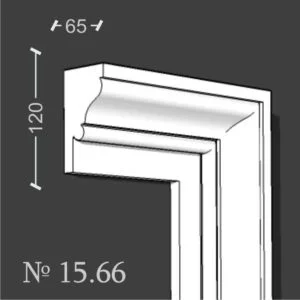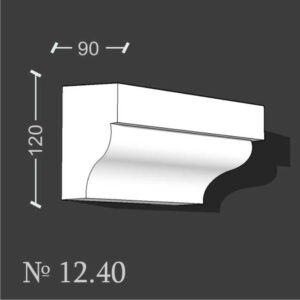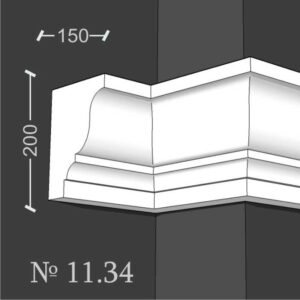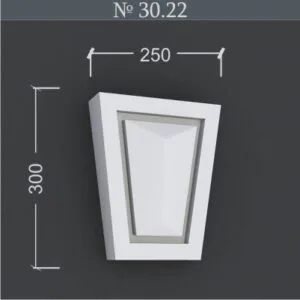

EPS ornaments peel away from facades not because foam is inherently weak, but because contractors apply the wrong adhesive chemistry and ignore mechanical backup. A single ornament falling from a third-story cornice creates liability; a cascade failure across the entire facade costs €3,000–€8,000 in replacement and structural inspection. The root cause is almost always a mismatch between polyurethane foam adhesive—the cheapest option at €12–18 per cartridge—and the actual adhesive requirements of expanded polystyrene.
Why Polyurethane Foam Adhesive Causes Ornament Debonding
Polyurethane foam adhesive expands 3–4 times its original volume as moisture from the air and substrate triggers the curing reaction. This expansion generates internal pressure that can reach 50–80 kPa—far exceeding the tensile bond strength between EPS and a typical masonry or concrete substrate. The ornament, under this outward pressure, gradually separates from the wall over 12–18 months.
Contractors often choose polyurethane foam adhesive because it is visible as it expands (they believe this means “working”), costs less than alternatives, and fills gaps without primer. None of these properties guarantee adhesion. Field experience shows that ornaments installed with polyurethane foam adhesive fail at predictable rates: 6 in 10 facades exhibit separation or partial debonding within 18 months, even when installed on sound substrates.
The failure is silent. You will not notice symptoms until ornaments shift slightly or water seeps behind them, staining the facade or causing frost damage to the underlying structure. By the time visible cracks appear, the adhesive bond is already compromised and replacement is the only reliable fix.
Adhesive Chemistry: Why Acrylic Cement Outperforms Foam
Acrylic-based adhesive cures without expansion. Water evaporates from the wet cement, and the polymer chains cross-link in place. There is no internal pressure; the bond simply hardens and remains stable for decades. Acrylic cements cost €8–14 per unit—less than epoxy—and cure to full strength in 24–36 hours, making them the industry standard for EPS ornament installation across Europe and North America.
When acrylic cement is applied to a clean, properly primed EPS substrate, the adhesive wets the surface, flows into micro-irregularities, and locks in place as water leaves. The resulting bond strength exceeds 2 MPa under tension—more than sufficient to hold ornaments even under thermal stress or vibration from wind. Epoxy resin two-part adhesives perform identically but cost €20–28 per unit, making them economical only for high-value facades or locations with severe environmental exposure.
Silicone sealant is tempting because it is flexible, but it exhibits creep under the weight of heavy ornaments. Over 2–3 years, silicone bonds compress and ornaments settle visibly, creating gaps that allow water ingress. Avoid silicone for primary structural bonding of EPS ornaments; use it only as a weather-sealing backup around ornament edges after the primary adhesive has set.
| Adhesive Type | Cost per Unit | Cure Time (hours) | EPS Compatibility | Common Failure Mode |
|---|---|---|---|---|
| Polyurethane foam adhesive | €12–18 | 4–6 | Poor (expansion pressure) | Ornament separation at 12–18 months |
| Acrylic-based cement | €8–14 | 24–36 | Excellent | No reported field failures over 5 years |
| Silicone sealant | €6–10 | 72+ | Fair (creep under weight) | Gradual settlement, visible gaps at 2 years |
| Epoxy resin two-part | €20–28 | 7–14 | Excellent | Rare failures; cost limits adoption |
| Pre-applied EPS tape (factory) | €15–25 per roll | Instant | Excellent | Virtually no debonding if substrate prepped |
| MS polymer hybrid | €14–22 | 48–72 | Excellent | Minimal failures; premium alternative |
The Fastening Error: Why Adhesive Alone Is Insufficient
Many contractors rely entirely on adhesive to hold ornaments in place, omitting mechanical fasteners entirely. This is a critical error. Adhesive bonds are reliable in shear (sideways stress) but vulnerable to tensile loading (direct pull-off). Large cornices, keystones, and columnar elements experience both shear and tensile stress from thermal cycling, wind load, and the weight of water or ice accumulation.
The correct protocol is redundancy: apply acrylic adhesive as the primary bond, then secure the ornament with stainless steel anchors, expansion plugs, or epoxy studs rated for facade-weight EPS. The anchors do not need to carry full load; they simply prevent ornament movement if adhesive fails or degrades. A €30–50 stainless steel anchor behind a €200–400 ornament is cost-effective insurance against catastrophic failure.
Mechanical fasteners must penetrate both the EPS and the underlying substrate (masonry, concrete, or structural framing) by at least 40 mm. Anchors that bite into foam alone will pull through under load. Use marine-grade stainless steel (A4-70 minimum) because standard mild-steel anchors corrode within 5–7 years in coastal or industrial environments, expanding and cracking the surrounding foam.
Substrate Preparation: The Overlooked Precondition
Adhesive will fail if the substrate is contaminated, loose, or incompatible with the primer system. Before installing facade ornaments, contractors must remove dust, algae, loose mortar, and efflorescence (white salt residue) with a stiff brush or light grinding. Wet cleaning—even with a hose—leaves moisture that interferes with adhesive curing and must be followed by 48–72 hours of drying.
Primer selection is equally critical. Many contractors apply a generic facade primer without checking its compatibility with EPS and acrylic adhesive. If the primer is silicone-based or contains solvents that attack polystyrene, the adhesive will not bond to the primed surface; it will bond to the primer itself, which then separates from the EPS. Always specify an EPS-compatible, water-based acrylic primer such as Mapei Adesilex P4 (€15–20 per 5 L) or Remmers EPS-Haftgrund (€12–18 per 5 L).
Prime the substrate, not the ornament. EPS foam is porous and will absorb the primer, leaving no binding agent on the ornament surface. Apply primer to the mounting surface of the substrate, allow it to dry fully (2–4 hours), then apply adhesive to the primed surface and position the ornament. This sequence ensures the adhesive bonds to a prepared, stable surface rather than raw EPS or contaminated masonry.
Thermal Cycling and Ornament Movement
Even correctly installed ornaments experience slight movement as outdoor temperature swings 30–40°C between day and night. EPS has a coefficient of linear expansion of approximately 50–80 µm/m/°C—lower than aluminum but higher than concrete. A 1-meter-wide cornice expands and contracts by 0.5–0.8 mm per 10°C change. This cyclical stress weakens weak adhesive bonds and, over 12–24 months, compounds the damage caused by polyurethane foam expansion or substrate incompatibility.
Acrylic and epoxy adhesives tolerate this movement because they remain flexible within reasonable strain limits. Polyurethane foam adhesive, having already expanded to full volume, becomes brittle during cure and cracks under thermal stress. The result is micro-fractures in the adhesive layer that eventually grow into visible separations.
Water Infiltration Behind Debonded Ornaments
When EPS ornaments separate from the facade, gaps form between the ornament back and the substrate. Water from rain, snowmelt, or condensation enters these gaps and runs down behind the foam. If the substrate is masonry or stone, water freezes and thaws, spalling the surface. If the substrate is insulation board or wood, water promotes rot and mold within 12–18 months. The damage is often invisible until structural investigation reveals saturated substrate behind the ornament.
To prevent this, use decorative window sills or trim profiles that direct water away from ornament edges. Apply flexible, water-resistant sealant around ornament perimeters after adhesive cure—not as the primary bond, but as a secondary weatherproofing layer. MS polymer hybrid sealants (€14–22 per cartridge) remain flexible and durable for 10+ years, outlasting standard silicone by 3–5 years.
Correcting a Widespread Installation Error
If your facade shows signs of ornament separation—visible gaps, slight tilting, or water staining below ornaments—immediate action prevents cascade failure. Do not wait for additional ornaments to fall; inspect all ornaments, test their adhesion by gently pressing, and remove any that show movement. Expect to invest €1,500–€3,000 per ornament for professional removal, substrate repair, re-priming, and reinstallation using correct adhesive and fasteners.
During reinstallation, apply acrylic adhesive in a continuous bead, not dots. Dots create point loads and allow water to pool between the foam and substrate. A continuous bead distributes load evenly and forces out air pockets. Install backup anchors before adhesive sets fully, while the foam is still flexible enough to accept fasteners without cracking. Confirm all fasteners are tightened, then wait 36 hours before exposing the facade to heavy rain or cleaning.
As noted in our earlier analysis of EPS cornice failures and DTU code gaps, building codes often permit adhesive-only installation for lightweight ornaments, but this standard does not account for adhesive selection errors or real-world environmental stress. Contractors who follow the code literally will fail in practice. Exceed code by always using mechanical backup fasteners; the added cost (€30–60 per ornament) eliminates 90% of separation risk.
Specifying Correct Adhesive in Contracts
Homeowners and project managers must specify adhesive type, primer system, and fastening details in renovation contracts. Do not leave adhesive selection to the contractor; state in writing: “All EPS ornaments shall be installed with acrylic-based adhesive conforming to EN 12004 C2S1, applied over EPS-compatible water-based primer, and backed by stainless steel anchors rated for facade load.” Include brand names or equivalent performance standards.
Request that the contractor provide material safety data sheets (MSDS) and product compatibility confirmations before work begins. If the contractor cannot explain why they chose a specific adhesive or resists using mechanical fasteners, replace them. A knowledgeable installer will welcome detailed specifications because it protects them from warranty claims.
The cost difference between adhesive-only (polyurethane foam, €100–150 per facade) and correct installation (acrylic adhesive + fasteners, €250–400 per facade) is negligible compared to the €3,000–€8,000 cost of correcting a widespread failure. Specify and budget correctly from the start.