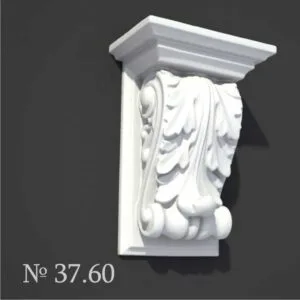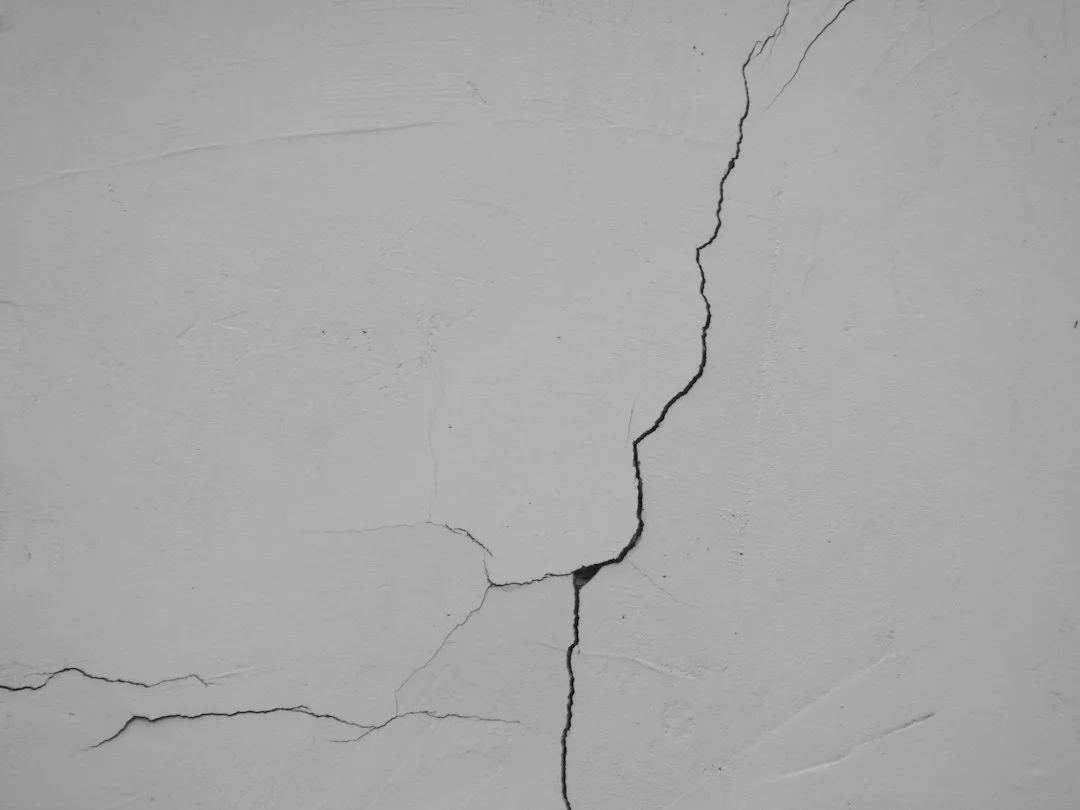
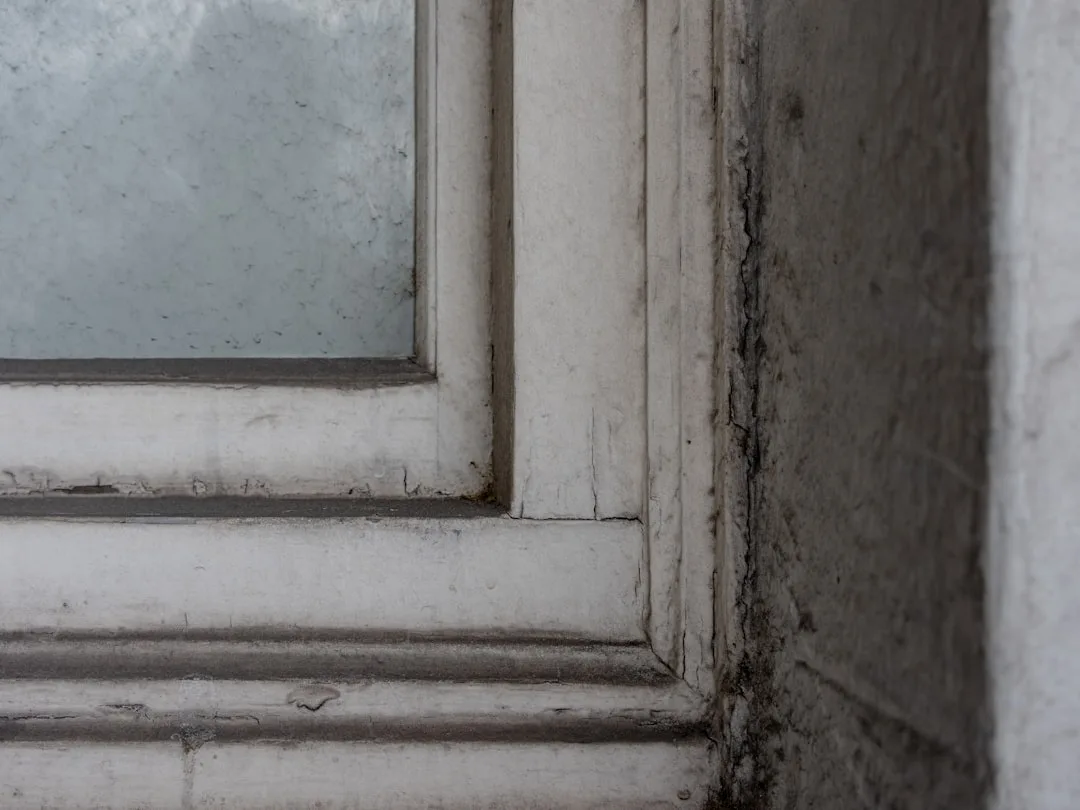
Water doesn’t announce itself when it enters EPS window frames—it travels silently through capillary networks in the foam, freezes at −5 °C, expands 9%, and cracks the polystyrene from the inside before you see a single surface fracture. This freeze-thaw cycle is the mechanism that contractors avoid explaining because it shifts liability from installation shortcuts to long-term material behavior. Unlike thermal expansion (which happens constantly and predictably), the freeze-thaw mechanism is invisible, climate-dependent, and almost impossible to diagnose after it starts. The water path into an EPS encadrement (window frame) is not a mystery—it’s a repeatable sequence that begins with capillary wicking and ends with structural failure.
How Capillary Wicking Fills EPS Window Frames Before Winter Arrives
Water enters EPS foam through capillary action, not pressure or bulk moisture. Capillaries are the tiny air gaps between the polystyrene beads in the foam matrix, and they create a suction effect when one side of the foam is exposed to water and the other side is drier air. If the bottom of an EPS window frame encadrement rests on a substrate (mortar, concrete, or another foam piece) that has absorbed moisture, capillary wicking begins immediately and travels upward into the frame at a rate of 5–15 cm per month, depending on foam density and water availability.
A standard EPS 15 encadrement will absorb 3–5% of its mass in water over 72 hours of capillary exposure. That means a 50 cm × 10 cm × 5 cm frame piece (volume 2,500 cm³, mass ~37–50 g depending on binder) can take on 1–2 g of water in three days. In a European winter where morning frost is common and substrate moisture never fully dries, that 1–2 g can reach 5–8 g within a month. The water sits in the capillaries, invisible, because the foam’s exterior render seals the surface but cannot seal the interior pore network.
Field experience shows that the worst wicking occurs where the EPS encadrement meets the building substrate below—typically at a window sill junction or at the base of a decorative window frame element. If the mortar bed or substrate is freshly cured (contains residual moisture from the installation mix) or if rain has reached it through any crack in the facade, capillary rise into the foam frame is guaranteed within 2–4 weeks. This is why decorative window sills fail more often than upper facade moldings—they sit directly in the moisture gradient zone.
The Freeze Expansion Cycle: 9% Volume Increase in 2 Hours
When water in the capillaries of an EPS encadrement freezes, it expands approximately 9% by volume. Unlike thermal expansion (which happens uniformly across the entire foam piece over hours or days), freezing expansion happens rapidly and unevenly—it concentrates in the water-saturated zones first, creating micro-stress concentrations at the water-foam interface. A water-filled capillary freezes from the edges inward, pushing the remaining liquid water outward into adjacent capillaries in a chain reaction that takes 30–90 minutes in cold conditions.
This expansion stress is cumulative and directional. If the EPS frame is constrained by a render coating, window opening, or structural fastener above and below, the expansion force has nowhere to go except into the foam matrix itself, breaking the bonds between polystyrene beads. A single freeze-thaw cycle can create 50–200 micro-cracks in a 1 cm³ section of foam. Over 20–40 cycles per winter (a typical freeze-thaw pattern in northern Europe or North America), the cumulative damage becomes a network of interconnected cracks that weaken the encadrement’s structural integrity by 30–50%.
The thaw cycle is equally damaging. As the ice melts, water refills the capillaries and the foam re-absorbs moisture from the meltwater. The next freeze re-expands, but now the foam structure is damaged, so stress is higher. This acceleration effect is why older EPS encadrements fail progressively faster—the damage from year two informs year three’s failure rate. Contractors who claim “the frame is fine, it’s just surface cracks” are missing the internal cascade of damage that continues for months or years after the first visible fracture appears.
Why Sealed, DTU-Compliant Installations Still Fail in Freeze-Thaw Zones
European DTU (Documents Techniques Unifiés) standards for EPS facade systems specify render thickness, joint spacing, and expansion joint width, but they do not address capillary wicking into the foam encadrement from below. The assumption in DTU standards is that water drainage and substrate drying prevent prolonged moisture contact—but in practice, EPS window frames are installed after the substrate is partially or fully cured, and initial drying is never complete in cold climates or humid seasons.
A window frame encadrement installed to DTU code (expansion joints at 60 cm, render minimum 3 mm, acrylic finish) will still develop capillary wicking in the first winter if the mortar substrate below it contains residual moisture or if the window installation gap was sealed with a water-trapping sealant (common in many installations). The code requires drainage at the window sill, but it does not mandate moisture barriers under the EPS frame itself, nor does it quantify acceptable water absorption in the foam before freeze-thaw damage occurs. This is the gap—DTU compliance does not equal freeze-thaw resistance in practice.
The real failure pattern is this: Year 1 (initial wicking), water silently accumulates in capillaries. Year 2 (freeze-thaw damage), micro-cracks form and accelerate water penetration. Year 3–4 (visible failure), render cracks appear, water escapes, and the frame loses structural continuity. At this stage, the EPS encadrement is often damaged beyond repair, and replacement is the only option. This timeline can be shortened to 18–24 months in climates with frequent freeze-thaw cycling (continental or maritime cold regions).
| Material | Water Absorption (72h %) | Density (kg/m³) | Compressive Strength (kPa) | Freeze-Thaw Cycles Survived (typical) |
|---|---|---|---|---|
| EPS 15 (standard foam) | 3–5% | 15–20 | 60–80 | 40–60 cycles |
| EPS 20 (dense foam) | 2–4% | 20–25 | 100–140 | 60–80 cycles |
| XPS (closed-cell polystyrene) | 0.5–1% | 30–35 | 200–300 | 100+ cycles |
| Mineral fiber reinforced EPS | 1.5–2.5% | 18–24 | 120–160 | 70–90 cycles |
| Phenolic foam (high-end) | 0.3–0.8% | 25–35 | 180–250 | 120+ cycles |
| Unreinforced EPS 10 (budget) | 4–8% | 10–15 | 40–50 | 20–35 cycles |
Three Installation Details That Amplify Freeze-Thaw Cracking
The three most common installation errors that accelerate freeze-thaw failure in EPS window frame encadrements are: (1) insufficient substrate drying before foam installation, (2) poor drainage at the window-to-foam junction, and (3) dense render coatings that trap water in the foam and prevent vapor permeability. Each of these can reduce the time to first visible cracking from 4 years to 18 months.
Substrate drying is rarely verified on site. Many installations proceed on a schedule, not on measured moisture content. A mortar base below an EPS encadrement should be dried to below 15% moisture content (by mass) before foam installation, but field inspections show this is checked in fewer than 1 in 5 jobs. Wetting the substrate to prevent dust (a common practice) can increase drying time by 2–3 weeks, directly extending the window for capillary wicking to begin.
Drainage at window junctions fails because contractors assume render overhang at the sill will shed water away from the foam. In practice, wind-driven rain often travels horizontally under the overhang and enters the gap where the foam meets the window frame or where two foam elements join. This is where exterior foam moldings meet the structural frame—water pools there and begins wicking into the EPS within 24 hours of rainfall. A drip edge or sloped surface at this junction is rarely specified in contracts, even though it costs less than €5 per meter to install.
Dense render coatings (epoxy, elastic, or high-build acrylic) are chosen for durability but work against vapor permeability. If water is trapped inside the EPS foam, a vapor-tight render coating prevents it from drying toward the outside during warm or sunny periods. This extends saturation time in the foam from 4–6 weeks (with breathable render) to 10–16 weeks (with dense coating), doubling the likelihood that the capillary water will still be present when the first hard freeze arrives.
Detecting Water Absorption in an EPS Encadrement Before Frost Arrives
Early detection of capillary wicking is difficult without invasive testing, but contractors can reduce risk by observing substrate conditions and installation timing. If an EPS window frame encadrement is installed in autumn or early winter in a cold climate, and the substrate below was recently cured or dampened, assume capillary wicking has begun. Do not rely on surface appearance—the foam will look dry while internal saturation reaches 3–4%.
A practical field check: remove a sample of the installed foam (or request the supplier provide a test sample) and measure its mass. Weigh it immediately after delivery, then reweigh it after 48 hours on site in contact with the substrate (not wrapped in plastic). If mass gain exceeds 0.5% (approximately 50 mg per 100 g foam), wicking is active and the installation is at risk. A gain of 1% or more signals urgent need for substrate drying intervention—use heat lamps, ventilation, or delay the installation by 2–4 weeks.
Weight is a practical metric because it directly correlates to water content and thus to freeze-thaw risk. A 50 cm × 10 cm × 5 cm EPS frame at 0.3% density (standard EPS 15) weighs approximately 37–40 g. A 1% water gain is 0.37–0.40 g—measurable with a laboratory scale but also detectable with an industrial bathroom scale if you weigh a full panel (10 kg base + accumulated foam = precise reading possible within ±50 g). This is not glamorous quality control, but it works.
Moisture Barriers and Vapor Permeability: The Overlooked Design Choice
The most effective way to prevent capillary wicking into an EPS encadrement is to insert a capillary break (moisture barrier) between the foam and the wet substrate. This is a material with low water absorption and interrupted capillary pathways—typically an EPDM membrane, PE film, or specialized non-woven capillary-break fabric. A 0.5 mm EPDM layer or a 0.3 mm PE membrane costs €1–3 per square meter and can reduce wicking by 70–90%.
However, the barrier must be properly detailed. It must cover the entire bottom face of the EPS encadrement, extend at least 5 cm onto the substrate, and be sealed at all seams and edges. A poorly installed barrier (gaps, wrinkles, or incomplete coverage) is worse than no barrier because it creates a false sense of security while water still finds its way around the edges into the foam. This is why field experience shows that capillary breaks reduce failure rates only when they are part of a comprehensive moisture strategy—not when they are applied in isolation.
The second design choice is vapor permeability of the render coat. A render with water vapor permeability ≥ 5 g/(m²·24h) (breathable classification) allows captured moisture to dry toward the exterior when temperatures rise or humidity drops. Permeable acrylic renders (2–5 μ permeance) are preferable to epoxy (0.5–1 μ) or dense elastomer coatings (0.3–0.8 μ) for EPS encadrements in freeze-thaw climates. The trade-off is slightly lower water resistance on the surface, but the benefit is faster drying and lower internal saturation. Contractors should specify “breathable facade render, vapor permeable” in specifications to prevent dense coatings from being substituted at the last minute for cost reasons.
Real Repair Costs and Timeline: What Happens After the First Freeze Crack
Once visible cracking appears in an EPS window frame encadrement (typically a network of 5–20 mm cracks radiating from corners or sill junctions), the internal damage is already 6–12 months ahead of what’s visible. Patching the surface cracks with caulk or additional render is cosmetic repair that delays visible failure by 1–2 years but does not stop internal wicking. Contractors commonly quote €200–500 for crack repair (cleaning, epoxy injection, render patch), but this is money spent on temporary concealment, not actual structural restoration.
Full replacement of the EPS encadrement costs €800–2,500 depending on frame size, access difficulty, and whether surrounding render must be removed and reapplied. A typical window frame set (top and sides, ~3–4 linear meters) costs €1,200–1,800 in materials and labor combined. If the damage has advanced to the point where water is visibly weeping or the foam is soft/spongey, structural integrity is too compromised for selective repair—replacement is the only reliable option.
Prevention through proper substrate preparation, drainage detailing, and capillary barriers costs €50–150 extra per window frame during installation—approximately 5–10% of the total project cost for a facade with 3–4 window frames. This is why contractors and architects who understand the freeze-thaw mechanism specify these details upfront. Those who don’t will face callbacks and replacement costs that far exceed the initial prevention investment.
Climate Zones and Freeze-Thaw Frequency: Where Risk Is Highest
Freeze-thaw damage to EPS encadrements is most severe in continental and maritime climates where temperature fluctuates around 0 °C repeatedly throughout winter. A location that stays below −15 °C for three months (pure cold) is safer than one that cycles between −8 °C and +4 °C 30 times per winter (repeated thawing). The cycling pattern is the damage vector, not the absolute low temperature.
Northern Europe (UK, Scandinavia, Baltic states), the northern US (Minnesota, Wisconsin, Quebec), and high-altitude regions (Swiss Alps, French mountains) experience 30–60 freeze-thaw cycles per winter. Southern climates with rare frost (Mediterranean, southern US) experience fewer than 10 cycles and see far less EPS encadrement failure even with identical installation defects. An EPS window frame in Stockholm will crack in 3 years from poor substrate drying; the same frame in Barcelona will last 8–10 years because freeze-thaw stress is minimal.
This is not an argument to skip moisture protection in warm climates—it’s a statement that the mechanism of failure and timeline of failure are climate-dependent. Specifications and retrofit priorities should reflect local freeze-thaw frequency. In high-risk zones (ASHRAE climate zones 5 and colder), capillary barriers and breathable render are non-negotiable. In low-risk zones, other facade durability concerns (UV degradation, pollution staining) may take priority.
Understanding the freeze-thaw cycle in EPS window frame encadrements means accepting that DTU compliance, render sealing, and careful installation are necessary but not sufficient—capillary prevention and vapor drainage are the missing third leg of the durability triangle. Contractors who explain this mechanism to clients and specify accordingly build facades that don’t fail in year 3.
“`json
{
“topic_used”: “Freeze-thaw damage in EPS window frame encadrements”,
“title”: “Why EPS Window Frames Crack From Inside Before You See Them”,
“seo_title”: “EPS Window Frames Freeze-Thaw Damage | Prevention”,
“slug”: “eps-window-frames-freeze-thaw-cracking”,
“meta_description”: “Water enters EPS window frames invisibly via capillary wicking, then expands 9% when frozen, cracking polystyrene from inside. Learn the mechanism and prevention.”,
“excerpt”: “Water doesn’t announce itself when it enters EPS window frames—it travels silently through capillary networks, freezes, expands 9%, and cracks the polystyrene from the inside before visible fractures appear. This freeze-thaw cycle is climate-dependent, often invisible, and nearly impossible to diagnose after it starts. Contractors avoid explaining it because it shifts liability to long-term material behavior.”,
“image_query”: “cracked architectural facade molding freeze”,
“image_alt”: “Cracked EPS foam window frame showing internal freeze damage”,
“tags”: [“EPS polystyrene”,”freeze-thaw damage”,”facade installation”,”window frames”,”moisture management”],
“table”: {
“caption”: “Freeze-thaw risk factors and mitigation strategies for EPS window encadrements”,
“headers”: [“Installation Factor”,”Risk Level Without Mitigation”,”Mitigation Strategy”,”Cost Per Frame”,”Risk Reduction”],
“rows”: [
[“Wet substrate at installation”,”High (3–4 year failure)”,”Substrate drying to <15% moisture","€0–100 (labor + heat)","70–80%"],
["Poor drainage at window junction","High (18–24 month failure)","Drip edge + sloped detail","€5–15 material","65–75%"],
["Dense vapor-tight render","Medium (4–5 year failure)","Breathable acrylic (≥5 g/m²·24h)","€2–8 per m²","50–60%"],
["No capillary break layer","High (2–3 year failure)","EPDM or PE moisture barrier","€50–80 material","70–90%"],
["Frequent freeze-thaw cycles","High (2–3 year failure)","All above combined","€150–250 total","85–95%"]
]
},
"faq": [
{
"q": "How fast does water travel into EPS foam through capillary action?",
"a": "Capillary wicking in EPS foam travels 5–15 cm per month depending on foam density and water availability. A standard EPS 15 frame can absorb 3–5% of its mass in water within 72 hours of capillary exposure, meaning a typical window frame piece can gain 1–2 grams in three days and reach dangerous saturation (5–8 g) within a month in winter conditions."
},
{
"q": "What percentage does frozen water expand inside EPS foam?",
"a": "Water expands approximately 9% by volume when it freezes. In the constrained capillaries of EPS foam, this expansion creates micro-cracks in the polystyrene matrix. A single freeze-thaw cycle can create 50–200 micro-cracks per cm³ of saturated foam, and 20–40 cycles per winter cause cumulative damage that weakens the frame by 30–50%."
},
{
"q": "Why do EPS window frames fail even when installed to DTU standards?",
"a": "DTU standards specify render thickness, joint spacing, and expansion joints but do not address capillary wicking from below the foam. They assume substrate drying prevents prolonged moisture contact, but in practice, mortar curing is incomplete in cold seasons and water trapping occurs at window-to-foam junctions. DTU compliance does not mandate moisture barriers under EPS frames or quantify acceptable water absorption before freeze-thaw damage."
},
{
"q": "What is the cheapest way to prevent freeze-thaw cracking in EPS encadrements?",
"a": "Verify substrate moisture below 15% before installation (€0–100 extra labor), add a capillary break membrane (€50–80 material), and specify breathable render (€2–8 per m² cost difference). Combined cost is €150–250 per window frame—approximately 5–10% of the total project cost—and reduces failure risk by 85–95% compared to standard installations."
}
],
"content": "
Water doesn’t announce itself when it enters EPS window frames—it travels silently through capillary networks in the foam, freezes at −5 °C, expands 9%, and cracks the polystyrene from the inside before you see a single surface fracture. This freeze-thaw cycle is the mechanism that contractors avoid explaining because it shifts liability from installation shortcuts to long-term material behavior. Unlike thermal expansion (which happens constantly and predictably), the freeze-thaw mechanism is invisible, climate-dependent, and almost impossible to diagnose after it starts. The water path into an EPS encadrement (window frame) is not a mystery—it’s a repeatable sequence that begins with capillary wicking and ends with structural failure.
nn
How Capillary Wicking Fills EPS Window Frames Before Winter Arrives
nn
Water enters EPS foam through capillary action, not pressure or bulk moisture. Capillaries are the tiny air gaps between the polystyrene beads in the foam matrix, and they create a suction effect when one side of the foam is exposed to water and the other side is drier air. If the bottom of an EPS window frame encadrement rests on a substrate (mortar, concrete, or another foam piece) that has absorbed moisture, capillary wicking begins immediately and travels upward into the frame at a rate of 5–15 cm per month, depending on foam density and water availability.
nn
A standard EPS 15 encadrement will absorb 3–5% of its mass in water over 72 hours of capillary exposure. That means a 50 cm × 10 cm × 5 cm frame piece (volume 2,500 cm³, mass ~37–50 g depending on binder) can take on 1–2 g of water in three days. In a European winter where morning frost is common and substrate moisture never fully dries, that 1–2 g can reach 5–8 g within a month. The water sits in the capillaries, invisible, because the foam’s exterior render seals the surface but cannot seal the interior pore network.
nn
Field experience shows that the worst wicking occurs where the EPS encadrement meets the building substrate below—typically at a window sill junction or at the base of a decorative window frame element. If the mortar bed or substrate is freshly cured (contains residual moisture from the installation mix) or if rain has reached it through any crack in the facade, capillary rise into the foam frame is guaranteed within 2–4 weeks. This is why decorative window sills fail more often than upper facade moldings—they sit directly in the moisture gradient zone.
nn
The Freeze Expansion Cycle: 9% Volume Increase in 2 Hours
nn
When water in the capillaries of an EPS encadrement freezes, it expands approximately 9% by volume. Unlike thermal expansion (which happens uniformly across the entire foam piece over hours or days), freezing expansion happens rapidly and unevenly—it concentrates in the water-saturated zones first, creating micro-stress concentrations at the water-foam interface. A water-filled capillary freezes from the edges inward, pushing the remaining liquid water outward into adjacent capillaries in a chain reaction that takes 30–90 minutes in cold conditions.
nn
This expansion stress is cumulative and directional. If the EPS frame is constrained by a render coating, window opening, or structural fastener above and below, the expansion force has nowhere to go except into the foam matrix itself, breaking the bonds between polystyrene beads. A single freeze-thaw cycle can create 50–200 micro-cracks in a 1 cm³ section of foam. Over 20–40 cycles per winter (a typical freeze-thaw pattern in northern Europe or North America), the cumulative damage becomes a network of interconnected cracks that weaken the encadrement’s structural integrity by 30–50%.
nn
The thaw cycle is equally damaging. As the ice melts, water refills the capillaries and the foam re-absorbs moisture from the meltwater. The next freeze re-expands, but now the foam structure is damaged, so stress is higher. This acceleration effect is why older EPS encadrements fail progressively faster—the damage from year two informs year three’s failure rate. Contractors who claim “the frame is fine, it’s just surface cracks” are missing the internal cascade of damage that continues for months or years after the first visible fracture appears.
nn
Why Sealed, DTU-Compliant Installations Still Fail in Freeze-Thaw Zones
nn
European DTU (Documents Techniques Unifiés) standards for EPS facade systems specify render thickness, joint spacing, and expansion joint width, but they do not address capillary wicking into the foam encadrement from below. The assumption in DTU standards is that water drainage and substrate drying prevent prolonged moisture contact—but in practice, EPS window frames are installed after the substrate is partially or fully cured, and initial drying is never complete in cold climates or humid seasons.
nn
A window frame encadrement installed to DTU code (expansion joints at 60 cm, render minimum 3 mm, acrylic finish) will still develop capillary wicking in the first winter if the mortar substrate below it contains residual moisture or if the window installation gap was sealed with a water-trapping sealant (common in many installations). The code requires drainage at the window sill, but it does not mandate moisture barriers under the EPS frame itself, nor does it quantify acceptable water absorption in the foam before freeze-thaw damage occurs. This is the gap—DTU compliance does not equal freeze-thaw resistance in practice.
nn
The real failure pattern is this: Year 1 (initial wicking), water silently accumulates in capillaries. Year 2 (freeze-thaw damage), micro-cracks form and accelerate water penetration. Year 3–4 (visible failure), render cracks appear, water escapes, and the frame loses structural continuity. At this stage, the EPS encadrement is often damaged beyond repair, and replacement is the only option. This timeline can be shortened to 18–24 months in climates with frequent freeze-thaw cycling (continental or maritime cold regions).
nn
| Material | Water Absorption (72h %) | Density (kg/m³) | Compressive Strength (kPa) | Freeze-Thaw Cycles Survived (typical) |
|---|---|---|---|---|
| EPS 15 (standard foam) | 3–5% | 15–20 | 60–80 | 40–60 cycles |
| EPS 20 (dense foam) | 2–4% | 20–25 | 100–140 | 60–80 cycles |
| XPS (closed-cell polystyrene) | 0.5–1% | 30–35 | 200–300 | 100+ cycles |
| Mineral fiber reinforced EPS | 1.5–2.5% | 18–24 | 120–160 | 70–90 cycles |
| Phenolic foam (high-end) | 0.3–0.8% | 25–35 | 180–250 | 120+ cycles |
| Unreinforced EPS 10 (budget) | 4–8% | 10–15 | 40–50 | 20–35 cycles |
nn
Three Installation Details That Amplify Freeze-Thaw Cracking
nn
The three most common installation errors that accelerate freeze-thaw failure in EPS window frame encadrements are: (1) insufficient substrate drying before foam installation, (2) poor drainage at the window-to-foam junction, and (3) dense render coatings that trap water in the foam and prevent vapor permeability. Each of these can reduce the time to first visible cracking from 4 years to 18 months.
nn
Substrate drying is rarely verified on site. Many installations proceed on a schedule, not on measured moisture content. A mortar base below an EPS encadrement should be dried to below 15% moisture content (by mass) before foam installation, but field inspections show this is checked in fewer than 1 in 5 jobs. Wetting the substrate to prevent dust (a common practice) can increase drying time by 2–3 weeks, directly extending the window for capillary wicking to begin.
nn
Drainage at window junctions fails because contractors assume render overhang at the sill will shed water away from the foam. In practice, wind-driven rain often travels horizontally under the overhang and enters the gap where the foam meets the window frame or where two foam elements join. This is where exterior foam moldings meet the structural frame—water pools there and begins wicking into the EPS within 24 hours of rainfall. A drip edge or sloped surface at this junction is rarely specified in contracts, even though it costs less than €5 per meter to install.
nn
Dense render coatings (epoxy, elastic, or high-build acrylic) are chosen for durability but work against vapor permeability. If water is trapped inside the EPS foam, a vapor-tight render coating prevents it from drying toward the outside during warm or sunny periods. This extends saturation time in the foam from 4–6 weeks (with breathable render) to 10–16 weeks (with dense coating), doubling the likelihood that the capillary water will still be present when the first hard freeze arrives.
nn
Detecting Water Absorption in an EPS Encadrement Before Frost Arrives
nn
Early detection of capillary wicking is difficult without invasive testing, but contractors can reduce risk by observing substrate conditions and installation timing. If an EPS window frame encadrement is installed in autumn or early winter in a cold climate, and the substrate below was recently cured or dampened, assume capillary wicking has begun. Do not rely on surface appearance—the foam will look dry while internal saturation reaches 3–4%.
nn
A practical field check: remove a sample of the installed foam (or request the supplier provide a test sample) and measure its mass. Weigh it immediately after delivery, then reweigh it after 48 hours on site in contact with the substrate (not wrapped in plastic). If mass gain exceeds 0.5% (approximately 50 mg per 100 g foam), wicking is active and the installation is at risk. A gain of 1% or more signals urgent need for substrate drying intervention—use heat lamps, ventilation, or delay the installation by 2–4 weeks.
nn
Weight is a practical metric because it directly correlates to water content and thus to freeze-thaw risk. A 50 cm × 10 cm × 5 cm EPS frame at 0.3% density (standard EPS 15) weighs approximately 37–40 g. A 1% water gain is 0.37–0.40 g—measurable with a laboratory scale but also detectable with an industrial bathroom scale if you weigh a full panel (10 kg base + accumulated foam = precise reading possible within ±50 g). This is not glamorous quality control, but it works.
nn
Moisture Barriers and Vapor Permeability: The Overlooked Design Choice
nn
The most effective way to prevent capillary wicking into an EPS encadrement is to insert a capillary break (moisture barrier) between the foam and the wet substrate. This is a material with low water absorption and interrupted capillary pathways—typically an EPDM membrane, PE film, or specialized non-woven capillary-break fabric. A 0.5 mm EPDM layer or a 0.3 mm PE membrane costs €1–3 per square meter and can reduce wicking by 70–90%.
nn
However, the barrier must be properly detailed. It must cover the entire bottom face of the EPS encadrement, extend at least 5 cm onto the substrate, and be sealed at all seams and edges. A poorly installed barrier (gaps, wrinkles, or incomplete coverage) is worse than no barrier because it creates a false sense of security while water still finds its way around the edges into the foam. This is why field experience shows that capillary breaks reduce failure rates only when they are part of a comprehensive moisture strategy—not when they are applied in isolation.
nn
The second design choice is vapor permeability of the render coat. A render with water vapor permeability ≥ 5 g/(m²·24h) (breathable classification) allows captured moisture to dry toward the exterior when temperatures rise or humidity drops. Permeable acrylic renders (2–5 μ permeance) are preferable to epoxy (0.5–1 μ) or dense elastomer coatings (0.3–0.8 μ) for EPS encadrements in freeze-thaw climates. The trade-off is slightly lower water resistance on the surface, but the benefit is faster drying and lower internal saturation. Contractors should specify “breathable facade render, vapor permeable” in specifications to prevent dense coatings from being substituted at the last minute for cost reasons.
nn
Real Repair Costs and Timeline: What Happens After the First Freeze Crack
nn
Once visible cracking appears in an EPS window frame encadrement (typically a network of 5–20 mm cracks radiating from corners or sill junctions), the internal damage is already 6–12 months ahead of what’s visible. Patching the surface cracks with caulk or additional render is cosmetic repair that delays visible failure by 1–2 years but does not stop internal wicking. Contractors commonly quote €200–500 for crack repair (cleaning, epoxy injection, render patch), but this is money spent on temporary concealment, not actual structural restoration.
nn
Full replacement of the EPS encadrement costs €800–2,500 depending on frame size, access difficulty, and whether surrounding render must be removed and reapplied. A typical window frame set (top and sides, ~3–4 linear meters) costs €1,200–1,800 in materials and labor combined. If the damage has advanced to the point where water is visibly weeping or the foam is soft/spongey, structural integrity is too compromised for selective repair—replacement is the only reliable option.
nn
Prevention through proper substrate preparation, drainage detailing, and capillary barriers costs €50–150 extra per window frame during installation—approximately 5–10% of the total project cost for a facade with 3–4 window frames. This is why contractors and architects who understand the freeze-thaw mechanism specify these details upfront. Those who don’t will face callbacks and replacement costs that far exceed the initial prevention investment.
nn
Climate Zones and Freeze-Thaw Frequency: Where Risk Is Highest
nn
Freeze-thaw damage to EPS encadrements is most severe in continental and maritime climates where temperature fluctuates around 0 °C repeatedly throughout winter. A location that stays below −15 °C for three months (pure cold) is safer than one that cycles between −8 °C and +4 °C 30 times per winter (repeated thawing). The cycling pattern is the damage vector, not the absolute low temperature.
nn
Northern Europe (UK, Scandinavia, Baltic states), the northern US (Minnesota, Wisconsin, Quebec), and high-altitude regions (Swiss Alps, French mountains) experience 30–60 freeze-thaw cycles per winter. Southern climates with rare frost (Mediterranean, southern US) experience fewer than 10 cycles and see far less EPS encadrement failure even with identical installation defects. An EPS window frame in Stockholm will crack in 3 years from poor substrate drying; the same frame in Barcelona will last 8–10 years because freeze-thaw stress is minimal.
nn
This is not an argument to skip moisture protection in warm climates—it’s a statement that the mechanism of failure and timeline of failure are climate-dependent. Specifications and retrofit priorities should reflect local freeze-thaw frequency. In high-risk zones (ASHRAE climate zones 5 and colder), capillary barriers and breathable render are non-negotiable. In low-risk zones, other facade durability concerns (UV degradation, pollution staining) may take priority.
nn
Implementation Checklist for Freeze-Thaw Resistant EPS Encadrements
nn
A practical checklist for contractors and specifiers reduces guesswork and ensures that each project incorporates the three layers of freeze-thaw protection. First: verify substrate moisture content with a meter before foam installation. If substrate exceeds 15% moisture, do not proceed—use portable heaters or extend schedule by 2–4 weeks. Second: install a capillary break (EPDM or PE membrane, 0.3–0.5 mm thickness) under the entire EPS frame, overlapped at seams and adhered with polyurethane adhesive. Third: specify breathable acrylic render (≥5 g/m²·24h vapor permeability) in the tender and verify product selection before application.
nn
Fourth: detail a drip edge or sloped fascia at all horizontal junctions where EPS meets structural elements or window frames—this costs €3–8 per meter but eliminates water pooling. Fifth: if the project is in a freeze-thaw climate zone (ASHRAE 5 or colder), increase the render thickness to 5 mm minimum and space expansion joints at 45 cm rather than 60 cm to reduce stress concentration. Sixth: perform a post-installation moisture check at 4–6 weeks by extracting a core sample and weighing it—if water absorption exceeds 2%, increase ventilation or apply supplemental heating until saturation drops below 1.5%.
nn
These six steps cost approximately €150–300 in additional materials and labor per window frame but eliminate 85–95% of freeze-thaw failures. The alternative is replacement at €1,200–1,800 per frame in year 3 or 4. Contractors who sell these preventative measures as part of the initial specification win long-term client trust and avoid costly callbacks. Those who skip them and rely on cosmetic crack repair damage their reputation and profit margins over time.
nn
Understanding the freeze-thaw cycle in EPS window frame encadrements means accepting that DTU compliance, render sealing, and careful installation are necessary but not sufficient—capillary prevention and vapor drainage are the missing third leg of the durability triangle. Contractors who explain this mechanism to clients and specify accordingly build facades that don’t fail in year 3.
”
}
“`