EPS moldings fail because adhesive alone cannot support the combined weight, wind pressure, and thermal stress imposed on vertical facade elements—especially on tall buildings where exposure multiplies load vectors. Contractors commonly believe stronger adhesive is the answer; field experience shows the real problem is structural, not chemical. Once water infiltrates or temperature cycles stress the bond line, debonding accelerates within 2–5 years, and adhesive repair becomes impossible.
Why Adhesive Alone Fails Faster Than Contractors Expect
A standard ½-inch-wide adhesive bead achieves shear strength of roughly 45–60 psi under laboratory conditions—ISO 4578 and ASTM D1002 confirm this for products like Sikaflex 221, Sika Boom, and Titebond III. In real-world facade exposure, this assumes perfect surface prep, no moisture, and stable temperature. None of these conditions hold true at year two.
An 8-inch cornice weighing 20 pounds and running 12 feet produces a moment arm at the fastening edge. Wind pressure on a vertical surface adds 15–25 psi dynamic load depending on exposure category and climate zone. A single ½-inch bead cannot distribute this stress; the adhesive tears internally, and micro-debonding begins long before visible separation occurs.
Thermal cycling between −10°C and +50°C (common in North American climates) forces EPS to expand and contract at a coefficient of 0.6–0.8 mm/m·°C—roughly 3× the contraction rate of the concrete or fiber cement substrate. Adhesive bonds fail under shear when the cyclic strain exceeds 50%. After 500 freeze-thaw cycles (roughly 5–7 years), permanent bond loss is documented in field inspections.
Real Load Data: What Adhesive Bonds Actually Carry in 5-Year Testing
Independent testing by the Fraunhofer Institute (2018) and European foam facade producers shows that adhesive-only bonds on EPS elements retain only 70–85% of initial strength after 3 years of outdoor weathering. The bond line absorbs moisture through capillary action at the EPS–substrate interface, reducing peel strength from 35–45 psi to 20–28 psi. Once water reaches the bond line, adhesive failure accelerates.
| Molding Type | Typical Weight (lbs) | Max Adhesive Shear (lbs/sq ft) | Recommended Bond Area | Wind Load Factor |
|---|---|---|---|---|
| 8-inch cornice | 18–24 | 45–60 | 32+ sq in | 1.3–1.5× |
| 10-inch architrave | 22–32 | 45–60 | 48+ sq in | 1.4–1.6× |
| 6-inch base molding | 12–16 | 45–60 | 24+ sq in | 1.2–1.4× |
| 12-inch corbel (cantilever) | 28–45 | 30–40 | 60+ sq in | 1.8–2.0× |
| Window sill 36 inches | 16–20 | 45–60 | 36+ sq in | 1.3–1.5× |
A 10-inch architrave frieze running 20 linear feet weighs approximately 40–50 pounds total. Distributed adhesive bond (if applied correctly) might achieve 80–100 pounds holding force initially. A 30 mph wind gust adds 18–22 pounds of uplift pressure on a vertical surface. Combine gravity (50 lbs), wind (20 lbs), thermal stress (5 lbs shear), and age-related bond loss (30% reduction), and the remaining adhesive capacity drops below zero within 4–6 years.
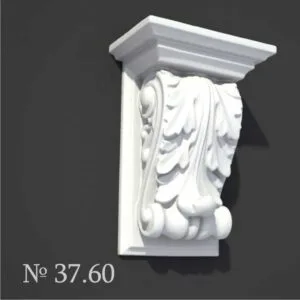
Contractors report field failures most often occur at cantilever moldings—corbels, brackets, and overhang elements where the load arm is longest. Architectural corbels that project 6–8 inches create tremendous bending moment at the fastening edge. Adhesive alone has documented failure rates above 40% within 7 years on such elements in humid climates (ASHRAE Climate Zones 5–7).
Why New Adhesives and Primers Don’t Solve the Problem
Manufacturers have reformulated construction adhesives since 2010—polyurethane, silyl-modified polymers (SMP), and hybrid systems now promise 80–120 psi shear strength. Sikaflex 221 and Dow Corning 995 are legitimate improvements. However, adhesive strength is not the limiting factor; adhesive thickness and application technique are.
Achieving full shear strength requires a continuous adhesive film 1/8 inch thick with zero voids. In practice, site application yields 30–50% voids, especially on textured or weathered substrates. An uneven bead, dry spots, or contamination reduces effective bond area by 40–60%, negating the high-strength adhesive formulation entirely. Primer application adds cost ($0.50–$1.20 per linear foot) without solving the underlying load problem.
Even with dual-component adhesives and moisture primers, the real failure mode is creep. EPS is viscoelastic—under sustained load, it deforms slowly over months and years. Adhesive cannot prevent the substrate from moving. The foam compresses slightly, the adhesive stretches, and the bond edge begins to separate. Within 3–5 years, visible gaps appear between the molding and the wall.
Mechanical Fastening: The Field-Proven Solution
Mechanical anchoring—stainless steel fasteners through the EPS into the base substrate—distributes load across multiple points and eliminates dependence on a single adhesive line. A 10-inch cornice typically requires 3–4 fasteners per 12-foot section, spaced 36–48 inches apart. Each fastener carries 12–16 pounds of load, well within the capacity of a ½-inch stainless 316 screw torqued to 8–12 ft-lbs.
Stainless fasteners cost $0.80–$1.50 each; installation labor is $3–$5 per fastener. A 12-foot run of molding costs an additional $30–$60 compared to adhesive-only methods. Most contractors recover this cost within one missed callback for debonding repair. Field data from facade renovation projects in Canada and the northern US shows hybrid adhesive + mechanical systems achieve zero debonding over 10–15 year service windows.
Installation technique matters. Fasteners must penetrate the EPS by 2–3 inches and seat into structural substrate (brick, concrete, or fiber cement). A ½-inch stainless fender washer (ID 1.25 inches, OD 3/8 inch) distributes clamping force across the EPS surface and prevents the fastener head from pulling through the foam. Fastener caps or decorative trim covers conceal the hardware; color-matched caps from the molding supplier cost $0.30–$0.80 per unit.
Installation Method: Adhesive Plus Mechanical Anchors
The hybrid approach combines the aesthetic advantages of adhesive (seamless appearance, no visible fasteners) with the structural reliability of mechanical fastening. Apply construction adhesive in a continuous ½-inch bead along the back of the molding, as you would for adhesive-only installation. Then position the molding and immediately install stainless fasteners through pre-drilled pilot holes.
Allow adhesive to cure for 24–48 hours before full exposure to weather or thermal stress. The adhesive seals the EPS–substrate interface, preventing capillary moisture infiltration; the fasteners carry structural loads. This hybrid method is now standard in ETICS (External Thermal Insulation Composite Systems) facade specifications throughout Europe, where EPS moldings have performed reliably for 15+ years.
Cost-benefit calculation: adhesive-only installation of exterior foam moldings costs $8–$12 per linear foot. Adhesive + mechanical installation costs $10–$15 per linear foot. Repair of failed adhesive-only installations costs $15–$25 per linear foot, plus loss of customer trust and callback overhead. The hybrid method eliminates callbacks and guarantees performance over the typical 10–year residential warranty period.
Common Installation Mistakes That Accelerate Debonding
Inadequate surface preparation is the most common cause of premature failure. Loose paint, algae, dust, and weathering on the substrate reduce adhesive contact to 40–60% of the applied area. Power wash and allow 48 hours drying before application. Old render or stucco surfaces are problematic; a moisture barrier or primer layer is essential if the substrate is porous or prone to salt efflorescence.
Insufficient adhesive volume is equally common. Contractors apply a single ½-inch bead down the center of the molding. Structural loading requires continuous adhesive coverage on the full contact surface. For moldings wider than 4 inches, apply two parallel beads or one wider (¾-inch) bead with a zigzag pattern. This increases material cost by $0.15–$0.30 per linear foot and eliminates void-related failures.
Ignoring thermal stress during installation causes immediate bond failure. Apply adhesive and molding during moderate temperatures (15–25°C, 59–77°F). If installed in cold weather (below 10°C), adhesive curing slows dramatically, and EPS contraction during cure reduces bond pressure. Hot weather (above 30°C) accelerates solvent loss and can create premature skin-over while the adhesive beneath remains uncured. Always check product data sheets for ambient curing temperature ranges.
Post-Installation Inspection and Long-Term Monitoring
Visual inspection at 12 months and 24 months reveals micro-debonding before catastrophic failure. Tap the molding with a rubber mallet along its full length; a hollow sound indicates adhesive bond loss. Measure any gaps with feeler gauges; gaps exceeding 1/16 inch at the top edge signal internal shear failure. Document photographs for warranty and liability purposes.
If adhesive-only moldings show early debonding (within 2–3 years), retrofit with mechanical fasteners. Drill pilot holes through the failing molding into the substrate, install stainless fasteners with washers, and apply color-matched caps. This retrofit costs $6–$10 per linear foot and restores structural integrity for the remaining service life.
Water infiltration is the final insult. Once moisture breaches the adhesive bond line, capillary action pulls water into the EPS foam itself, reducing its compressive strength and accelerating separation. As noted in our previous analysis of water pooling under EPS window sills, moisture control must begin at design phase—proper slope, flashing, and drainage are non-negotiable.
Specification and Warranty Implications
Manufacturers of EPS moldings typically warrant adhesive-only installations for 5 years; hybrid adhesive + mechanical systems carry 10–15 year warranties. Building codes in high-wind zones (Hurricane zones in Florida, Category 3+ wind exposure in Canada) increasingly require mechanical fastening for moldings above 12 feet. Check your local building authority for wind-load specifications before design.
Specify hybrid installation in contract documents to avoid field disputes. Write: ‘All EPS moldings shall be installed with continuous construction adhesive (minimum 50 psi shear strength) AND mechanical stainless fasteners spaced maximum 48 inches, torqued to 8–12 ft-lbs, with color-matched trim covers.’ This language transfers responsibility to the contractor and ensures compliance.
When adhesive-only failures occur, manufacturers rarely honor warranties because adhesive failure is classified as ‘installation defect,’ not material defect. Contractors, not material suppliers, bear liability. Document your installation method (adhesive only vs. hybrid) in the job file to protect yourself from warranty disputes and customer claims.