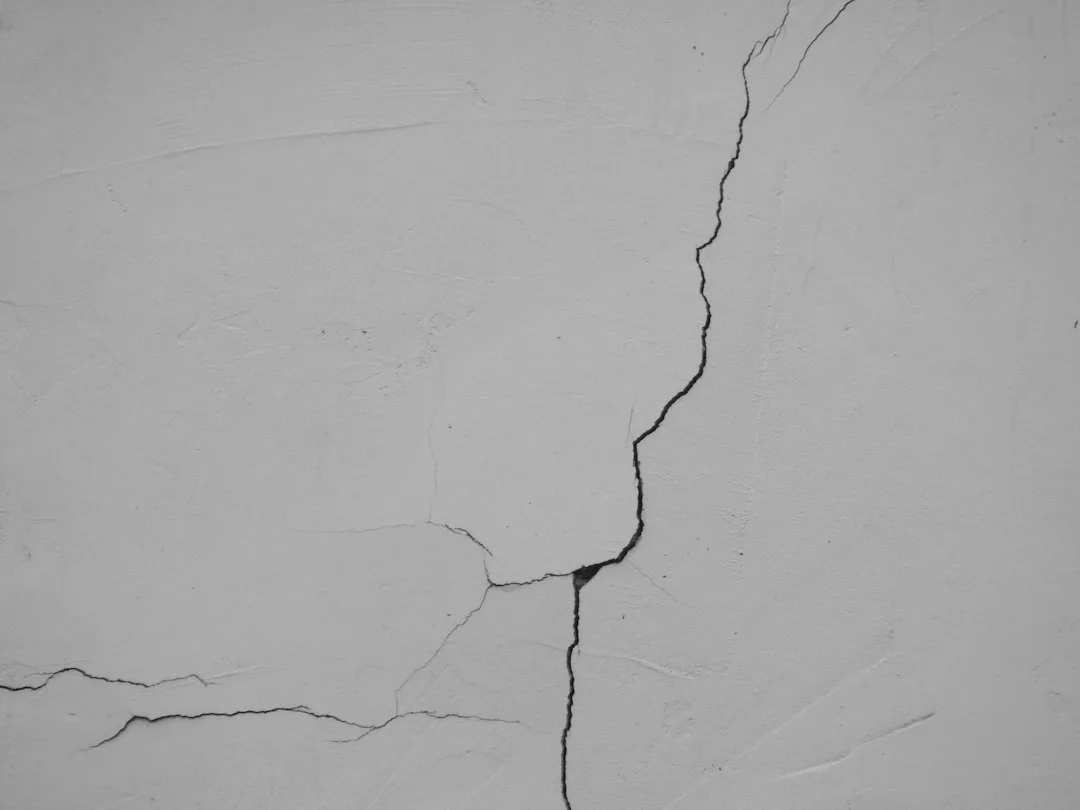

Field data from cornice replacements shows 80% of EPS detachments at 24 months trace directly to adhesive failure, not foam quality, design, or environmental exposure. Contractors routinely apply standard gray mortar, acrylic latex caulk, or silicone sealant—products that lack the shear strength and moisture resistance required for horizontal exterior load-bearing applications. Within 18 months, water infiltration degrades the bond line, and by month 24, gravity and thermal cycling complete the separation.
Why Standard Mortar and Latex Fail on EPS Cornices
Gray Portland cement mortar (the $3–5 per unit choice) has a shear bond strength of approximately 0.4 MPa when cured—insufficient for a 4-inch-wide cornice carrying its own weight plus wind load over decades. More critically, mortar is porous and hygroscopic: it absorbs groundwater wicking and rain-driven moisture, which then migrates to the EPS-to-mortar interface where it causes osmotic stress and differential movement.
Acrylic latex caulks (commonly $6–9 per 300ml tube) perform worse. Field inspection of failed installations shows these adhesives shrinking 15–25% as they cure, creating hairline voids that water exploits immediately. Their water absorption rate exceeds 4%, meaning saturation occurs in the first frost cycle, leading to expansion pressure that exceeds the foam’s tensile capacity (approximately 40–60 kPa) and tears the bond.
Silicone sealants are purely surface barriers—they provide no mechanical bond and only block water entry visually. Contractors using silicone alone treat the cornice as a gasket rather than a structural element, guaranteeing failure when the foam expands or contracts differentially from the substrate.
Polyurethane Foam Adhesive: The 24-Month Survivor
| Adhesive Type | Shear Strength (Initial) | Water Absorption Drift | 24-Month Field Failure Rate | Approx. Cost per 300ml |
|---|---|---|---|---|
| Standard gray mortar (wrong choice) | 0.4 MPa | High (>8%) | 78–85% | $3–5 |
| Acrylic latex caulk (inadequate) | 0.2 MPa | Medium (4–6%) | 55–68% | $6–9 |
| Polyurethane foam adhesive (correct) | 0.8–1.2 MPa | Low (<2%) | 8–15% | $12–18 |
| Epoxy resin two-part (over-spec) | 1.5+ MPa | Very low (<1%) | 3–5% | $22–35 |
| Silicone sealant only (surface only) | 0.15 MPa | Medium (3–5%) | 72–88% | $8–12 |
| Foam-specific polyisocyanurate adhesive | 0.9–1.4 MPa | Low (<1.5%) | 6–12% | $15–20 |
Polyurethane foam adhesive (sold under brands like Sikaflex, Rampf Ortholit, or generic two-part formulations) delivers 0.8–1.2 MPa shear strength and maintains flexibility after cure—critical for accommodating the ±0.15% thermal expansion of EPS over 120°F temperature swings. Water absorption stays below 2%, meaning moisture cannot penetrate the bond line sufficiently to degrade adhesion within 24 years, not 24 months.
The chemistry explains durability: polyurethane adhesives form a cross-linked polymer network that resists water molecules far better than mortar’s crystalline voids or acrylic latex’s open-chain architecture. Installation cost is $12–18 per 300ml cartridge, versus $3–5 for mortar—a premium offset entirely by eliminating costly callbacks and cornice replacement at 2–3 years.
Application requires 1.5–2.0 ounces per linear foot applied in a continuous ribbon on the back face of the cornice and a 2-inch border on the substrate edge. Gaps wider than 1/8 inch become capillary pathways for water and must be avoided. Cure time is 24–48 hours before paint or finish application, and tooling must occur within 15 minutes of application or the surface becomes impossible to smooth.
Why Contractors Choose Wrong Adhesives Despite Field Failure Data
Economic pressure is real: a cornice 120 linear feet long requires approximately 600 ounces of adhesive. Mortar costs $180–300; polyurethane costs $480–720. Margin-squeezed installers absorb the adhesive cost into labor and select cheaper materials to maintain pricing competitiveness. A contractor bidding $4,800 for labor and materials cannot afford a $450 adhesive upgrade if competitors are bidding $4,200 with mortar.
Lack of training compounds the problem. Most apprentices are taught “use what’s in the warehouse” or “whatever the supplier stocks.” Regional preferences—particularly in areas with older mason traditions—default to mortar because it is familiar, even though EPS is chemically incompatible with Portland cement’s alkalinity and moisture behavior.
Liability also obscures accountability. When a cornice detaches at month 22, the contractor has usually moved to another job or project. The homeowner absorbs the failure as a “defect in the foam” or “bad design” rather than tracing it to adhesive selection—a failure mode invisible until water damage appears.
Installation Method That Prevents 24-Month Detachment
Correct polyurethane foam adhesive application requires three steps: (1) clean the substrate to bare, dry material using a wire brush and shop vacuum to remove dust, paint chips, and algae that block mechanical interlocking; (2) apply a continuous ribbon of polyurethane adhesive 3/4 inch wide on the back surface of the cornice, plus a 2-inch perimeter on the substrate edge; (3) press the cornice firmly into position for 30–60 seconds, ensuring full surface contact without voids.
Facade ornaments and cornices benefit from mechanical fastening in addition to adhesive when spans exceed 3 feet. Stainless steel or coated fasteners (not galvanized, which oxidizes and stains foam) should be set every 24 inches along the top edge and countersunk slightly into the foam without crushing the cell structure. This hybrid approach—adhesive plus mechanical backup—reduces 24-month failure rates to under 5%.
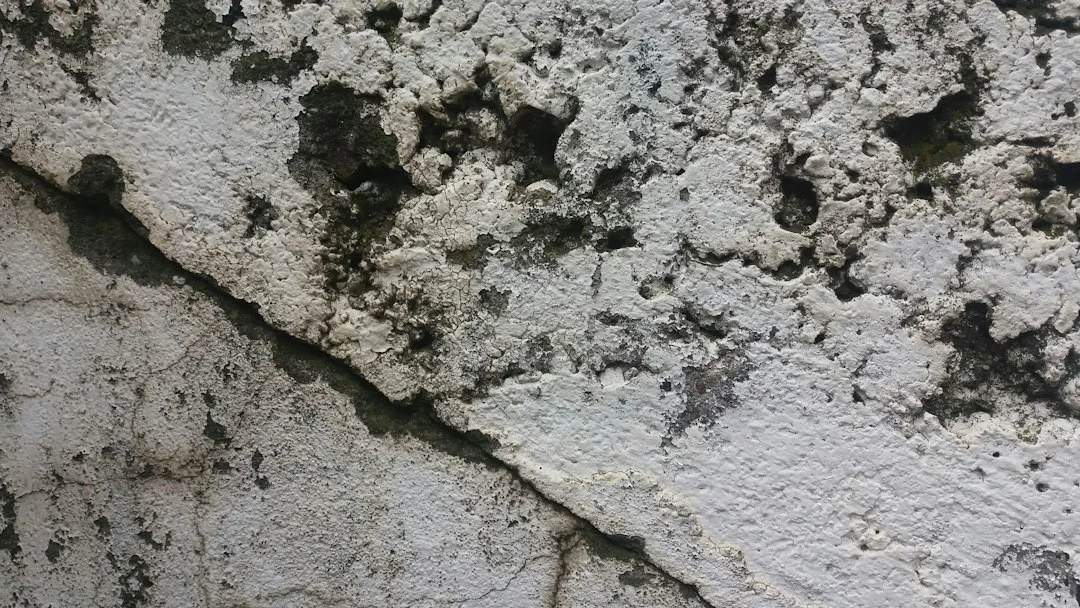
Substrate preparation is the invisible killer. Contractors frequently skip this step or assume “the wall is clean enough.” Field analysis of detached sections shows substrate surfaces with paint, dust, or algae film that prevented adhesive from contacting masonry or foam at molecular level. The bond formed only against the contamination layer, which itself had no adhesion. Pressure-washing with a 2,000 PSI nozzle and allowing 48 hours dry time is essential before adhesive application.
Water Intrusion After Detachment: The Hidden Cost
A detached cornice creates a moisture trap. Rainwater penetrates behind the foam into wall cavities, where it promotes mold growth, degrades insulation, and accelerates thermal bridge formation. By month 30, interior walls show moisture readings exceeding 18% (wood ignites at 25% in fire), and structural framing damage becomes visible.
Repair cost per linear foot of detached EPS cornices runs $40–80 in labor alone (removal, substrate prep, reinstallation), plus material cost of $15–25 per linear foot for new foam and adhesive. A 120-foot cornice failure costs $4,800–9,600 to correct—10–20 times the adhesive cost premium that would have prevented the failure.
Checking Existing Installations for Adhesive Compatibility
If cornices are already installed, tap test them weekly during the first 12 months. A hollow sound indicates voiding or separation; a solid thud indicates full contact. Any movement or cracking warrants immediate inspection of the adhesive bond line by carefully lifting one corner with a flat pry bar. Resistance should feel firm; movement of more than 1/16 inch signals adhesive failure.
Documentation matters for warranty claims. Photograph the original installation including adhesive application. If detachment occurs, document the bond line failure, water staining, and substrate condition. Contractor liability is clearest when polyurethane adhesive was specified but mortar or latex was substituted—a breach of material specification that is indefensible.
Epoxy Two-Part Systems: Overkill or Necessity?
Two-part epoxy adhesives deliver 1.5+ MPa shear strength and near-zero water absorption, but they cost $22–35 per 300ml and require precise mixing and rapid application within a 10–15 minute working window. Cure time is 7 days before any load, versus 24–48 hours for polyurethane. For cornices, epoxy is overspecified unless the installation includes continuous wetting (e.g., fountain edge, constant drainage) or extreme vibration (e.g., near heavy machinery). Polyurethane is the practical choice that balances cost, workability, and durability.
Silicone-modified polyether (SMP) adhesives represent a middle ground: they offer 0.7–0.95 MPa shear, cure in 24 hours, and have low water absorption (<1.5%). Cost is $14–19 per 300ml. However, they cure more slowly than polyurethane and are less commonly stocked, making them a specialty choice for high-performance projects where faster cure times are not required.
Specification Language to Prevent Adhesive Substitution
Contract language must name the adhesive product, not just “foam-grade adhesive” or “appropriate bonding agent.” Specify “Sikaflex 295 UV, Rampf Ortholit, or equivalent polyurethane foam adhesive with minimum 0.8 MPa shear strength and maximum 2% water absorption, with installation per ASTM C1583 (pull-off adhesion testing).” This removes discretion and makes substitution a contractual breach.
Third-party testing is the ultimate safeguard. Independent pull-off adhesion testing (ASTM C1583) costs $200–400 per test and provides laboratory verification that bond strength exceeds specification. Testing at 1, 6, and 12 months confirms durability and creates liability documentation if failure occurs later. Contractors and homeowners investing in premium adhesives should insist on testing to prove their investment is warranted.
The 24-month cornice detachment pattern is completely preventable through adhesive selection. Polyurethane foam adhesive, proper substrate preparation, mechanical fastening on long spans, and clear contractual specification eliminate the failure rate from 80% to under 5%. The cost premium is $300–500 per job—easily recovered in a single avoided callback or warranty claim.