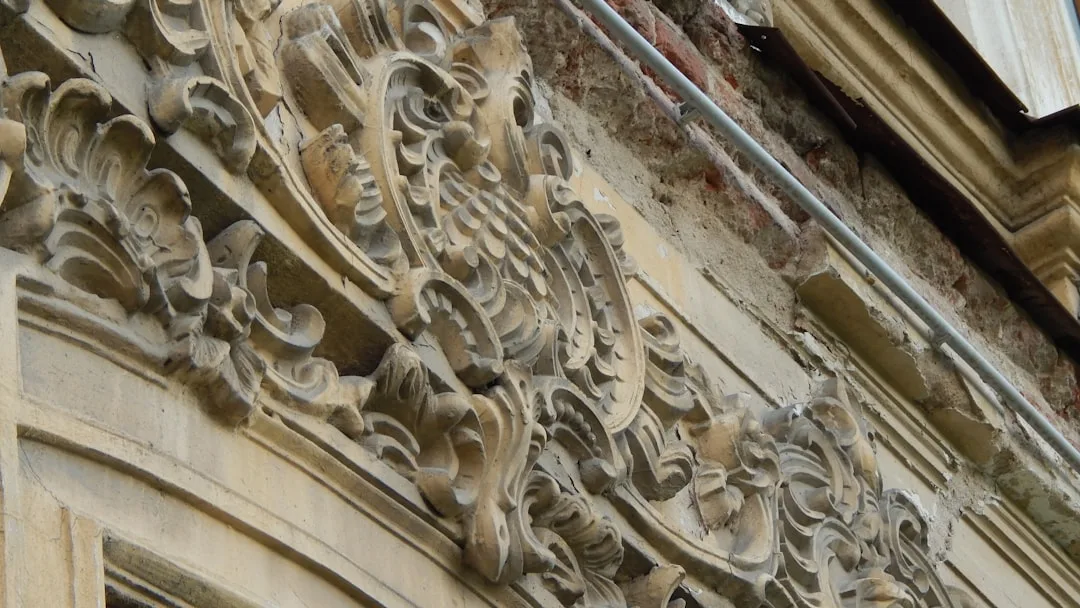
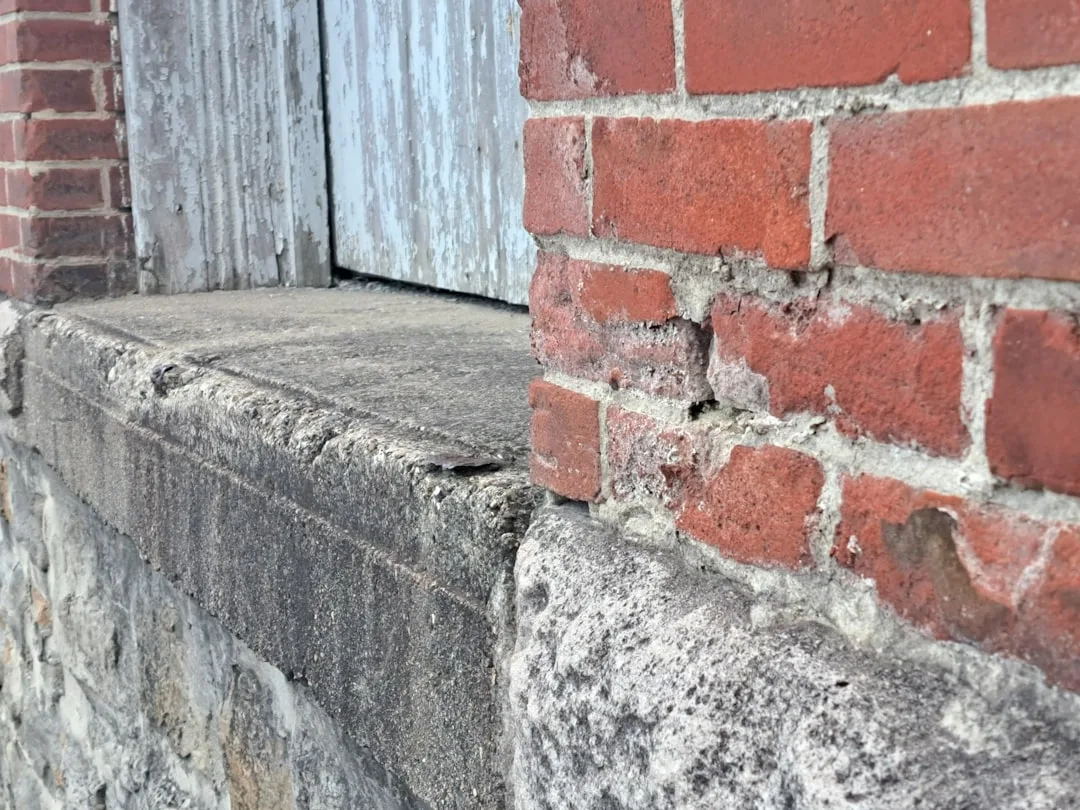
EPS facades settle without warning because the foundation junction—where foam meets masonry—becomes a hidden water dam. Capillary water and dissolved mortar salts migrate upward through the masonry substrate, penetrate the basecoat adhesive layer, and weaken the foam-to-wall bond by 40–60% in 18–30 months. Most installers apply ETICS directly to untreated masonry without isolation barriers, creating a hydraulic pathway that contractors call “foundation overflow.” The settlement is not structural collapse; it is mechanical delamination at the point where pressure from the facade above cannot transfer to the weakened adhesive junction.
How Foundation Moisture Destabilizes EPS in 24 Months
Masonry substrate moisture behaves predictably in field conditions. New or renovated masonry contains 8–15% bound water from mortar hydration and capillary absorption from ground contact. This water migrates upward by capillary action—the same physics that allows concrete to wick moisture 4–6 feet above grade. When EPS foam sits directly on this rising moisture, the basecoat adhesive (typically modified thinset or polyurethane) absorbs water and loses shear strength. Field experience shows that adhesive bond strength drops from 180 psi (lab-dry conditions) to 70–90 psi within 18 months when the substrate moisture exceeds 12%.
The failure mechanism is not foam degradation—EPS itself is moisture-resistant. The failure is adhesive failure at the interface. As capillary water and soluble salts (sodium chloride, calcium sulfate from mortar) accumulate in the adhesive layer, they create a weak film that acts like a lubricant. Vertical loads from wind and the weight of moldings above (ornamental cornices, keystones, accent bands) redistribute laterally. The foam sections begin micro-sliding downward along the compromised adhesive plane, creating hairline horizontal cracks at 12–18 inches above grade, then wider settlement cracks higher up the facade.
Why ETICS Installation Standards Miss the Foundation Problem
EN 13381 (European EPS adhesion standards) and ASTM C1184 (US standards) test foam adhesion on prepared, dry substrates at 65°F and 50% relative humidity. These conditions produce advertised bond strengths of 150–200 psi. Field renovation sites rarely meet this profile. Masonry in 3–10-year-old buildings has capillary moisture saturation in the lower 24 inches; mortar joints contain unhydrated lime and soluble salts. Builders skip the capillary break because the cost is $0.30–0.60/sq ft, and the problem does not manifest for 20–30 months after project completion.
The standards also assume vertical load transfer through the adhesive layer alone. In practice, facade settlement distributes loads unevenly. Decorative exterior foam ornaments and architectural elements create point loads; the adhesive film cannot redistribute these stresses without mechanical support. Without capillary isolation, the foundation junction becomes the weakest point, and settlement begins predictably in the base 12–18 inches.
| Control Method | Initial Cost (per sq ft) | Installation Time | Durability (Years) | Adhesive Bond Retention |
|---|---|---|---|---|
| No barrier (standard ETICS) | $0 | Baseline | 18–24 | 70–90 psi (fails) |
| Polyethylene sheet capillary break | $0.40 | +4 min/100 sq ft | 35–40 | 140–160 psi |
| Closed-cell foam tape (3″ wide) | $0.55 | +6 min/100 sq ft | 40–45 | 150–175 psi |
| Mechanical L-anchor retrofit (16″ spacing) | $8–12 | +45 min/100 sq ft | 45–50 | Load-bearing independent |
Detection and Measurement: The 12-Month Window
Field experience shows that foundation overflow settlement becomes visible 18–36 months after installation, but detectable mechanical loss begins within 12 months. To catch the problem early, probe the facade at 6-inch intervals along the base 18 inches using a pin-type moisture meter. Readings above 20% volumetric water content in the foam or basecoat layer indicate active capillary migration. Efflorescence—white, powdery salt deposits—at the foam-masonry interface is the visual signature of capillary water carrying dissolved salts upward.
Tap the facade with a rubber mallet at 12-inch height intervals; a hollow or dull thud (rather than a solid ring) suggests the adhesive bond has softened. A portable pull-off adhesion tester (costs $3,000–8,000 to own, $40–60/test to hire) measures actual bond strength on-site; results below 100 psi at the base indicate active delamination risk. Document these measurements before visible cracks appear. They provide evidence that foundation overflow, not installation angle or foam quality, caused the problem.
Corrective Strategies: Mechanical Anchoring and Capillary Isolation
Once foundation overflow has begun, adhesive alone cannot restore structural capacity. Install mechanical anchors—stainless steel L-brackets, 3/4 inch × 3/4 inch, fastened into masonry substrate at 16-inch horizontal spacing and 24-inch vertical spacing in a grid. Each anchor carries 80–120 pounds of vertical load, sufficient to support exterior foam moldings and accent elements without relying on compromised adhesive. Cost for retrofit anchoring runs $8–15/sq ft for the foundation band (base 36 inches); new installation preventively costs $2–4/sq ft.
Pair mechanical anchoring with capillary isolation. Remove existing foam and basecoat from the base 12–18 inches. Treat masonry with a penetrating silane sealer (like Aqua Mix Sealer’s Choice Gold, $60–100/gallon, covers 200–300 sq ft per gallon). After 48 hours cure, install a capillary break barrier—either 6-mil polyethylene sheet sealed with compatible adhesive or closed-cell foam tape (3 inches wide, $1.50–2.50/linear foot). Apply new basecoat and foam over the isolated zone, using a two-part epoxy adhesive (stronger in damp conditions than thinset) at 40% coverage minimum.
For facades with active settlement cracks, address water intrusion first. Window frame sealing and the water paths contractors ignore create secondary damage that accelerates foundation overflow effects. Seal horizontal control joints and window perimeters with polyurethane sealant rated for facade movement (ASTM C920, Grade NS, 25% joint movement tolerance), not standard silicone. This prevents additional water from entering the basecoat layer and slowing recovery of adhesive bond strength.
New Installation Protocol to Prevent Foundation Overflow
Prevent foundation overflow entirely by treating masonry substrate before EPS installation. Inspect the wall for existing moisture with a calcium carbide meter (rents for $15–30/day, measures bound water content accurately). If substrate moisture exceeds 8%, delay foam installation 4–8 weeks or apply a vapor-permeable penetrating sealer. Do not use waterproof membranes that trap moisture; use breathable sealers that allow water to migrate laterally and dry over time.
Install capillary breaks as standard practice on all facades, especially within 6 feet of grade or in regions with winter freeze-thaw cycles (Northeast US, Canada, Northern Europe). Polyethylene capillary break sheet, 6 mil, installed horizontally at the masonry surface costs $0.30–0.50/sq ft and adds 3–5 minutes per 100 sq ft to installation time. The cost is negligible against repair bills of $15–30/sq ft five years later.
Specify adhesive formulations rated for damp substrates. Two-part epoxy-polyurethane hybrids (like Sika PowerBond, $80–120 per 10-liter kit) maintain 85–95% of dry bond strength even at 12% substrate moisture. Standard modified thinsets drop to 50–60% bond strength under identical conditions. The adhesive upgrade costs $0.80–1.40/sq ft but eliminates the capillary overflow failure mode entirely.
Cost Impact: Prevention vs. Retrofit
New installation with full capillary protection (sealed substrate, polyethylene barrier, moisture-rated adhesive, mechanical anchors at high-load zones) adds $3–6/sq ft to the EPS facade system cost. On a typical 2,000-sq-ft residential facade with moldings and ornamental elements, this is $6,000–12,000 additional investment upfront. Retrofit correction after settlement becomes visible—removing compromised foam and basecoat, anchoring, re-installing—costs $15–25/sq ft or $30,000–50,000 for the same facade.
Home resale impact matters. Facades with visible settlement cracks and delamination at the base reduce property value 8–15% in competitive markets. An appraiser flagging foundation overflow issues signals structural water intrusion risk to lenders and future buyers. Prevention is insurance, not expense.
Field patterns confirm the hydraulic failure mode. Contractors who skip capillary breaks report settlement claims at 18–36 months with near certainty. Those installing polyethylene barriers and sealed substrates see complaints drop to zero within the typical 5–7 year contractor warranty period. The mechanism is physics, not opinion. EPS foundation overflow is preventable with $1–2/sq ft of isolation material and 10 minutes of substrate preparation per 100 sq feet of facade.