Why an Existing ETICS Facade Is Not an Obstacle
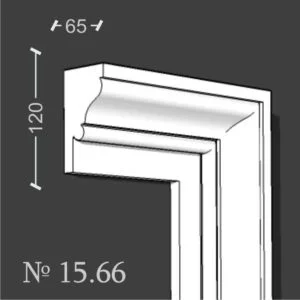
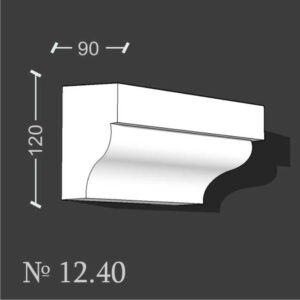
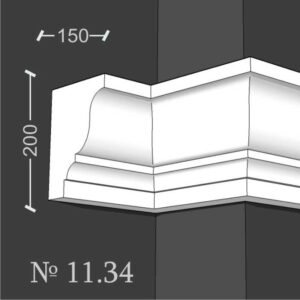
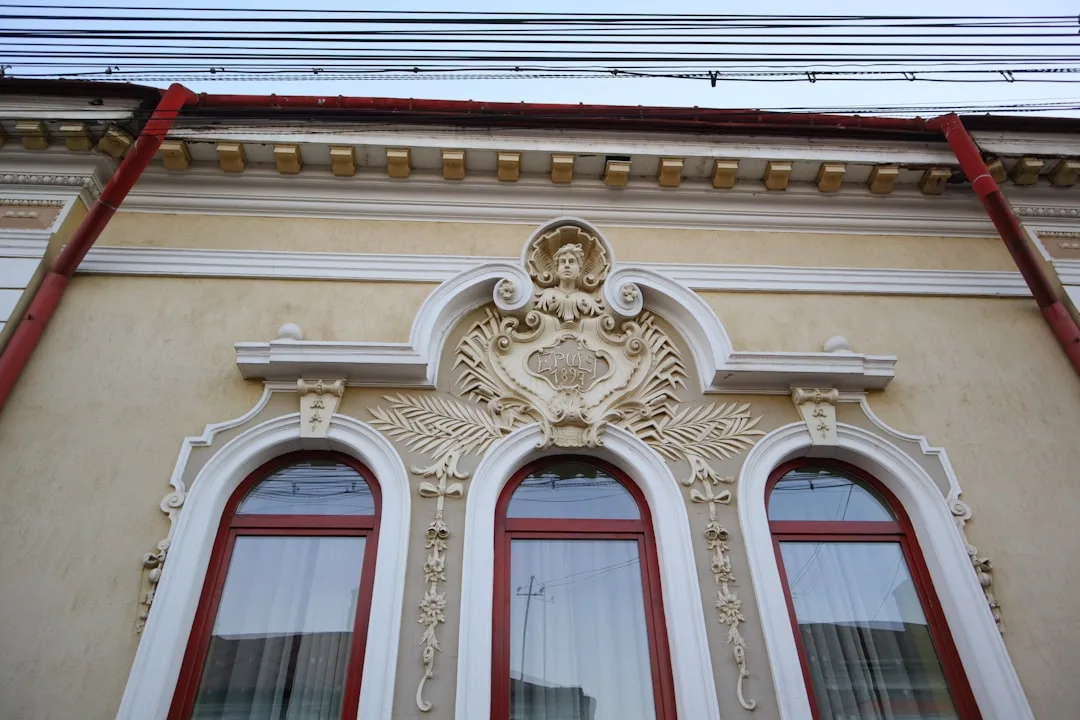
Many homeowners assume that adding decorative elements to a finished ETICS facade means reopening the render system — that assumption is wrong and expensive. EPS polystyrene moldings are lightweight, chemically compatible with most render finishes, and designed specifically for bonded application over existing substrates. A 2-meter cornice profile in EPS weighs roughly 0.4 to 0.8 kg, compared to 8 to 14 kg for the equivalent in cement or plaster.
The ETICS render coat — typically 3 to 6 mm of silicone, acrylic, or mineral finish — provides a stable bonding surface if it is structurally sound. Check for hollow spots by tapping along the surface; a dull sound indicates delamination requiring local repair before any molding goes on. If the render is solid and less than 15 years old, you can proceed directly.
Surface Preparation Is the Step Most Installers Skip
Clean the application zone thoroughly with a degreasing solution — isopropanol works well — to remove dust, efflorescence, and any silicone residue from previous caulking. Lightly sand glossy acrylic renders with 80-grit paper to improve mechanical key; silicone renders generally do not need sanding. Mark your layout lines with a chalk line before opening any adhesive.
For exterior foam moldings, the contact surface on the back of the profile should be primed with a thin coat of the same polyurethane adhesive, allowed to tack for 90 seconds, then pressed firmly against the primed wall zone. This double-contact method increases bond strength by approximately 40% compared to single-surface application.
Choosing the Right Adhesive for a Bonded-Only System
Polyurethane foam adhesives — Soudal Fix All Flexi, Ceresit CT84, or Penosil Premium — are the industry standard for EPS-to-render bonding. Apply in a continuous perimeter bead plus two diagonal lines across the back face; this pattern prevents air pockets and ensures even load distribution. Working time is 5 to 10 minutes depending on temperature, so prepare each piece individually.
Avoid epoxy adhesives: they cure rigid and create stress concentrations at the bond line during thermal cycling. EPS expands and contracts with temperature changes — up to 1.5 mm per meter over a 40°C range — so the adhesive layer must remain flexible throughout its service life. Silicone-based adhesives are too weak for anything beyond thin decorative bands.
When Mechanical Anchoring Becomes Mandatory
Any molding element taller than 15 cm, heavier than 1.2 kg per linear meter, or subject to wind uplift at corners and overhangs must be mechanically fixed in addition to adhesive bonding. Use 8 mm stainless steel helical anchors driven through the EPS molding and through the render into the insulation board below — minimum 50 mm embedment into the EPS insulation layer. Countersink the anchor heads 10 mm, fill with EPS-compatible filler, and sand flush before painting.
For decorative window sills installed on an ETICS facade, the sill profile sits proud of the wall face and catches significant wind load and water impact. Fix with two anchors per 600 mm of sill length, seal the top joint with low-modulus silicone, and slope the sill surface minimum 5° outward to shed water away from the wall junction.
Technique Comparison — Installation Methods on ETICS Facades
| Method | Best For | Approximate Cost per m | Risk Level |
|---|---|---|---|
| Adhesive only (PU foam) | Profiles under 10 cm, flat bands, thin cornices | €2–€5 material | Low if prep is correct |
| Adhesive + mechanical anchors | Wide cornices, sills, door surrounds | €6–€12 material | Very low |
| Mechanical anchors only | Heavy ornaments over 2 kg/m | €8–€15 material | Medium — render cracking risk |
| Re-render and embed | Full renovation or damaged render zones | €35–€80 labor + material | Low but unnecessary in most cases |
Finishing Without Repainting the Entire Facade
The joint between the new EPS molding and the existing render is the most visible potential failure point. Apply a 6 mm bead of flexible exterior acrylic sealant — Sika Sikaflex 11FC or equivalent — tooled smooth and allowed to cure 24 hours before painting. Do not use cement-based patching compound here; it will crack at the first freeze-thaw cycle.
Prime the EPS molding surface with a penetrating facade primer — Caparol Tiefgrund or Knauf Primer — before applying topcoats. Two coats of silicone-resin facade paint in the existing wall color will produce a finish that is visually indistinguishable from the original render surface. If the original render is textured, apply the final coat with a short-nap roller to approximate the texture without fully replicating it.
Realistic Cost Expectations for a Typical House
A standard detached house with 4 windows, 1 entrance door, and a facade perimeter of 30 meters can be decorated with EPS moldings — window surrounds, a continuous cornice line, and quoin corners — for a material cost between €400 and €900 depending on profile complexity. Installation time for an experienced two-person team is one to two days. Hiring a contractor adds €600 to €1,200 in labor, still far below the €4,000 to €8,000 cost of a full render system replacement. The visual transformation is immediate and permanent with a correctly bonded EPS system lasting 25 to 30 years on a well-maintained ETICS facade.