
Why a Blank Facade Wall Is an Unfinished Facade Wall
A flat, unbroken render surface is not a neutral design choice — it signals that vertical articulation was skipped. Pilasters serve a structural-visual role: they divide a facade into bays, anchor the eye at transitions, and give proportional logic to window and door placement. Without them, even a freshly coated ETICS wall reads as incomplete to anyone trained to look.
This is not purely aesthetic. In classical and neoclassical architecture, pilasters indicate where load is conceptually transferred — they encode a grammar that viewers recognize subconsciously. Removing that grammar produces facades that feel vaguely wrong without observers being able to articulate why. The result is a renovation that appraisers, architects, and buyers instinctively discount.
What EPS Pilasters Actually Do on a Modern Renovation
On contemporary exterior insulation systems (ETICS or EIFS), exterior pilasters in EPS polystyrene serve three practical functions simultaneously. First, they create vertical shadow lines that break up large wall planes and prevent render monotony. Second, they frame facade bays, giving window groupings a structured context. Third, on corners and entrances, they signal hierarchy — telling the eye where the building begins, ends, and where its important elements are.
EPS is the correct material for this application for measurable reasons: density grades between 15 and 25 kg/m³ handle outdoor thermal cycling without delaminating, the material is lightweight enough to bond with standard polymer adhesive mortar (no structural anchoring required under 800mm height), and it accepts the same mesh-reinforced render coat as the surrounding ETICS wall. A pilaster profile in EPS costs roughly $8–$18 USD per linear metre depending on cross-section complexity — compared to $60–$120 per metre for GRC (glass-reinforced concrete) equivalents.
Reading a Renovation by Its Pilaster Decisions
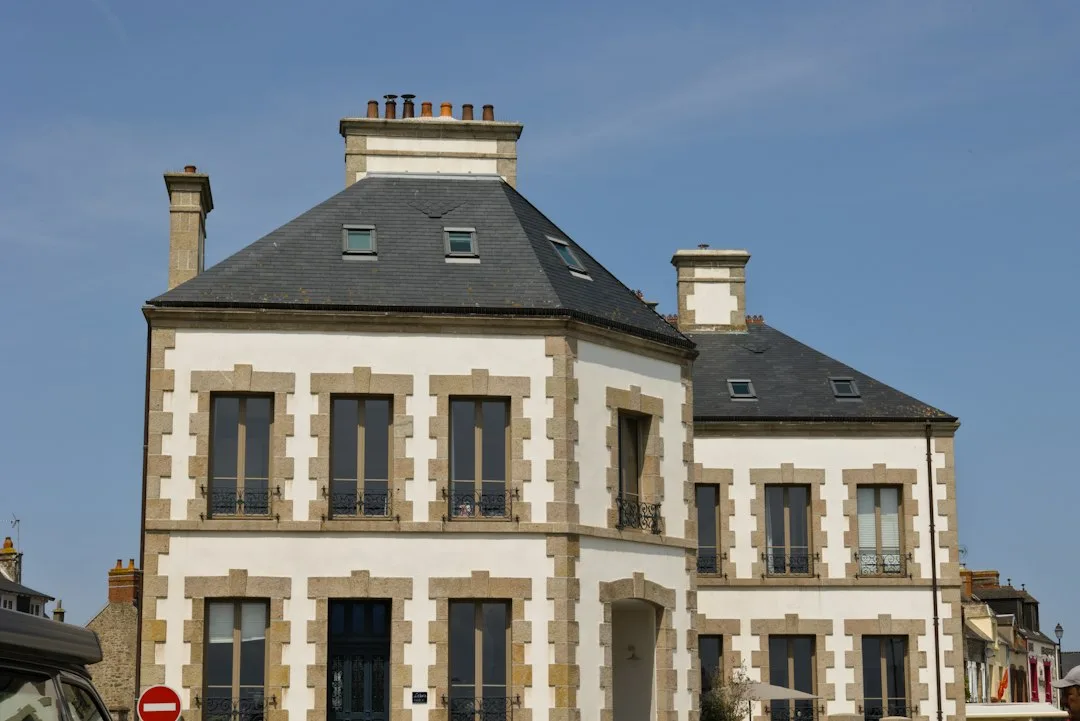
When you inspect a renovated facade, check four pilaster positions: building corners, primary entrance flanks, transitions between render zones, and window axis alignments. A contractor who addressed all four understood facade composition. A renovation that missed two or more of these positions cut the decorative budget after insulation costs ran over — a common pattern that leaves the thermal performance intact but the architectural result incomplete.
Corner pilasters are the easiest tell. A bare ETICS corner with only a corner bead and render finish is the default minimum — functional but architecturally null. Adding EPS quoin corners or a full pilaster at the corner angle takes the same afternoon to install and costs $12–$25 per metre, yet it permanently changes how the building reads from the street. This is the intervention with the highest visual return per dollar on any renovation.
Installation: How to Get It Right on an ETICS System
Pilasters must be integrated into the render system, not applied over it as an afterthought. The correct sequence is: apply EPS insulation boards to substrate, install pilaster EPS profiles before the base coat, embed the standard 160g/m² fiberglass mesh continuously across both the pilaster face and the surrounding wall, then apply finish render uniformly. This creates one monolithic reinforced shell with no weak adhesion joint at the pilaster perimeter.
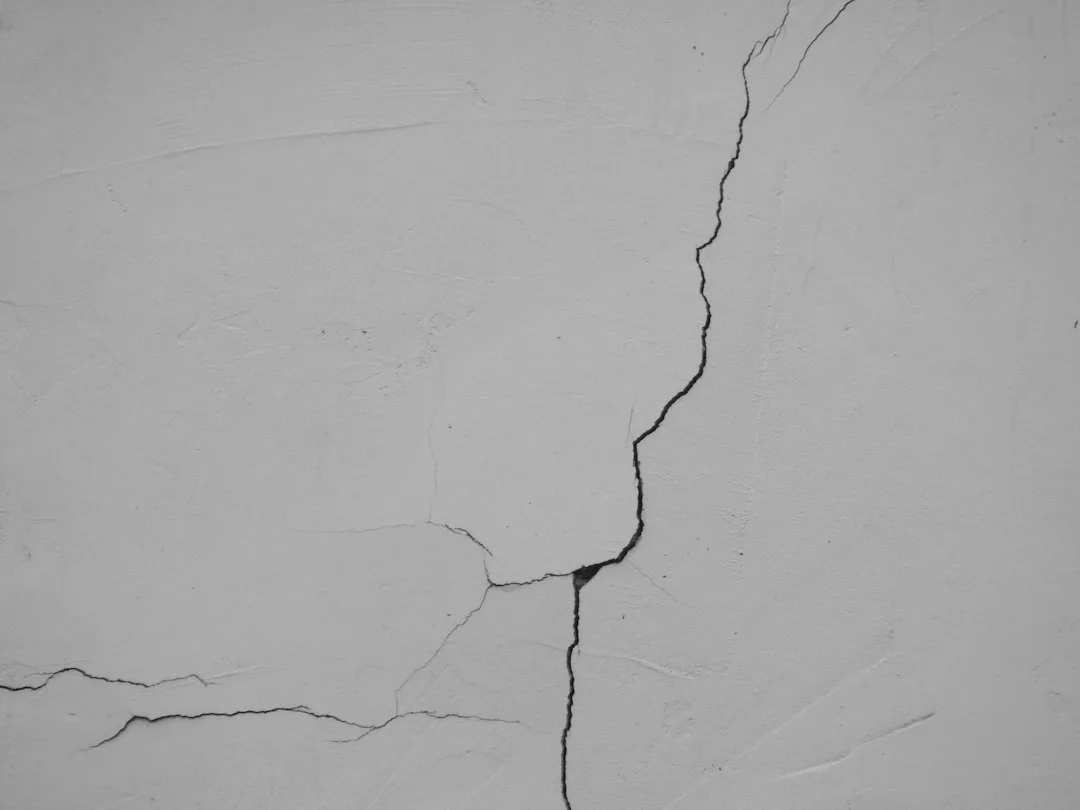
The failure mode to avoid is bonding pre-finished pilasters onto cured render. This creates a mechanical bond only, with no mesh continuity, and produces visible crack lines within one to two freeze-thaw cycles. Adhesive mortar brands like Ceresit CT 85 or Knauf Insulation FKD maintain sufficient tack on smooth render surfaces but cannot substitute for mesh integration in freeze-prone climates. If the facade is already finished, mechanical fixings — 8mm stainless expansion anchors at 400mm centres — are mandatory before adhesive application.
Proportioning Pilasters Correctly
Pilaster width should be 1/8 to 1/6 of the bay width it flanks — on a 3.6m bay, a 450–600mm wide pilaster is proportionally correct. Projection depth should be a minimum of 1/5 of the pilaster width; below this ratio, the element reads as a flat band rather than a volumetric form. Height should run full storey, from plinth level to cornice or eave line, without interruption.
Tapering the pilaster shaft slightly — 5–8mm narrower at the top than at the base — is a classical refinement that reads as more resolved at street level. Most EPS suppliers cut pilasters to uniform width, so this entails ordering tapered profiles or scribing the foam on site with a hot wire tool before render application. It adds roughly 30 minutes per pilaster and zero material cost; contractors who include it demonstrate genuine craft attention.
Cost Summary and What to Budget
For a standard two-storey detached house with eight facade pilasters (four bays, flanked), budget $350–$600 USD in EPS profile material, $80–$120 in adhesive and mesh, and 12–16 hours of skilled labour for installation and rendering. Total installed cost: $700–$1,100 depending on region and profile complexity. That figure represents less than 3% of a typical ETICS renovation budget and is the single line item with the greatest impact on final facade quality assessment.
| Pilaster Material | Cost per Linear Metre | Weight (kg/m) | Render Compatible |
|---|---|---|---|
| EPS Polystyrene (20 kg/m³) | $8–$18 | 0.4–0.9 | Yes — mesh integrated |
| GRC (Glass-Reinforced Concrete) | $60–$120 | 8–14 | Partial — bonded surface only |
| Polyurethane Foam (coated) | $22–$45 | 1.2–2.0 | Yes — with primer coat |
| Cast Stone (reconstituted) | $90–$180 | 20–35 | No — requires lintel support |
| Timber (painted) | $30–$65 | 3–6 | No — incompatible with ETICS |