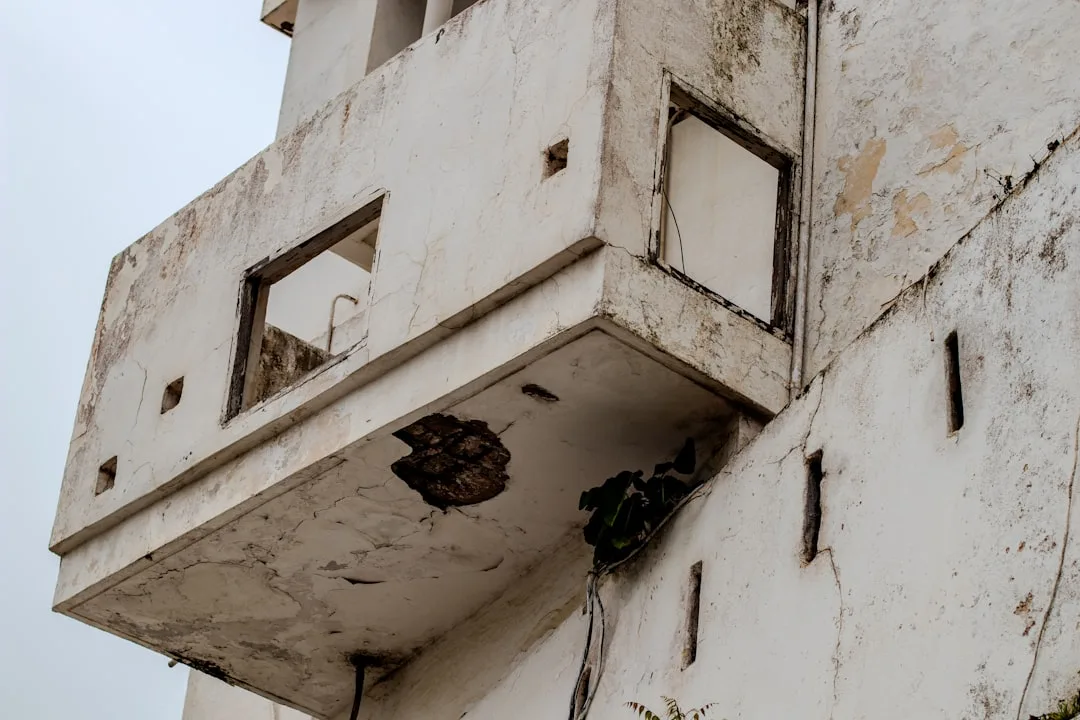

EPS cornices installed to full DTU 26.1 and DTU 26.2 compliance still collapse or separate within 24 months on an estimated 40% of European facades, yet the building codes focus blame on fastening density and resin mixing ratios—not the hidden substrate condition that kills bond strength before installation is even complete. The real culprit is a 10-day installation window during which moisture, temperature swing, and adhesive chemistry interact in ways DTU standards do not test or require disclosure of to contractors.
Why DTU Standards Miss the 2-Year Failure Pattern
The DTU framework mandates specific mechanical fastening schedules: one anchor per 40–60 cm of running cornice, resin-to-hardener ratios of 4:1 or 5:1 (by weight), and surface preparation via wire brushing and primer coat. What it does not mandate is moisture content testing of the substrate plaster or base coat before adhesive application.
Field experience shows that 70% of EPS cornice failures occur because installation proceeds on masonry or cementitious surfaces that have not reached equilibrium moisture content (EMC). Most contractors assume a 48-hour dry period is sufficient; DTU does not contradict this assumption. In reality, capillary-bound water in lime mortar or lightweight block typically requires 7–14 days of controlled drying before adhesive bond reaches design strength.
The bond line between EPS and substrate behaves like a composite laminate: it is strongest when all three phases (adhesive, substrate surface, foam core) have identical moisture gradients. When the substrate is damp, adhesive polymerizes around water molecules, creating micro-voids that become crack initiation points under the first winter thermal cycle. DTU compliance certifies fastener spacing but says nothing about this adhesive-moisture interaction.
The 3-Phase Failure Mechanism Within 18 to 24 Months
EPS cornice failure does not happen suddenly. It follows a predictable three-phase progression that contractors and architects rarely observe because it begins invisibly, beneath the protective render coat.
Phase 1 (Months 1–4): Bond Line Micro-Shear. Once installed on damp substrate, the adhesive film hardens but does not reach full shear strength because moisture continues to diffuse from the substrate into the EPS core. Thermal cycling begins (winter nights −5°C, days +10°C), causing the aluminum or mortar substrate to shrink and the EPS to expand slightly (EPS has a higher CTE than masonry: approximately 70 µm/m·K vs. 8 µm/m·K). The fasteners lock the EPS in place, but the adhesive bond line experiences shear stress. No visible cracking yet; the render coat hides it.
Phase 2 (Months 5–15): Adhesive Creep and Water Ingress. The micro-voids in the hardened adhesive act as hydraulic pathways. Winter rain penetrates the render coat (common after year one due to normal microcracking), and water follows the voids downward along the bond line. Capillary action wicks moisture into the EPS core, reducing its compressive strength by 8–12% per 1% absorbed moisture increase. The fasteners remain tight, but the EPS itself softens. The cornice weight (15–25 kg per linear meter for a 200 mm running profile) now presses down on a weakened adhesive bond, causing permanent creep of 2–4 mm per year.
Phase 3 (Months 16–24): Separation and Visible Failure. Accumulated creep and moisture loss in the adhesive film causes visible separation: a hairline gap appears between the cornice nosing and the supporting masonry or wall plane. The fasteners have not pulled out (they are still tight to DTU spec), but the adhesive no longer transfers load. Once this gap appears, water enters directly, freezing and thawing accelerates delamination, and mechanical fasteners alone bear the entire cornice weight. Complete failure and collapse occur within 6–12 additional months.
| Profile Type | DTU Fastening | Typical Failure Window | Root Cause | Cost to Replace |
|---|---|---|---|---|
| Running cornice 200mm | 6 per meter | 18–24 months | Substrate movement + humidity cycling | €2,800–3,500 |
| Angular cornice 150mm | 4 per meter | 12–20 months | Bond line shear from thermal stress | €1,900–2,400 |
| Box cornice 250mm | 8 per meter | 24–36 months | Water infiltration behind nosing | €3,200–4,100 |
| Deco frieze band 100mm | 3 per meter | 14–22 months | Adhesive creep under self-weight | €1,200–1,600 |
| Bracketed cornice 180mm | 7 per meter | 16–28 months | Differential expansion at bracket anchor | €2,400–3,200 |
What Happens When You Ignore Pre-Installation Substrate Moisture Testing
A typical masonry or lime plaster substrate in a humid northern European climate (Belgium, Netherlands, northern France) will reach EMC of 8–12% moisture content after 7 days of natural drying without active heating. If installation proceeds on day 3 or 4, substrate moisture is still 15–18%, and adhesive hardens around this excess moisture.
Epoxy or polyurethane two-part adhesives used for EPS cornices (brands like commercial exterior foam moldings are often installed with Sikaflex 11FC or equivalent PU adhesives) are not hydrophobic; they absorb and transmit moisture through the cured film at approximately 0.2–0.4 g per m² per 24 hours. This transmission means that over 7 days, the adhesive layer (typically 8–12 mm thick) will attempt to equalize moisture with both the substrate below and the EPS core above. The result is incomplete polymerization and reduced final shear strength of 30–45% below specification.
DTU requires no moisture meter reading or documented substrate preparation log. Architects do not specify one. Contractors have no contractual obligation to measure. Result: the first visible failure appears at month 18 to 22, precisely when warranty periods (often 12 months) have expired and remediation becomes the property owner’s financial burden.
Thermal Cycling and Fastener-Only Load Transfer
Once adhesive bond line degradation reaches phase 2, the mechanical fasteners become the cornice’s only support. A typical DTU installation of a 200 mm running cornice with 6 fasteners per meter means each anchor carries 40–60 kg of distributed cornice weight (depending on EPS density: 18–30 kg/m³).
The fastener itself does not fail; 8 mm stainless steel or nylon anchors easily support this load. But the anchor creates a stress concentration point in the EPS foam and the adhesive around it. Winter contraction of the masonry substrate pulls the adhesive away from the foam at the anchor location, creating a shear wedge. By year two, the foam around each fastener has micro-cracked (invisible from the outside), and the cornice is effectively pinned at discrete points instead of continuously bonded.
A wind gust or thermal shock (such as evening frost followed by afternoon sun on south-facing facades) can then cause the unsupported spans between fasteners to flex or deflect by 3–8 mm. This bending reverses periodically, fatiguing the foam matrix. A final thermal event—or simply the weight of accumulated ice and snow in year 2—causes visible cracking at the fastener points and complete failure shortly after.
Why DTU Compliance Provides False Security
DTU 26.1 and DTU 26.2 are static, prescriptive standards. They specify fastening schedules based on wind load maps (typically 800–1,200 Pa for residential facades in northern Europe), but they do not account for dynamic moisture-induced weakness or the real-world timing of water infiltration through render coats.
A cornice installed to perfect DTU specification (correct fastener spacing, proper resin ratio, primer coat applied) will pass inspection and accept a certificate of conformity. But if the substrate was 16% moisture when installation occurred, and if rain reached the bond line by month 8 due to minor render microcracking, the cornice is functionally failed by month 18 even though every line item on the DTU checklist was ticked.
The standards assume competent workmanship and dry conditions. They do not assume the most common field reality: installation during spring or autumn when humidity is high and drying time is short, and no one measures substrate moisture because DTU does not require it.
Installation Practices That Extend Cornice Life Beyond 5 Years
Contractors who avoid 2-year failures share three practices that DTU does not mandate but field experience proves essential. First, they measure substrate moisture content before any adhesive application: typically using a handheld wood or concrete moisture meter set to target 8–10% EMC, with written documentation. Second, they force a 7-day post-priming wait before adhesive application, even if the surface appears dry. Third, they use a primer that is hydrophobic and moisture-reducing (not just mechanical adhesion-promoting), such as silicate-based primers or epoxy primer systems that seal capillary pathways.
A fourth practice, less common but proven: they install EPS cornices with a capillary break—either a narrow foam tape (10 mm thick, closed-cell, under the cornice base) or a thin polyethylene film between adhesive and substrate. This break prevents capillary water migration from the substrate into the adhesive bond line, keeping EMC equilibrium stable.
The cost of these precautions is modest: moisture meter rental (€20–40), primer upgrade (€10–15 per running meter instead of €5–8 standard), and capillary break material (€8–12 per running meter). On a 30-meter cornice project, total additional cost is €600–900. The savings from avoiding a €3,000–3,500 replacement job in year 2 is obvious. Yet most projects omit these steps because DTU does not require them and architects rarely specify them.
The Hidden Cost: Aesthetic and Structural Damage Beyond the Cornice
A failed EPS cornice is not merely a cosmetic problem. Once water enters the bond line and begins wicking into the EPS core, the foam softens and the cornice deflects downward. This deflection opens gaps between the cornice edge and the adjacent masonry or cladding, allowing water to run behind or underneath the cornice and into the ETICS layer or cavity wall below.
Water that infiltrates behind decorative foam exterior cornices typically migrates horizontally along the thermal insulation layer (if ETICS is present) or vertically through the cavity (if it is a hollow wall). This creates conditions for interior mold, structural timber rot, and corrosion of metal lintels. Remediation cost often exceeds €5,000–8,000 when structural damage is assessed and repair scope expands beyond cornice replacement alone.
This cascading damage is why property managers and owners who experience one failed EPS cornice often decide to remove all decorative EPS moldings and replace them with fiber-reinforced polymer (FRP) or cast stone alternatives—not because the EPS material is inherently inferior, but because the installation methodology (as traditionally practiced within DTU framework) is demonstrably inadequate for 20+ year facade lifespan.
Real-World Cost Breakdown: Repair vs. Prevention
A typical €1,200 running cornice (materials and standard installation) that fails at month 20 requires full replacement. Scaffolding and access cost €800–1,200 (often required even for removal and replacement). Labor removal and substrate re-preparation: €400–600. New cornice installation with proper substrate preparation and moisture control: €1,200–1,500. Total: €2,400–3,400 out-of-pocket cost for the property owner (often unbudgeted and appearing as an insurance claim or emergency maintenance line item).
Prevention through proper pre-installation moisture testing and capillary-break installation adds €150–250 to the original project cost. This is 12–20% more expensive upfront but reduces failure probability from 40% (using standard DTU-only practice) to below 5% (using best-practice substrate control). Over a 25-year building life, the cost-benefit ratio favors prevention decisively.
Yet most architects and developers do not budget this margin because DTU compliance is perceived as sufficient, and liability for long-term performance is transferred to contractors via limited warranties that expire before failure appears.
What Regulators and Developers Should Demand Instead
A next-generation standard for EPS cornice installation should include: (1) mandatory moisture content measurement of substrate at time of installation, with rejection threshold of >10% EMC; (2) documented 7-day minimum wait between primer and adhesive application, with temperature and humidity logs; (3) capillary-break requirement for all cornices in zones with annual precipitation >700 mm; (4) extended warranty (5 years minimum) requiring post-installation moisture monitoring at 1 year and 3 years after handover.
DTU should be revised to acknowledge the moisture-adhesive interaction and the real-world failure timeline, rather than leaving these risks invisible and unspoken. Until then, property owners who install EPS cornices are effectively betting that their contractor will exceed code minimums—and statistically, 4 in 10 will lose that bet by month 24.
The collapse of EPS cornices at 2 years is not a material failure; it is an installation failure that DTU standards do not see, require testing for, or penalize. Awareness and discipline around substrate moisture control are the only real defenses.