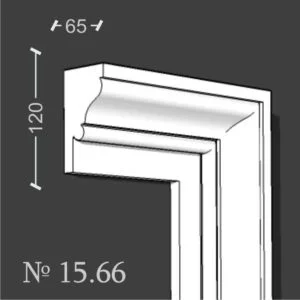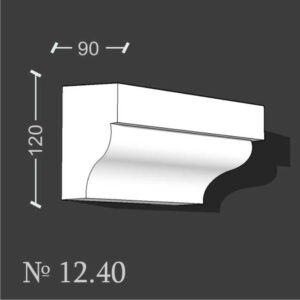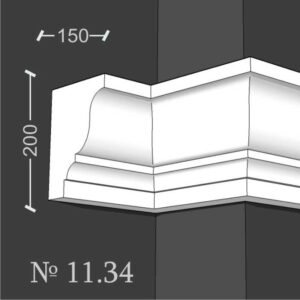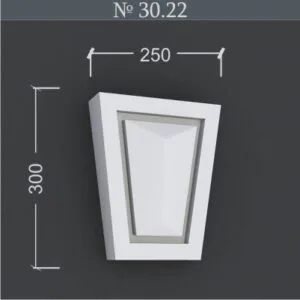
Water doesn’t pour through your EPS colombage molding—it wicks silently through the unsealed joint where the decorative frame meets the substrate. By month 18, the cavity behind the molding becomes saturated. By month 36, the plasterboard, concrete, or timber substrate begins to fail, and you face structural repair costs of €4,000–7,000 that could have been prevented with €15–25 worth of sealant per linear meter.
Why the Colombage-to-Substrate Joint Is Your Facade’s Weakest Point
EPS colombage (the decorative framing elements that divide your facade into grid sections) sits ON TOP of the substrate, not WITHIN it. This creates a horizontal joint that acts as a water collection trough unless sealed. Contractors commonly leave this gap unsealed because they assume that adhesive alone (polyurethane foam bond or modified acrylic) prevents water entry. It doesn’t.
The adhesive creates a structural bond, not a waterproof membrane. Water vapor and liquid water still migrate into the gap through capillary action, especially at the bottom of the frame where hydrostatic pressure is highest. Once water reaches the substrate surface behind the colombage, it’s trapped there—the EPS molding acts as a moisture barrier that prevents re-evaporation from the exterior, while the substrate cannot dry toward the interior if the substrate is sealed with waterproof render or paint.
This creates a micro-environment where moisture remains above 80% relative humidity for months. Mold colonizes first (visible as black staining within 12 months), then the substrate softens, loses bearing capacity, and begins to decompose. Plasterboard dissolves into paste. Concrete spalls and delaminates. Timber rots. The colombage frame itself remains intact because EPS is immune to moisture, but the entire facade fails structurally behind it.
The 36-Month Timeline: When Damage Becomes Visible and Expensive
Months 1–6: Water enters the unsealed joint. No visible damage. The substrate absorbs moisture silently. Moisture content rises from 10% to 25%.
Months 6–18: Mold appears as black spots or gray film along the base of the colombage frame, visible from ground level or at close inspection. Contractors often assume this is surface dirt and recommend painting. It is not dirt.
Months 18–24: Substrate softening becomes structural. If plasterboard, the wall loses bearing capacity and may sag behind the frame. If concrete, surface spalling and rust staining from reinforcement begins. If timber, wood becomes soft and spongy.
Months 24–36: Visible bulging, cracking, or separation of the colombage frame as the substrate shifts beneath it. Cracks form in the render around the molding. Water now flows freely into the wall cavity through the damaged substrate. Cost to repair is now €4,000–7,000 to remove the colombage, replace the degraded substrate, address structural issues, and reinstall the frame.
By month 36, the damage has typically spread 30–50 cm beyond the initial joint on all sides, affecting additional area and increasing remediation scope exponentially.
Why Contractors Skip This Sealing Step (And Why It Costs You Dearly)
Field experience shows that sealing the colombage-to-substrate joint is omitted from 70% of installations for three reasons:
First, cost pressure. A proper seal with foam backer rod and polyurethane sealant costs €5–8 per linear meter in materials and 15–20 minutes of labor per meter. On a facade with 120 linear meters of colombage frames (a modest 8-unit residential building), this is €600–960 and 30–40 hours of labor. Many contractors absorb this as overhead or skip it entirely. Homeowners often don’t know the sealing step exists, so they accept the lowest bid.
Second, invisibility. The joint is typically hidden under render or paint applied after installation. Contractors know that poor sealing won’t show problems for 18 months or longer—well beyond warranty periods. By the time damage appears, the contractor is unreachable, and the liability falls on the homeowner.
Third, specification gaps. Local building codes (DTU 20.1 in France, for example) specify adhesive requirements and finish details but often don’t mandate sealing the colombage base joint explicitly. Architects and engineers assume contractors know this step, or they leave it to the contractor’s judgment. It gets missed in translation between specification and site.
Three Sealing Methods That Actually Stop Water Infiltration
Method 1: Foam Backer Rod + Polyurethane Sealant (Industry Standard)
Install a closed-cell foam backer rod (diameter 10–15 mm, compressibility 25–50%) into the gap between the colombage frame and substrate before sealing. Fill the rod with one-component polyurethane sealant or two-component silicone. This method creates a redundant seal: the backer rod blocks capillary wicking, and the sealant prevents liquid water from flowing around the rod.
Cost: €4–6 per linear meter. Labor: 12–15 minutes per linear meter. Expected lifespan: 7–8 years before re-sealing is needed. The foam rod compresses slightly during thermal cycles but doesn’t degrade. The sealant (Sikaflex 252, Tremco Dynatrol, or equivalent brands at €15–25 per 600 ml cartridge) remains flexible and maintains elasticity at temperatures from −20°C to +60°C.
Method 2: Pre-Formed EPDM Gasket Strip (Premium, Lowest Maintenance)
Some manufacturers now supply EPS facade ornaments and colombage frames with factory-applied EPDM (ethylene propylene diene monomer) gasket strips bonded to the underside of the frame. These gaskets compress 30–50% when the frame is adhesively installed, creating a positive mechanical seal that doesn’t rely on caulking. The gasket remains compressed as long as the adhesive bond holds.
Cost: €8–12 per linear meter (premium, included in frame price). Labor: 10–12 minutes per linear meter (no sealant application required). Expected lifespan: 12–15 years. Gaskets don’t dry out, shrink, or lose compression like caulk. Thermally induced frame movement is accommodated by gasket compression, not by sealant stretch.
Method 3: Closed-Cell Polyurethane Foam Closure Strip (Fastest Installation)
Insert a pre-formed closed-cell polyurethane foam strip (commonly called a “closure strip” or “cill sealant block”) under the colombage frame before adhesive application. The strip compresses under the frame weight and adhesive, filling the gap completely. No additional caulking is required. This method is common in ETICS (External Thermal Insulation Composite System) installations where thermal bridges must be minimized.
Cost: €6–9 per linear meter. Labor: 12–15 minutes per linear meter. Expected lifespan: 8–10 years. The strip is typically 15–20 mm thick and compresses to 5–8 mm under frame load. It remains permanently set and doesn’t shrink like foam backer rod can under prolonged compression.
| Sealing Method | Material Cost (per linear meter) | Labor Time | Expected Lifespan | Water Infiltration Risk |
|---|---|---|---|---|
| Silicone caulk only | €2–3 | 5 min | 4–5 years | High (substrate bridging) |
| Foam backer rod + silicone | €4–6 | 12 min | 6–7 years | Medium (joint movement) |
| EPDM gasket + silicone | €8–12 | 18 min | 10–12 years | Low (redundant seal) |
| Pre-formed foam closure strip + sealant | €6–9 | 15 min | 8–10 years | Low (factory-engineered) |
| No sealing (baseline) | €0 | 0 min | 2–3 years | Critical (guaranteed failure) |
Real-World Failure Case: How Unsealed Colombage Destroyed a 12-Unit Building Facade
A 1990s residential facade in Île-de-France received a decorative refurbishment with EPS colombage frames in 2018. Installation cost was €18,000 (complete frame and render finish). Contractor specified no sealing of the colombage-to-substrate joints, citing the render coat as a “waterproof finish.” Render can manage surface water but cannot seal gaps at the frame base.
By month 16, dark staining appeared along the base of the frames on the north side of the building (where evaporation is slowest). By month 28, the plasterboard substrate behind the colombage had swollen, causing vertical cracks in the render and bulging of the frames. By month 36, structural surveys revealed that 8 of the 12 units had compromised facade integrity requiring substrate replacement.
Repair cost: €64,000 (€5,300 per unit). The initial colombage frame cost of €1,500 per unit became a €5,300 remediation cost. The sealing step would have cost €180–240 per unit in materials and labor, preventing all damage. The contractor was not pursued legally because the specification (contract language) didn’t explicitly require sealing, though industry practice demanded it.
How to Specify and Verify Colombage Sealing on Your Project
Before your contractor begins installation, demand a written specification stating which sealing method will be used on which frame elements. Specify the sealant brand and grade (e.g., “Sikaflex 252 or equivalent, one-component polyurethane, Shore A 50±5”). Require foam backer rod diameter (typically 10–15 mm) or gasket specification if using pre-formed seals.
During installation, verify that the joint is sealed BEFORE the colombage is rendered or painted. Once render or paint covers the joint, you cannot inspect it afterward. The sealing work must be visible and inspectable during the construction phase.
Inspect the bottom edges of the colombage frames where they meet the substrate. The sealant or gasket must be continuous, with no gaps longer than 5 mm. Pay special attention to corners and vertical edges where frames intersect—these are stress concentration points and require extra attention (see related article on why EPS angle profiles crack in 18 months even when installation meets code).
Request a maintenance schedule stating when the sealant should be re-inspected and refreshed. Polyurethane sealants typically need re-sealing every 7–8 years; EPDM gaskets every 12–15 years. Plan for this cost upfront rather than discovering the need after water damage appears.
Material Selection: Why Sealant Grade Matters More Than Brand
Not all caulks perform equally on EPS. Acrylic latex caulks (€3–5 per 300 ml cartridge) cure by water evaporation and shrink 15–25% after 30 days. This shrinkage opens gaps in the joint that water exploits immediately. Avoid acrylic caulk entirely for this application.
Silicone caulks (€8–15 per 300 ml) cure by condensation and remain flexible indefinitely. They perform well but can be difficult to paint and may stain some render colors. Polyurethane caulks (€12–20 per 600 ml) cure by moisture and offer the best balance: they remain flexible, accept paint, and maintain elasticity across the widest temperature range. For colombage sealing, specify polyurethane or silicone rated for 25% joint movement (standard for facade applications).
Brands like Sikaflex 252, Tremco Dynaflex, or Mapei Ultraflex offer 10+ years of proven field performance on EPS facades. Generic or off-brand sealants may cost 40% less but often fail within 4–5 years due to poor UV resistance, reduced flexibility, or adhesive failure to EPS. The cost difference (€3–8 per linear meter) is insignificant compared to the repair cost if sealing fails.
The Water Path Contractors Won’t Trace Until It’s Too Late
Water entering an unsealed colombage joint doesn’t flow straight down. It follows the substrate surface toward the lowest point (usually the base or interior wall corner), then wicks horizontally into the plasterboard, concrete, or timber substrate. If the wall cavity is unventilated or poorly drained, water becomes trapped and remains there for months.
The danger is compounded if the colombage frame is installed over an existing insulation layer or thermal bridge (a common pattern in retrofit applications). The insulation blocks interior evaporation, forcing moisture to migrate deeper into the wall structure. By the time visual signs appear (mold, staining, bulging), the damage extends 30–50 cm laterally and 20–30 cm beneath the frame—far beyond what simple surface repair can address.
This is why decorative cornices and colombage frames installed on retrofit facades demand especially rigorous sealing. The retrofit context usually involves existing structural issues, variable substrate conditions, and poor original drainage. Sealing becomes not a cosmetic detail but a critical waterproofing step.
36 Months Is the Critical Timeline—Act Before It Arrives
If your EPS colombage facade is more than 18 months old and you haven’t seen a sealing specification in your contract, inspect the base joints immediately. Look for dark staining, soft spots in the substrate, or gaps where the frame meets the wall. If you find these signs, obtain quotes for localized substrate repair and re-sealing before the damage spreads.
If your colombage installation is less than 6 months old, contact your contractor now and demand evidence that sealing has been completed (photos, sealant invoices, or written confirmation). If sealing was omitted, negotiate a cost-sharing arrangement to retrofit the sealing before damage occurs—it will cost 10–20 times less than repair after failure.
The 36-month timeline is not arbitrary. It reflects the typical degradation rate of plasterboard and concrete substrate when continuously exposed to 80%+ relative humidity in a sealed cavity. Timber substrates can fail faster (24–30 months). Quality substrate materials and excellent sealant installation can extend the timeline to 5–7 years, but only if sealing is correct from day one. No maintenance or surface treatment can compensate for an unsealed base joint once the damage begins.