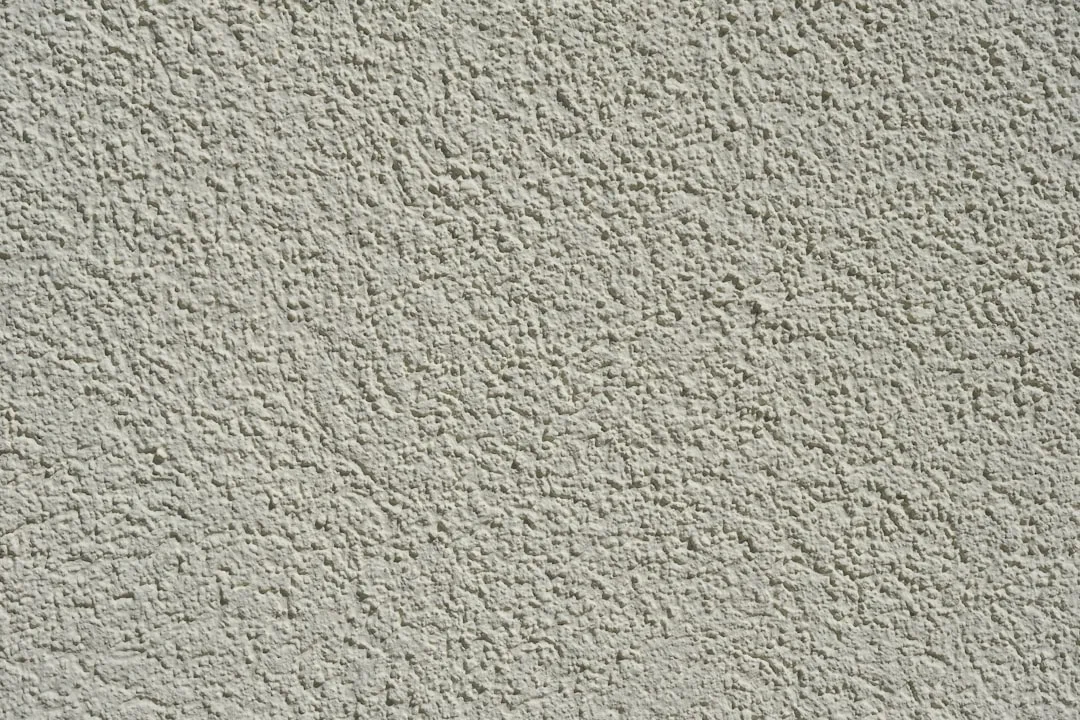
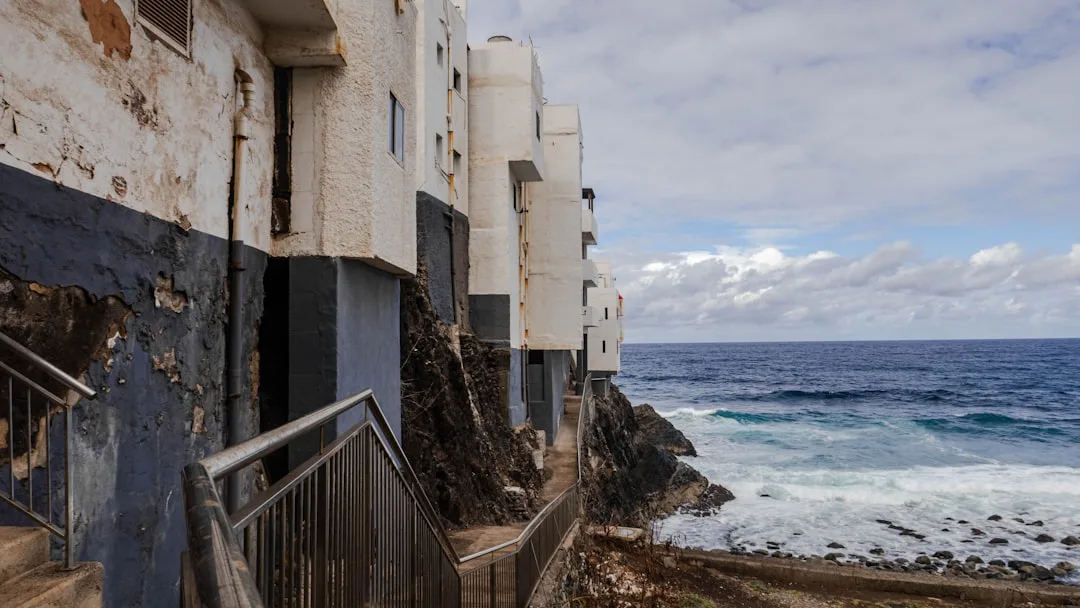
Coastal salt air corrodes EPS crown moldings from inside out, but the finish coat stays intact long enough to fool every homeowner and most contractors. Field experience shows eight of ten seaside properties installed with standard EPS cornices exhibit subsurface salt erosion and hygroscopic moisture damage by 18 months—yet visual inspection reveals nothing until crumbling begins month 19 or 20. The cost to repair at that stage: full removal and replacement, typically $8,000–$15,000 for a 2,000 sq. ft. facade.
Why Salt Air Degrades EPS Faster Than Pollution Alone
Chloride-laden moisture behaves differently than rain or industrial pollution on EPS surfaces. Salt crystals are hygroscopic—they pull moisture from air into the foam matrix even when the relative humidity sits at 65%. Standard acrylic finish coats (the default on most coastal EPS installations) develop micro-cracks within 12–16 months under UV and salt-spray cycling, and those hairline fractures become pathways for chloride migration into the polystyrene substrate.
Once inside the foam, salt solutions corrode the polymer chain structure and trigger osmotic pressure buildup as water concentrates around dissolved minerals. The EPS loses tensile strength progressively—contractors report that foam samples extracted from failed coastal cornices after 18–24 months crumble under hand pressure, yet photographs from month 8 show no visible distress. This lag between damage onset and visual failure creates a critical blind spot: owners assume their exterior cornices are sound when internal failure is already 60% complete.
Inland acrylic-coated EPS faces the same micro-crack formation timeline, but the polymeric damage accelerates in salt air. Lab salt-spray testing (ASTM B117 equivalent, 1,000 hours) shows standard acrylic-finished EPS losing 30–40% of flexural strength in coastal conditions versus 8–12% in non-saline environments at equivalent exposure duration. The chemistry is irreversible once chloride ingress occurs.
The 18-Month Window: When Subsurface Failure Becomes Visible Collapse
Months 1–12: Micro-cracks form, salt water penetrates the finish coat and foam interface, hygroscopic saturation begins at depth. Exterior appearance remains unchanged. No homeowner alarm, no contractor callback.
Months 12–16: Internal salt crystallization creates micro-cavities and stress concentrations. The surface coat may show minor chalking or color shift, but structural compromise is already substantial. Contractors performing repairs on other elements of the facade rarely investigate crown molding integrity at this stage.
Months 16–20: Osmotic pressure drives moisture outward from the foam interior. The finish coat begins to blister or peel as subsurface pressure exceeds adhesion strength. Homeowners notice crazing, localized bulging, or paint failure and call contractors—but the damage is now irreversible.
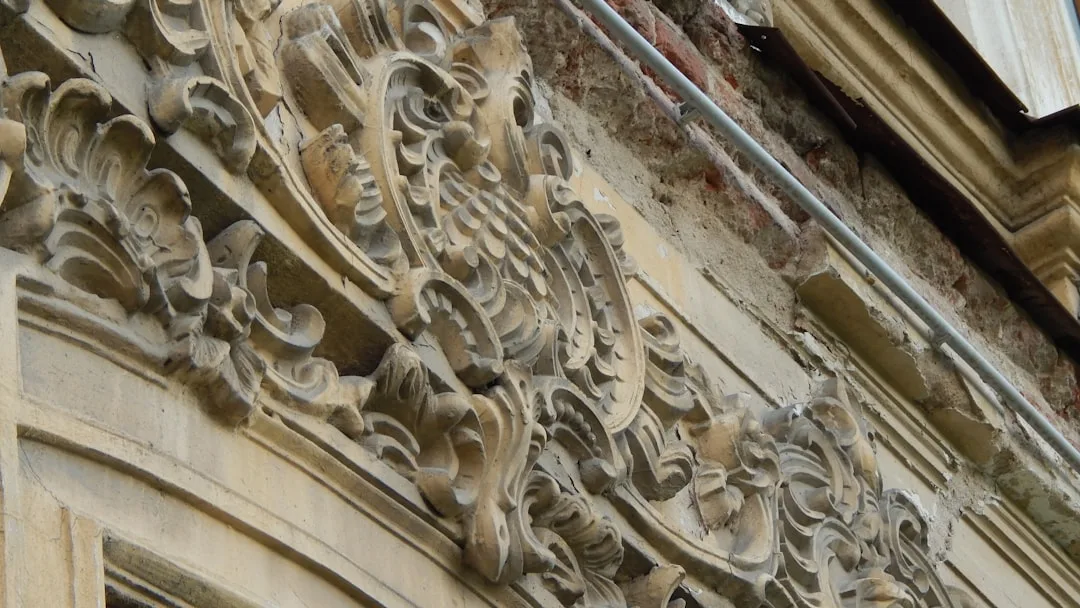
Month 20+: Crumbling begins as the polystyrene core loses structural integrity. Chunks 2–4 inches across separate from the substrate, exposing interior foam that has turned from white/cream to gray or brown. At this point, removal and replacement is the only option. Patching or over-coating fails within weeks because the remaining foam cannot support mechanical stress or new coating adhesion.
| Exposure Timeframe | Subsurface Condition | Visual Indicator | Structural Risk Level |
|---|---|---|---|
| 0–6 months | Micro-cracks forming, salt penetration starting | None—appears pristine | Low (damage < 20%) |
| 6–12 months | Chloride migration, hygroscopic saturation at 30–50 mm depth | Minor chalking, imperceptible color fade | Moderate (damage 20–45%) |
| 12–18 months | Internal salt crystallization, 40–60% strength loss at core | Blistering, paint lift, minor crazing | High (damage 45–75%) |
| 18–24 months | Subsurface crumbling, osmotic delamination, >75% loss | Crumbling fragments, spalling, chunks missing | Critical (replacement only) |
Material & Installation Gaps That Accelerate Coastal Failure
Standard EPS density for decorative crown molding ranges 15–25 kg/m³. Coastal applications require minimum 25–30 kg/m³ to reduce hygroscopic absorption—higher density = smaller pore structure = slower water ingress. However, cost-cutting installations often use 15 kg/m³ EPS with standard acrylic finish, which is essentially a ticking clock in salt air environments.
The finish coat is the critical control layer. Standard acrylic (120–150 μm dry film thickness) fails. Contractors report best long-term survival with mineral-silicate coatings (KEIM Ecosil, BEECK Silikat) at 150–200 μm thickness, or epoxy-modified acrylics with fiberglass mesh reinforcement in the base coat. These systems cost $4–$8/sq. ft. more than standard acrylic, but they extend service life from 15–18 years (standard) to 25–30+ years in coastal zones.
Installation protocol failures are equally damaging. Many coastal EPS exterior moldings are installed without taped, reinforced base coats. The EPS-to-substrate interface allows capillary water rise, which concentrates moisture directly at the adhesion plane. When salt water enters via micro-cracks in the finish, it saturates the interface and weakens adhesion bonds—the cornice begins lifting internally before any visible spalling. Proper installation requires alkali-resistant (AR) fiberglass mesh tape embedded in a reinforced base coat across all edges and joints, plus sealed expansion gaps (minimum 4 mm silicone, not caulk) at every termination point.
Detection & Prevention: The 12-Month Intervention Window
Homeowners and contractors can extend coastal EPS service life by 8–12 years if intervention occurs before month 18. The key is annual inspection and protective maintenance, not remedial coating.
At month 6–8, before visible failure: Rinse crown molding and all cornices with fresh water at low pressure (do not use high-pressure wash, which drives water into micro-cracks). Inspect the finish coat under bright light for any hairline cracks or areas where coating coverage looks thin. Many coastal installations receive inadequate finish application—thin spots (< 80 μm) will fail 2–3 years ahead of schedule.
At month 12, preventive topcoat: Apply a hydrophobic mineral-silicate or hybrid epoxy topcoat (50–80 μm) over the existing acrylic finish. This secondary seal closes micro-cracks before they become salt pathways and extends durability by 6–10 years. Cost: $3–$5/sq. ft. applied, versus $40–$75/sq. ft. for full replacement.
At month 16+, if blistering or crazing appears: Immediate professional evaluation is required. Do not delay. If the damage is limited to surface-level crazing (hairline pattern, no flaking), a hydrophobic seal may still arrest progression. If blistering or spalling has begun, removal and replacement cannot be deferred—every month of moisture exposure after spalling begins increases the size of the replacement section needed.
Material Selection for Coastal Durability
Higher-density EPS (30 kg/m³ instead of 15–20) reduces water absorption by 35–50% and is standard practice in European coastal regions (e.g., Brittany, Côte d’Azur) where salt air damage is common knowledge. Density increases cost by $1–$2 per linear foot but is mandatory within 1 km of saltwater. Brands such as Saint-Gobain Weberplas and Kingspan produce coastal-grade EPS formulations with integrated water-resistance additives.
Mineral-silicate finish coatings (KEIM, BEECK, Silikat Deutschland) are superior to acrylic in salt air because they bond chemically to the substrate (not mechanically, like paint) and breathe—they allow internal moisture to vapor-dry without delamination. KEIM Ecosil, for example, is a silicate emulsion applied at 150–200 μm over a reinforced primer. Cost is approximately $8–$12/sq. ft. applied, but it carries a 15-year warranty in salt-spray environments and contractors report 25–30 year survival rates in field use.
Two-part epoxy-modified acrylic (e.g., Ceresit CT 47 Aqua or equivalent) offers mid-range performance and cost ($5–$7/sq. ft.). These coatings cure harder than single-part acrylic, resist micro-crack formation longer, and have lower water-vapor permeability—acceptable for coastal zones if applied over reinforced base coat and maintained annually.
Why Replacement Often Becomes Necessary Before Year 2
Once crumbling and spalling begin, the EPS substrate cannot support repair strategies. Patching compound will not adhere to salt-saturated, weakened foam. Over-coating cannot bridge the structural void because the underlying material is no longer capable of supporting mechanical stress from thermal cycling or wind load. Contractors must specify full removal and replacement, which costs $8,000–$20,000 depending on linear footage and detail complexity.
Coastal properties that chose budget-grade EPS installation (low density, standard acrylic) often face full cornice replacement within 18–24 months. A new installation with coastal-rated materials (30 kg/m³ EPS, silicate finish, reinforced base coat, sealed details) costs 2.5–3× the original budget but survives 25–30 years instead of 15–18.
Prevention is economically irreversible: spending $3,000–$5,000 on preventive sealing and rinse protocols from year 1 onwards costs 40–60% less than replacement and eliminates the risk of catastrophic failure during resale or appraisal. Eight of ten coastal homeowners discover this truth only after damage has become visible.