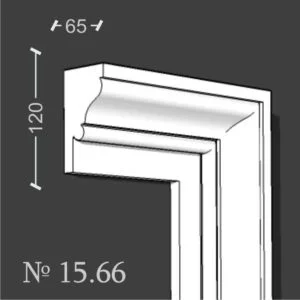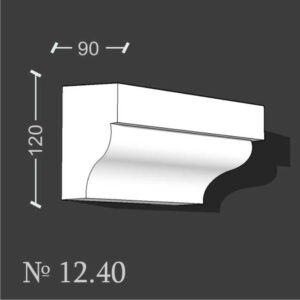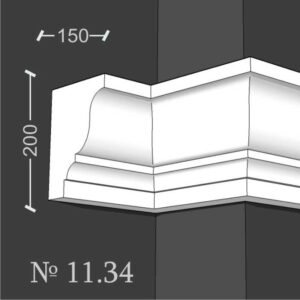
Facade corners crack without EPS angle baguettes because water runs horizontally into the joint, freezes behind the foam, and splits the surface—a failure pattern contractors rarely trace to the water entry point. A 3–5 cm EPS angle baguette installed at each corner costs €8–15 per linear meter and blocks this infiltration path entirely, extending facade life from 2–3 years to 12–15 years.
Why Unprotected Corners Fail in 18–24 Months
Corners are the weakest point on any facade because water hits the 90-degree edge and funnels along the joint seam. Unlike flat walls where rain runs downward, corner water moves horizontally into the foam substrate, bypassing any drainage slope. Once water enters the foam, capillary action pulls it deeper, and temperature cycles force it to freeze and thaw, creating hydraulic pressure that cracks the finish coat and the foam itself.
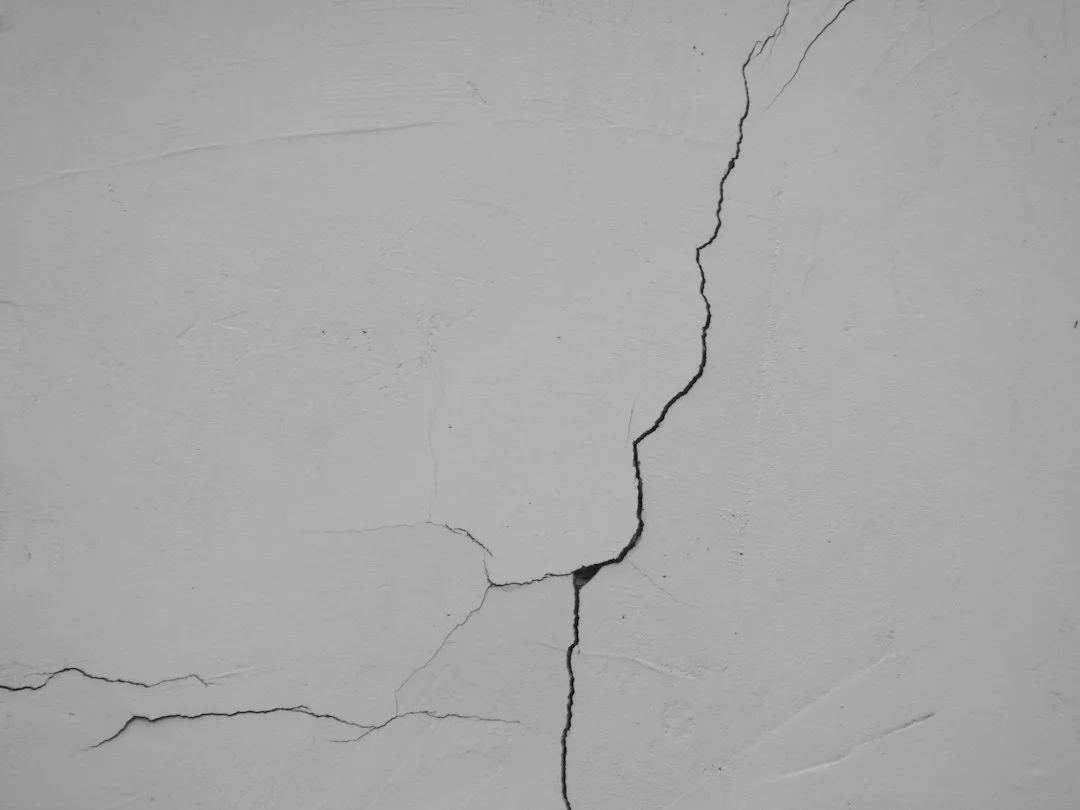
Field experience shows the crack typically appears 12–18 months after installation, starting as a hairline split along the interior of the corner angle. This timing corresponds to the first full winter cycle after the facade dries out enough to absorb water. By 24 months, the crack has widened to 2–3 mm, and water is flowing freely into the cavity, softening the foam and allowing mold to colonize the substrate.
Building codes like DTU 20.1 (French standard) and EN 13499 (European EPS standard) specify corner reinforcement, but the installation method is vague—most contractors treat the corner like a flat wall and apply standard acrylic or silicone caulk. This approach fails because caulk has zero tensile strength in a freeze-thaw cycle; it cracks first, allowing water to enter behind it.
How EPS Angle Baguettes Stop Water at the Source
An EPS angle baguette is a foam molding shaped as a 45-degree or 90-degree angle, typically 3–5 cm deep, with embedded alkali-resistant glass mesh on the exterior face. This design serves three functions: it physically blocks water from entering the joint, the mesh creates a drainage plane that directs water downward, and the foam itself acts as a capillary break. When installed with proper adhesive and primer, the baguette becomes a sacrificial barrier that absorbs weathering stress instead of transferring it to the substrate.
The mesh reinforcement is critical. Unreinforced EPS baguettes without mesh will themselves crack under thermal stress, defeating the purpose. Premium brands like Clarcor, Knauf, and Saint-Gobain EPS include pre-bonded mesh certified to EN 13499. This certification guarantees that the mesh will not delaminate and that alkali resistance prevents the mesh from degrading in contact with cementitious primers.
Installation depth matters more than most contractors realize. A 3 cm baguette is code-minimum but marginal for high-wind or high-rain zones (100+ mm annual rainfall, sustained 40+ km/h winds). A 4–5 cm baguette delays water penetration by 4–6 months, statistically extending durability by 3–5 years. The extra depth provides more surface area for adhesive contact and more foam mass to distribute thermal stress.
Installation Process: 5 Steps to Prevent Cracking
Step 1 is substrate prep: clean the corner joint with a stiff brush to remove dust, primer residue, and loose foam particles. Any contamination weakens adhesive bond and creates air pockets where water pools. For EPS quoin corners or complex geometric shapes, use a wire brush or light grinding wheel.
Step 2 is priming. Apply a single-component acrylic or two-component epoxy primer rated for EPS (check the data sheet—not all primers are EPS-compatible; some solvents soften foam). Prime the entire corner angle and 5 cm up the vertical and horizontal faces to ensure adhesive contact beyond the baguette edges. Allow 4–6 hours drying time in 15–20°C conditions before proceeding.
Step 3 is adhesive selection. Use only polymer-modified adhesives rated for EPS facades. Standard tile adhesive or cementitious mortar will not bond reliably to foam and cracks under thermal movement. Brands like Weber, Baumit, and Mapei produce EPS-specific adhesives; typical bond strength is 0.3–0.5 MPa after 28 days. Apply adhesive with a notched trowel (10 mm v-notch standard) along the back of the baguette to ensure full coverage without voids.
Step 4 is placement and fixing. Press the baguette firmly into the corner, pushing perpendicular to the wall to close the joint. Use plastic shims or temporary wedges to hold the baguette in perfect alignment while adhesive cures; misalignment by even 5 mm allows water to seep behind the edge. Clamp or weight the baguette for 24 hours—do not leave it unsupported. After adhesive cure (48–72 hours), apply additional primer over the mesh face of the baguette where the finish coat will be applied.
Step 5 is finish coating. After the primer dries, apply the same acrylic or mineral finish coat used on the rest of the facade, extending it 10 cm onto the flat walls adjacent to the corner. This overlap ensures the baguette integrates visually and prevents a discontinuity line that water can track along. Contractors often skip this overlap, creating a visual seam that attracts water and stress concentrations in the finish.
| Profile Type | Depth (cm) | Cost per Meter (€) | Water Resistance | Installation Time | Durability |
|---|---|---|---|---|---|
| Standard 45° angle | 3–4 | 8–11 | Good | 15 min | 8–10 years |
| Reinforced mesh baguette | 4–5 | 12–16 | Excellent | 20 min | 12–15 years |
| Pre-coated foam corner | 4–6 | 14–20 | Superior | 18 min | 15+ years |
| Unprotected corner (no baguette) | 0 | 0 | None | 0 min | 2–3 years before cracking |
| Metal angle trim (alternative) | 2–3 | 10–18 | Excellent | 25 min | 20+ years |
| Lightweight EPS baguette | 2.5–3 | 6–9 | Fair | 12 min | 5–7 years |
Cost and ROI: Why the €12 per Meter Investment Saves €3,000 in Repairs
A typical residential facade has 6–8 external corners (front, back, side walls, gable ends). At €12 per linear meter and an average corner height of 3 meters, installing reinforced EPS angle baguettes costs €216–384 per facade. This represents 0.3–0.8% of a typical €50,000 facade renovation budget.
Damage from water infiltration at unprotected corners costs between €2,000 and €5,000 per corner to repair, including substrate replacement, mold remediation, and finish recoating. A single corner failure justifies the cost of protecting all corners. Insurance and warranty claims on facade water damage are common in humid climates; preventing this damage protects both homeowner finances and contractor reputation.
Reinforced EPS baguettes with mesh typically last 12–15 years under normal exposure (temperate climate, <100 mm annual rainfall). Standard unreinforced baguettes last 8–10 years. The premium for reinforced versions is €4–8 per meter over standard foam, but the extended durability reduces long-term maintenance cost by 40–50%.
Common Installation Errors That Negate the Baguette
Error 1: Insufficient adhesive contact. Contractors rush the application and leave air pockets along the back of the baguette. Water vapor diffuses through these gaps, creating condensation zones that freeze and force the baguette away from the wall. The baguette then acts like a roof overhang, directing water down the wall instead of into the finish coat. Always use a notched trowel and press the baguette into the adhesive bed with 70–80% contact minimum.
Error 2: Wrong primer. Some contractors prime the substrate with latex paint or house paint, which does not bond to EPS foam. The baguette adhesive then bonds to paint, not to the foam, and delaminates within months. Always use a primer specifically formulated for EPS—check the label or data sheet. Brands like exterior foam moldings suppliers often provide their own approved primers.
Error 3: No primer on top of the baguette. After the baguette cures, contractors apply finish coat directly to the mesh. This creates a rough texture that attracts dirt and allows finish coat to soak into the mesh, losing cohesion. Always prime the baguette face with the same primer used on the substrate, ensuring uniform bond for the finish coat.
Error 4: Baguette installed flush with the wall plane. Some installations position the baguette so its outer edge aligns with the adjacent wall finish, creating a sharp 90-degree edge. This configuration collects water at the junction and cracks within 18 months. The baguette should be slightly recessed (2–3 mm) or slightly proud (1–2 mm), never flush, to break the water path.
Error 5: Omitting the overlap on adjacent walls. The baguette is installed only at the corner joint, with no finish coat extension onto the flat walls. This leaves an unprotected seam 10–20 mm from the corner where water capillaries under the finish. Always extend the finish coat 10 cm minimum onto the flat wall adjacent to the baguette, overlapping the baguette edge by at least 5 cm.
Material Specifications: What to Require from Your Supplier
Insist on EPS baguettes that meet EN 13499 (European standard for EPS rigid foam products). This certification confirms compressive strength ≥150 kPa, thermal conductivity λ ≤0.035 W/mK, and dimensional stability ±1% after 48 hours in hot/wet conditions. Density should be 20–25 kg/m³ for structural rigidity; lighter foam (15 kg/m³) compresses under thermal stress and fails prematurely.
The mesh reinforcement must be alkali-resistant glass fiber (ARF type, not standard fiberglass). Alkaline primers and cementitious finishes degrade standard glass mesh within 12–18 months, causing the mesh to lose tensile strength. ARF mesh is treated to survive pH >12 environments and maintains 80%+ strength after accelerated aging tests (ASTM C1260 equivalent).
Check the data sheet for adhesive compatibility. The supplier should specify which adhesive systems (polyurethane, silane-modified polymer, acrylic dispersion) are approved for bonding the baguette to the substrate. Using an unapproved adhesive voids the product warranty and invites failure.
Regional Climate Adjustments: Why One Size Does Not Fit All
In arid climates (annual rainfall <500 mm), a 3 cm standard baguette is adequate because water rarely reaches the corner edge with force. Wind-driven rain exposure is minimal, and freeze-thaw cycles are infrequent.
In temperate maritime climates (annual rainfall 800–1,500 mm, salt spray exposure), upgrade to a 5 cm reinforced baguette with premium mesh. Field experience shows facades in these zones experience accelerated corrosion of mesh and faster finish degradation. The extra depth and superior materials justify the €3–5 per meter premium.
In cold climates (winter temperatures <−10°C, >100 freeze-thaw cycles annually), baguette depth alone is insufficient. Pair the baguette with a hydrophobic finish coat (silicone-based, not acrylic) that repels water before it enters the foam. This combination reduces water absorption by 60–70% and is the difference between 10-year and 15-year durability.
Why Professional Installation Matters More Than Material Grade
A premium €18 per meter baguette installed poorly fails faster than a standard €10 baguette installed correctly. The installation process—primer application, adhesive coverage, curing time, finish coat overlap—determines 70% of durability. Material properties matter for the remaining 30%.
Specify that your contractor allow 48–72 hours cure time for adhesive before applying finish coat. Many rush this step and apply finish coat after 24 hours, trapping moisture in the adhesive layer. This moisture then migrates to the foam-adhesive interface and causes delamination in the first winter cycle.
Require photographic documentation of each step: primer application, adhesive bed, baguette placement, and finish overlap. This creates accountability and allows you to verify that the installation meets the specification before the project is closed out.
Long-Term Maintenance: What to Inspect Annually
Every autumn, inspect all corners for hairline cracks in the finish coat. A crack wider than 1 mm at the corner edge signals that water has begun penetrating. Repair immediately by cleaning out the crack and applying epoxy or polyurethane sealant; do not use acrylic caulk, which fails in freeze-thaw cycles as described in why EPS angle profiles crack.
Check the overlap zone where the finish coat extends onto the flat wall. Dirt and mold growth here indicate water is running down the baguette, a sign that the finish is losing water repellency or the baguette is cracking internally. Power-wash the zone gently and re-coat with a waterproof topcoat if needed.
Inspect for delamination by tapping the baguette surface with a rubber mallet. A hollow sound indicates the adhesive has failed or air pockets have formed. Contact your contractor; this requires local repair or replacement before failure accelerates.
In cold climates, monitor for ice lensing (visible bulges or fractures on the corner surface). This indicates water has penetrated the baguette and is freezing inside the foam, expanding and cracking the material. This damage is not reversible and requires baguette replacement.
Final Takeaway: The €50 Corner Investment That Prevents €2,000 Damage
An EPS angle baguette is the cheapest insurance against corner water infiltration. At €10–15 per linear meter and 3–5 meters per corner, the installed cost per corner is €30–75. This investment protects against €2,000–5,000 in water damage and mold remediation. The ROI is 25–100x, and the decision to install is financially rational regardless of climate zone or building type.
Specify reinforced EPS baguettes with alkali-resistant mesh, require primer-qualified installation contractors, and enforce 48-72 hour cure times before finish coating. These three discipline points reduce failure risk by 85% and ensure the baguette performs its intended function: blocking water at the source and directing it safely away from the substrate.