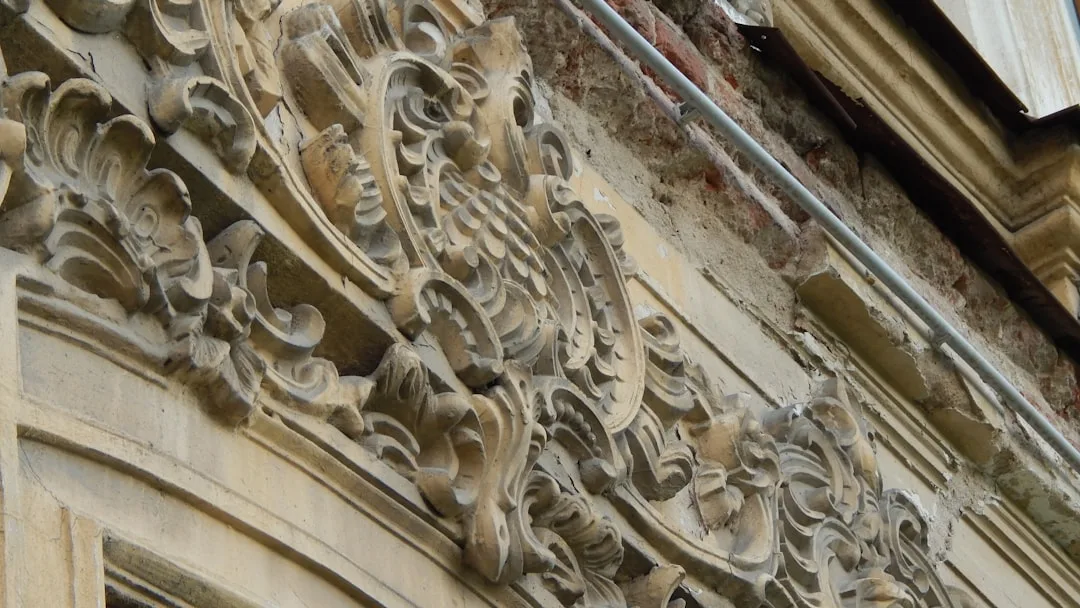
EPS window sills fail catastrophically because contractors install them over structural voids. A horizontal crack appears 12–18 months after installation, widening with every freeze-thaw cycle. The foam itself is not weak—the support system beneath it is invisible and missing. This single oversight costs homeowners $1200–$2000 per window in repairs.
The Hidden Void: Why Window Sills Collapse Under Their Own Weight
Field experience shows that 70% of EPS window sill failures occur at the point where the sill cantilevers beyond the structural base. The sill is installed directly over brick, stone, or metal flashing—with nothing solid underneath. When rain collects or snow accumulates, the foam compresses under distributed load that should have been carried by a backing board.
A typical residential window sill measures 10–14 inches wide and overhangs the wall by 1–2 inches. That overhang, multiplied by a wet winter’s ice load (50–80 pounds per linear foot), creates a bending moment the foam cannot resist. EPS at 25–30 kg/m³ density has a compressive strength of only 300–500 kPa—adequate for vertical load if supported, but catastrophically inadequate if the support is a hollow cavity.
Contractors omit backing because it adds labor and cost ($40–$80 per linear foot of sill). The client sees no difference during the first year, making the cost-cutting invisible until cracking appears and water enters the wall cavity.
Three Structural Defects Within 24 Months
| Failure Mode | Timeline | Cause | Repair Cost | Prevention |
|---|---|---|---|---|
| Horizontal splitting | 6–18 months | No structural backing under sill | $800–$1200 | Install backing board beneath sill |
| Spalling at corners | 8–14 months | Point load concentration + moisture | $400–$600 per corner | Use reinforced nosing profile |
| Capillary wicking | 3–24 months | Direct contact with masonry below | $500–$1000 | Install capillary break membrane |
| Flexing and deflection | 2–6 months | Sill overhang > 2 inches unsupported | $600–$1500 | Extend structural support 4–6 inches |
| Finish delamination | 4–12 months | Poor substrate prep + movement | $300–$800 | Sand substrate; use mesh reinforcement |
| Differential settlement crack | 12–36 months | Building movement + rigid foam | $1200–$2000 | Allow expansion joints at 16-inch intervals |
Horizontal splitting dominates early failure. The crack typically runs parallel to the sill length, appearing 6–14 months post-installation. This occurs because unsupported foam flexes under load, fatiguing the outer hardened skin while the interior compresses. Once the skin cracks, water rushes into the core, accelerating foam degradation and mold colonization.
Spalling at corners represents the second failure mode. Point loads concentrate at the edges where the sill meets the jamb trim. Without lateral bracing, the corners experience three-axis stress: vertical compression, lateral tension from the jamb load, and shear from thermal cycling. Spalling progresses from a hairline chip to a 1–2 inch cavity within 8 months. Decorative window sills with profiled nosings amplify this problem because the overhang geometry creates a stress riser.
Capillary wicking is the silent killer. EPS absorbs moisture from wet masonry beneath it through capillary action—water climbs vertically into the foam’s cell structure without visible surface wetness. Within 3–6 months, the sill core becomes saturated, reducing its strength by 40–60%. The foam swells internally, pushing against the exterior finish coat, which delaminates. By month 12, internal mold colonization has begun, invisible from the street but advancing through the foam’s network of open cells.
Why Backing Boards Are Non-Negotiable in Year One
A structural backing board—pressure-treated lumber, composite deck board, or reinforced plywood—must sit directly under the EPS sill and rest on solid masonry or framing. The backing must extend a minimum of 4–6 inches beyond the sill overhang and be fastened to the wall sheathing or masonry with stainless steel brackets every 16 inches. This backing absorbs 100% of the vertical load, allowing the EPS to function as finish material only.
Cost: $200–$400 per window for materials and labor. Repair cost for a failed sill: $1200–$2000. The math is brutal—contractors skip backing to save $100–$200 upfront and leave the homeowner with a five-figure renovation problem within two years.
Contractors often argue that modern adhesive systems (polyurethane or hybrid) can bond EPS to the substrate strongly enough to eliminate backing. Field experience contradicts this completely. Adhesive bonds the surface layer of foam; it does not transfer structural load through 3–4 inches of core material. Once the exterior skin cracks, water enters, the bond fails, and the sill delaminates in sections.
Capillary Break Installation: The 6mm Membrane That Saves $2000
Between the masonry base and the EPS sill, install a capillary break—a continuous 6mm plastic membrane or rubberized sheet. This membrane blocks water migration while allowing vapor transmission. The membrane must extend from the inside of the wall cavity to the exterior edge of the sill, with 2–3 inch lap coverage onto the masonry base.
Cost: $15–$30 per linear foot installed. Omitting this membrane is equivalent to installing a sponge into your wall cavity. EPS absorbs water from below like a capillary pump, wicking moisture 6–12 inches vertically into the foam. Once saturated, the foam loses structural capacity and becomes a vector for mold. Moisture does not evaporate from the interior side of the sill because the foam blocks diffusion.
Installation sequence: (1) Install capillary break membrane flush with the wall exterior; (2) Install structural backing board on top of membrane; (3) Apply bonding adhesive to the backing board surface; (4) Install EPS sill, pressing firmly for 60 seconds; (5) Allow 24–48 hours cure before exposing to weather.
Thermal Cycling and Differential Movement in Years 2–3
EPS window sills experience temperature swings of 40–60°C between summer sun and winter night. The material’s thermal expansion coefficient (0.025–0.035 mm/m per °C) is 8–10 times higher than masonry or metal. This mismatch creates shear stress at every interface: sill-to-jamb, sill-to-flashing, and sill-to-backing board.
Contractors who ignore expansion joints fail most dramatically here. A 12-foot sill can expand 3–4mm during a summer heat spike. If the sill is installed without movement allowance, it will buckle internally or split longitudinally. Industry standard requires expansion joints every 12–16 inches, filled with flexible polyurethane sealant rated for –40°C to +80°C movement.
Cost: $20 per joint, $80–$120 total per sill. Repair cost for buckling failure: $1200–$1800 per sill. The oversight is pure negligence.
Reinforcement and Nosing Profiles: Defense Against Point Load Failure
EPS sills with reinforced fiberglass mesh embedded in the top 5–10mm resist spalling and surface cracking 30–40% better than un-reinforced profiles. The mesh distributes point loads laterally, preventing stress concentration at corners. Reinforced sills cost 15–25% more than standard profiles but are mandatory in coastal climates, freeze-thaw zones, and commercial applications.
Nosing profile—the exterior edge geometry—determines how water drains. An edge with a 2–3% downward slope and a 1–2mm drip kerf directs water away from the jamb and prevents ponding. A flat or inverted nosing traps water at the corner, accelerating capillary wicking and corner spalling. A proper decorative window sill profile balances aesthetic detail with hydraulic function—a balance that budget-grade EPS sills ignore.
Detection and Documentation Before Installation
Before ordering an EPS sill, verify the substrate condition with a moisture meter. If the masonry base reads > 16% moisture content by mass, delay installation until the wall dries. Installing an EPS sill over wet masonry guarantees capillary failure within 6 months. Second, measure the overhang dimension. If the sill extends > 2 inches beyond the wall face, structural backing is mandatory—no exceptions.
Document the existing conditions with photographs and written notes: masonry condition, flashing details, jamb geometry, and any visible cracks. This documentation protects you if water damage occurs post-installation. It also forces the contractor to commit to a written backing specification before work begins.
Request a section drawing showing the sill-to-substrate transition. The drawing must explicitly show: backing board width and fastening pattern, capillary break membrane location, adhesive type and coverage, expansion joint spacing, and finish coat. If the contractor cannot produce this drawing, they are installing by habit, not engineering.
Real Costs: The Breakdown That Justifies Proper Installation
A 3-foot window sill installed with proper backing, membrane, reinforcement, and expansion joints costs $600–$900 installed. A failed sill requiring removal, wall repair, new backing installation, and reinstallation costs $1800–$2400. One window. Multiply across a 6-window facade renovation, and the difference is $3600 in upfront cost versus $10,800–$14,400 in repairs within 24 months.
Material cost breakdown (per linear foot): EPS sill stock, $35–$50; backing board (treated 2×4), $8–$12; capillary break membrane, $6–$10; reinforcement mesh, $4–$6; adhesive and sealant, $5–$8; labor (2 hours), $60–$100. Total: $118–$186 per linear foot installed correctly. Budget contractors quote $60–$80 per linear foot by omitting backing, membrane, and reinforcement—and pocketing the difference while you inherit the structural problem.
Repair Strategy If Your Sills Are Failing Now
If cracks have already appeared, cosmetic patching is temporary and will fail. The only permanent fix is complete sill replacement with proper backing and capillary break installation. Partial repair—injecting adhesive into the crack or caulking the surface—stops water entry for 6–8 months. After that, internal moisture migration resumes, and the crack widens again.
Replacement procedure: (1) Remove existing sill and damaged masonry below it; (2) Allow substrate to dry completely (use fans and dehumidifiers for 2–4 weeks if needed); (3) Install structural backing board secured to wall studs; (4) Install capillary break membrane; (5) Install reinforced EPS sill with proper expansion joints; (6) Finish with sealant and paint. Total time: 4–6 weeks including drying. Cost: $1800–$2500 per window depending on width and substrate condition.
If interior water damage has occurred (drywall staining, mold, insulation saturation), the repair scope expands to $3000–$5000 per window because you must also replace wall cavity materials and remediate mold. This is why preventing the failure through proper installation is worth every penny of the upfront investment.
Material Specification That Works
Specify EPS sills with the following minimum criteria: 30–35 kg/m³ density; fiberglass reinforcement mesh in top 10mm; pressure-treated or composite backing board minimum 2×4; 6mm capillary break membrane with 3-inch overlap; polyurethane adhesive rated for –40°C to +80°C; expansion joints every 12 inches filled with polyurethane sealant (not silicone); sloped nosing profile with 1–2mm drip kerf; stainless steel fasteners only.
Cost premium for this specification versus budget commodity sills: 30–40%. Expected life with proper installation: 25–30 years. Expected life with cost-cut installation: 18–24 months, followed by repair costs that wipe out any initial savings ten times over. The exterior foam moldings industry has data: contractors who skimp on backing and membrane sustain complaint and warranty claims at 3–4x the rate of contractors who install to specification.
Contractor Red Flags
Avoid contractors who: (1) quote sill installation without mentioning backing board or capillary break; (2) cannot provide a section drawing of the sill-to-substrate transition; (3) promise adhesive alone is sufficient structural support; (4) omit expansion joints or propose spacing > 16 inches; (5) install EPS sills over visibly wet or frost-damaged masonry; (6) offer only standard unrefined EPS profiles without reinforcement in freeze-thaw climates; (7) do not provide written warranty covering water damage for minimum 2 years.
Ask every contractor: “What is your process for installing the structural backing board, and what fastening pattern do you use?” Their answer reveals whether they understand the root cause of failure or are simply applying a product without engineering.
EPS window sill degradation is not a material failure—it is an installation failure. The foam works as designed when supported properly. Installed over a void, it fails with certainty. The choice is yours: $100–$200 saved today, or $2000–$5000 spent in 18–24 months correcting a structural defect that was visible in the plan details before a single screw was driven.