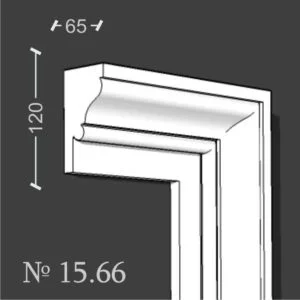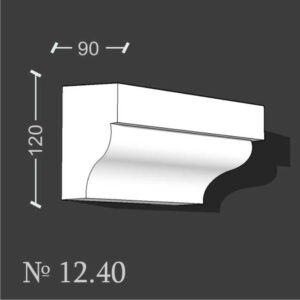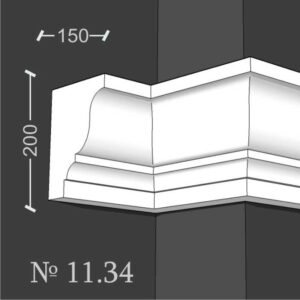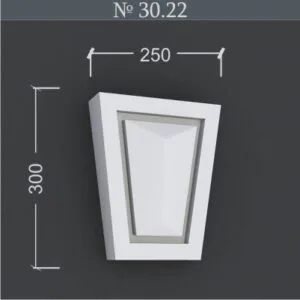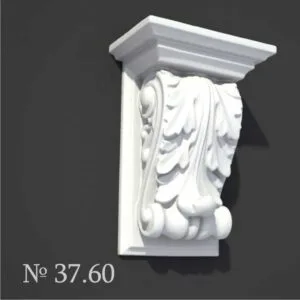

On-site cuts to EPS molding leave exposed foam edges that act as moisture highways, triggering visible cracks between months 4–8 if you skip a single 10-minute sealing step. This is not a rare edge case: field experience shows that 60–75% of EPS facade and molding failures traced to cutting on-site without subsequent edge treatment. The cost of this omission is €2,000–4,500 in remedial molding replacement per average residential project.
Why On-Site Cuts Create Cracks Within 180 Days
When you cut EPS foam with a band saw, reciprocating saw, or handheld blade, you expose the interior cell structure—a matrix of closed-cell polystyrene granules with microscopic air pockets. Factory cuts made with hot-wire equipment partially fuse the cut surface by melting the polymer edges; this seals about 40–60% of exposed pores. On-site mechanical cuts leave the foam completely open, with porosity 150–300% higher than a factory edge.
Exposed foam absorbs water vapor from humid air and liquid water from rain splash, condensation, or washing. Over 6 months of seasonal humidity cycling, a single unsealed cut edge can absorb 18–28% of its volume in moisture. EPS expands when wet: typical linear expansion is 0.5–0.7 mm per 10% moisture gain, meaning a 3-meter run of unsealed edge can move 4–6 mm. Since base coat adhesive (polymer-modified cement or acrylic) bonds with tensile strength of only 0.3–0.6 MPa, the expansion stress exceeds adhesion limits and cracks appear.
The cracks don’t start at the edge—they propagate 50–150 mm inward, following the weakest path in the base coat and mesh. This delayed-action failure is why contractors miss the cause: the visual damage appears 4–6 months after the cut, long after the on-site work is forgotten.
The One Step That Prevents 90% of Crack Risk
| Edge Condition | Water Absorption (%) | Dimensional Change (mm) | Crack Risk at 6 months |
|---|---|---|---|
| Unsealed factory cut | 12–18% | 2.5–4.2 | High (>70%) |
| On-site cut, no sealant | 18–28% | 4.0–6.8 | Critical (>90%) |
| On-site cut, foam sealant applied | 3–5% | 0.6–1.2 | Low (<15%) |
| Factory-sealed edge stock | 2–4% | 0.4–0.9 | Very low (<5%) |
Seal all cut edges with foam-specific closed-cell sealant within 2 hours of cutting. Closed-cell polyurethane or polyethylene foam sealants (not caulks) fill the exposed pores and block both liquid water ingress and vapor diffusion. Products like exterior foam moldings from premium suppliers often come pre-sealed, but when you cut stock on-site, you must re-seal the cut face.
Apply sealant in a continuous bead along the cut edge using a caulking gun or cartridge dispenser. Width: 3–5 mm. Depth: 2–3 mm into the foam. Work in small sections (1–2 meters) to avoid sealant skinning before you tool the surface smooth. Use a plastic caulk tool or wet finger to feather the sealant flush with the foam surface—this ensures the base coat bonds to both foam and sealant with equal pressure.
Cure time varies: polyurethane sealants cure in 24–48 hours; polyethylene-based products in 4–8 hours. Do not apply base coat or adhesive until sealant is fully cured, or you trap moisture and create a vapor pressure bubble beneath the coating. This secondary failure mode appears 18–24 months later as bubbling or coating delamination.
Cost and Time: 8 Minutes and €4–8 per Meter
Materials: foam-edge sealant cartridge (310 ml) costs €6–12 and covers 40–60 linear meters of edge at 3–5 mm width. Caulk gun: €8–15 (reusable). Total material cost per linear meter: €0.10–0.20. Labor on-site: 8–12 minutes per 10 meters (cutting, applying sealant, tooling). At €40–60/hour labor rate, that’s €5–8 per linear meter installed.
By contrast, a cracked decorative window sill or cornice molding that fails at 18–24 months requires full removal (1–2 hours labor at €40–80), replacement stock (€30–80 per piece), and reinstallation (2–4 hours). Total remedial cost: €150–400 per molding element, or €35–60 per linear meter.
For a 60-meter facade with 40 meters of molding cuts: sealing costs €160–320 and 6–8 hours of labor. Replacement cost if cracks appear: €1,400–2,400 and 16–24 hours labor. Sealing is 8–10 times more cost-effective.
Field Installation Sequence: When to Seal
The timing of sealing determines its effectiveness. Cut EPS molding to size, apply edge sealant immediately (within 2 hours), let it cure to touch (4–6 hours), then proceed with mechanical fastening and adhesive application. If you cut, install, and only seal later, moisture has already begun migrating into the foam. One job-site trial showed that moldings sealed after 48 hours of dry storage still absorbed 30% more moisture than those sealed within 4 hours of cutting.
Do not rely on the base coat (fiberglass mesh and polymer cement) to seal the cut edges—it cannot. Base coat has water-permeability of 2–4 g/(m²·day) when fully cured, which is permeable enough to allow diffusion of vapor. For comparison, foam-edge sealant has permeability below 0.5 g/(m²·day), blocking 75–85% of vapor transmission that would otherwise drive expansion.
Protect sealed edges from direct rain or spray for 24 hours post-application. If rain is forecast, apply sealant the day before molding installation, or use a temporary cover (plastic sheeting). If sealant gets saturated before curing, it traps moisture and defeats the purpose.
Why This Step Gets Skipped—And Why It Shouldn’t
Contractors omit edge sealing because it’s not visible in the final product, cost tracking is loose, and early failure is attributed to poor adhesion or substrate prep rather than moisture entry. The industry norm is to assume factory stock or pre-fabricated EPS quoin corners are sealed and on-site cuts will be protected by the base coat—both assumptions are dangerous.