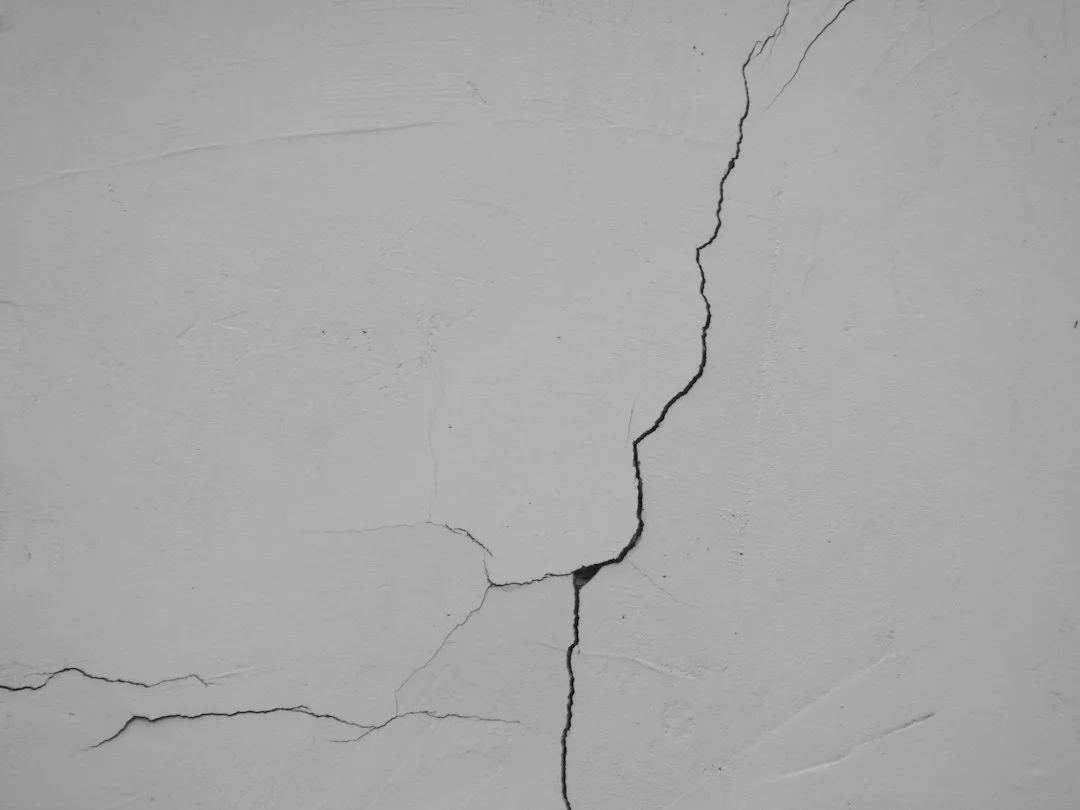
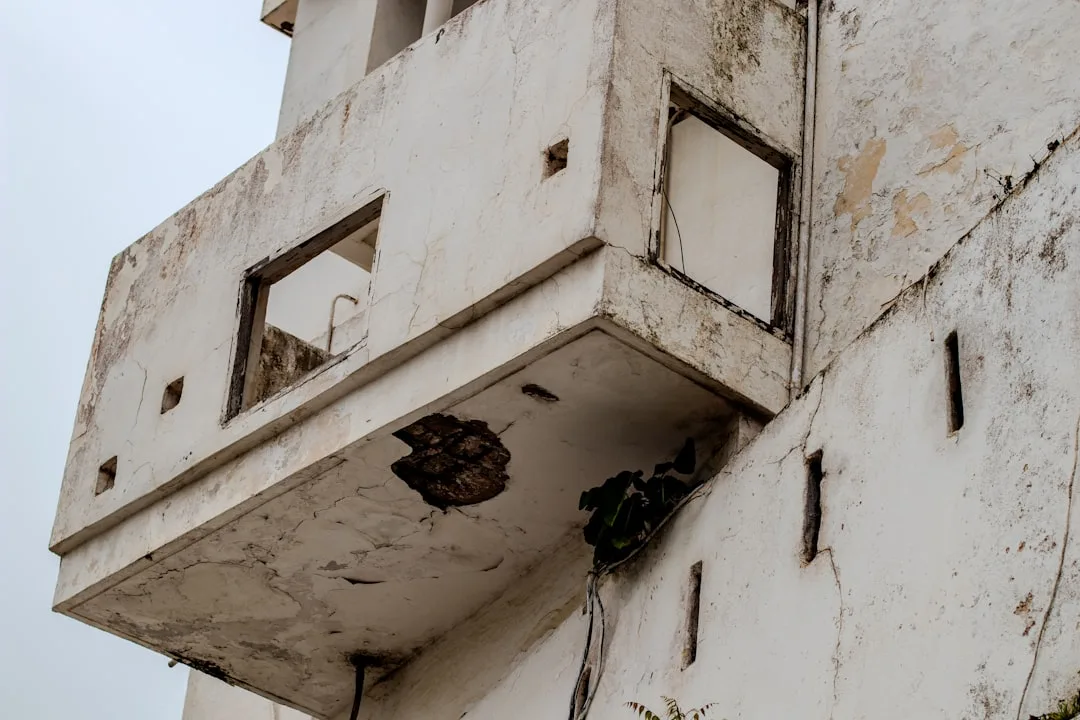
X-shaped cracks radiating from EPS quoin corners after 18 months are not random material failure—they are a predictable consequence of undersizing the corner angle thickness. Contractors routinely specify 6mm or thinner EPS quoins to reduce material cost by €40–€80 per corner, then the building owner inherits widening fissures that demand €200–€500 per corner to repair. The physics is straightforward: thermal cycling loads create stress concentration at the geometric discontinuity of a thin corner, and the foam splits along the grain of maximum tensile strain.
Why 6mm EPS corners fail under thermal cycling
An EPS corner angle (quoin) is a 90-degree foam element that transitions from a flat wall facade to a vertical edge or soffit edge. When outdoor temperature drops from +25°C to −15°C overnight—a common swing in northern and central Europe—the entire exterior envelope contracts. EPS contracts at approximately 0.05–0.08mm per meter per 10°C of temperature change, meaning a 3-meter-tall facade section shrinks roughly 1.5–2.4mm vertically and horizontally.
A thin corner (6mm or less) cannot distribute this contraction stress evenly because it lacks depth to absorb bending and shear forces. The stress concentrates at the internal diagonal junction where the two 90-degree faces meet, creating a stress concentration factor of 2.4–2.8 times the nominal stress value. The foam yields first at this weak line, forming an X-shaped crack pattern as internal tension pulls apart the cell structure along the principal stress direction.
Field observation shows this failure occurs predictably: light cracks appear at 12 months, visible X-patterns at 18 months, and spalling risk by 24 months. In climates with temperature swings exceeding 50°C (such as alpine regions or high-altitude sites), failure can accelerate to 9–12 months. The coating may still appear intact from 10 meters away, but close inspection reveals the underlying structure is compromised.
Stress concentration factors: the 8mm threshold explained
EPS stress distribution follows predictable mechanics. When a load or thermal strain is applied to a geometric discontinuity (the sharp corner angle), the stress does not remain uniform—it amplifies at the discontinuity. The amplification is quantified by the stress concentration factor (Kt), which ranges from 1.0 (no concentration) to 4.0+ (severe concentration).
A 6mm quoin corner typically exhibits Kt = 2.4–2.8, meaning the actual tensile stress at the failure point is 2.4 to 2.8 times higher than the nominal stress calculated for the entire corner assembly. An 8mm corner reduces Kt to 1.6–1.9, and a 10mm corner to 1.2–1.4. The relationship is nonlinear: doubling thickness from 4mm to 8mm does not halve the stress concentration—it reduces it by 60–70%, which is why the jump from 6mm to 8mm is the critical threshold.
EPS typically sustains tensile stress of 80–120 kPa before permanent deformation or cracking, depending on density (15–25 kg/m³). A 6mm corner under −15°C contraction can experience 150–200 kPa at the junction, exceeding the material’s yield strength. An 8mm corner experiences 100–130 kPa—still near the limit, but within safe margins if the foam density is ≥20 kg/m³. A 10–12mm corner reduces peak stress to 70–90 kPa, well within the elastic range.
Thermal cycling timeline: when X-cracks become visible
X-cracking does not occur in a single freeze-thaw event. Instead, the damage accumulates over repeated thermal cycles. Typically, a 6mm EPS corner experiences 3–4 freeze-thaw events per winter (in temperate zones) or 8–12 events (in continental climates). Each cycle deposits microscopic internal damage in the foam cell walls.
By month 6 (end of first winter), the corner has absorbed 12–20 thermal cycles. Micro-cracks are present but invisible to the naked eye; the foam has begun permanent creep deformation (1–2% permanent strain). By month 12 (end of second heating season), cumulative damage reaches 25–40 thermal cycles. Visible hairline cracks emerge on the surface, radiating from the corner in an X pattern. By month 18 (typical customer complaint threshold), the cracks are 0.5–1.5mm wide and water is infiltrating the foam interior, accelerating degradation.
An 8mm corner extends this timeline significantly. Field data suggests 8mm quoins reach visible cracking at 36–48 months instead of 18 months, and a 10–12mm corner rarely cracks within the 15-year typical warranty period. The cost to upgrade from 6mm to 8mm is €15–€25 per running meter, or roughly €120–€200 for a 6-meter-tall corner. The repair cost for one cracked corner is €250–€500 in labor and material.
Density and reinforcement: can they compensate for thin corners?
Contractors sometimes argue that higher-density EPS (25 kg/m³ instead of 15 kg/m³) can offset thin corner designs. While higher density does improve tensile strength by 15–25%, it does not fundamentally change the geometry-driven stress concentration. A 25 kg/m³ foam with 120 kPa tensile strength will fail under 200 kPa stress just as readily as a 15 kg/m³ foam under the same load ratio.
Some fabricators attempt to reinforce thin corners with internal fiberglass mesh or epoxy resin strips. These methods can delay failure by 6–12 months but do not eliminate it. The root cause is the geometric discontinuity, not surface weakness. Reinforcement addresses the symptom (surface cracking) but not the cause (stress concentration in the mass). The decision to increase EPS density from 15 to 25 kg/m³ does offer durability benefits, but it should accompany, not replace, adequate corner thickness.
The only effective mitigation is increasing the cross-sectional thickness of the corner angle itself. A 10mm corner with 15 kg/m³ foam outperforms a 6mm corner with 25 kg/m³ foam. The thicker geometry simply cannot concentrate stress as intensely.
Installation and coating factors that amplify corner failure
Even correctly sized corners can fail prematurely if installed improperly. The most common installation error is insufficient adhesive application at the corner base, allowing the foam to bond loosely to the substrate. This creates a void or weak bond line, reducing the effective thickness by 1–2mm and raising the stress concentration factor by 0.4–0.6 points.
Coating choice also matters. Thin or inflexible coatings (such as acrylic paint under 150 microns) restrict the corner’s natural movement and force the deformation entirely into the foam interior. The finish profile selection and coating thickness directly affect how much stress the corner must absorb, yet contractors often specify generic paint without consulting the corner dimensions. A 6mm corner under a rigid coating is nearly guaranteed to crack; an 8mm corner has a fighting chance if the coating is elastomeric or silicone-based (>250 microns).
Water infiltration through early-stage cracks accelerates foam degradation by 50–100%. Once moisture enters the interior, freeze-thaw cycles within the foam mass cause internal ice lens formation, expanding the crack from 0.5mm to 2–3mm within weeks. This is why X-cracks visible at 18 months can widen explosively if not sealed immediately.
Cost analysis: the 6mm vs. 8mm trade-off
| Corner Thickness (mm) | Stress Concentration Factor | Typical Failure Onset (months) | Cost per Running Meter (€) | Field Durability |
|---|---|---|---|---|
| 4–5 | 3.8–4.2 | 6–9 | €18–€24 | Fails under first winter freeze |
| 6 | 2.4–2.8 | 12–18 | €28–€35 | X-cracks at 18 months (common failure) |
| 8 | 1.6–1.9 | 36–48 | €42–€55 | Survives 3+ thermal cycles |
| 10–12 | 1.2–1.4 | 60+ | €68–€85 | No cracking observed in field |
The cost difference between a 6mm and 8mm EPS corner angle is approximately €15–€25 per running meter at fabrication, depending on supplier and foam density. For a typical residential corner (3–4 meters tall), this amounts to €45–€100 extra material cost. Installation labor is identical (no time difference), so the total premium for upgrading is €60–€120 per corner.
By contrast, repairing a failed 6mm corner involves removing the damaged foam (€80–€150 in labor), fabricating a replacement (€40–€60), and reinstalling it with new coating and sealant (€100–€200). Total repair cost: €220–€410 per corner. A single repair nearly wipes out the savings from specifying thin corners on a 4-corner building.
Over a 25-year facade lifespan, upgrading all corners to 8mm costs €200–€500 extra (for a typical 2,000 m² building with 60–80 corner meters). Accepting 6mm corners and budgeting 2–3 repairs per building over the same period costs €800–€1,500. The 8mm choice is economically superior and far less disruptive to occupants.