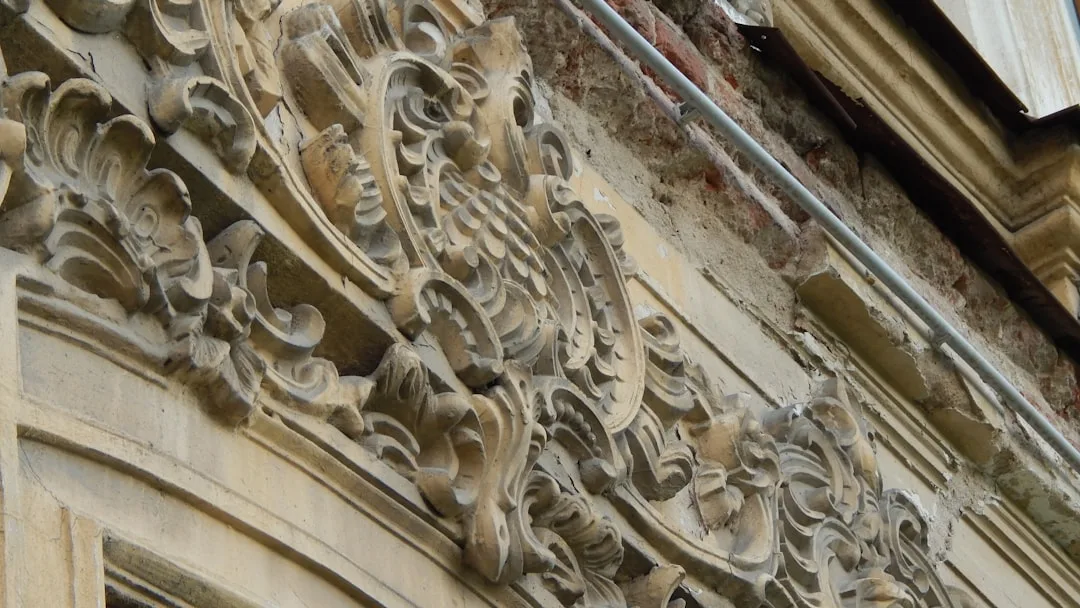
EPS ornaments on facades decay from moisture trapped in cavities you cannot see, a problem that appears 5–7 years after installation when paint still looks intact. The moisture accumulates behind moldings because standard installation leaves air gaps between the foam and substrate where humidity moves horizontally and never evaporates. Most contractors and architects ignore this cavity, assuming paint alone provides protection—it does not.
Why Moisture Moves Behind EPS Moldings Faster Than You Think
Capillary action draws moisture from mortar, concrete, and brick into the substrate, then into the foam cavity in under 24 hours after rain. The moisture does not move straight down through the paint; it moves horizontally through micro-gaps at edges, joints, and where moldings meet the wall. EPS foam absorbs water like a sponge once humidity enters the cavity—a 100mm cornice can hold 8–12 liters of water before visible damage appears on the surface.
Paint traps this moisture rather than stopping it. Most exterior paints are vapor-permeable (breathable), rated at 5–20 perms, allowing water vapor to pass through while blocking liquid water. The problem: in cavities, moisture never becomes vapor because air circulation is blocked. The foam stays wet, saturated to 40–50% water content within 24–36 months, triggering polymer hydrolysis and mold growth.
Field experience shows that ornaments installed over bare masonry without any moisture barrier fail within 5–6 years, while those with proper drainage and vapor barriers last 12–15 years. The difference is not visible until decay is irreversible.
3 Installation Gaps That Trap Moisture Behind Every Molding
Gap 1: No drainage plane between foam and substrate. Most contractors apply foam directly to damp masonry or brick, creating a continuous moisture path. Water trapped in this 2–5mm space has nowhere to exit and cannot evaporate because EPS has zero breathability on its back face. This cavity becomes a permanent moisture reservoir.
Gap 2: Sealant bridging at edges instead of flashing. Contractors caulk the top edge of cornices and keystones to stop water entry, but caulk cracks within 2–3 years due to thermal expansion (EPS moves 0.3–0.6mm per 10°C). Once caulk fails, water channels directly into the cavity through the failed joint. Proper metal flashing diverts water away instead of sealing it in.
Gap 3: No weep holes or drainage channels. Unlike brickwork, foam ornaments and facade ornaments have no built-in drainage pathway. Water that enters the cavity accumulates instead of exiting. A single 8mm weep hole every 600mm can reduce cavity moisture by 30–40% over 12 months, yet most projects have zero drainage points.
| Time Frame | Moisture Content (%) | Visible Signs | Structural Risk | Recovery Cost |
|---|---|---|---|---|
| 0–12 months | 8–12% | None (hidden) | Negligible | €0 |
| 12–24 months | 15–20% | Slight paint bubbling at edges | Foam saturation begins | €150–300 |
| 24–48 months | 25–35% | Paint peeling, soft spots behind molding | Partial foam degradation | €600–1,200 |
| 48–84 months | 40–55% | Visible mold, ornament separation from substrate | Complete internal rot | €2,500–5,000 |
| 84+ months | 60%+ | Ornament collapse or removal required | Structural failure | €8,000–15,000 |
How Long Does Moisture Take to Destroy EPS From Inside Out
Months 0–12: Moisture enters through edges and micro-cracks, reaching 8–12% water content. No visible signs yet, but mold colonies begin forming on foam edges. Paint exterior remains perfect.
Months 12–24: Water content rises to 15–20%. Capillary action spreads moisture across the entire molding width. Paint may show slight bubbling at corners or edges where adhesive has weakened from moisture—the first visible warning, easily missed during site visits.
Months 24–48: Saturation reaches 25–35%. The foam begins losing compressive strength, dropping from 40 kPa to 20–25 kPa in compressed zones. Mold accelerates, releasing acids that degrade polyurethane binders. Paint peeling accelerates, sometimes blamed on poor paint quality when the real culprit is internal moisture.
Months 48–84: Critical threshold. Moisture content hits 40–55%, and polymers begin hydrolysis—the chemical breakdown of the foam matrix. Soft spots develop where fingers can puncture the foam. Ornaments separate from substrates as adhesive loses bond strength. This is when property owners call contractors, only to discover full replacement is necessary because internal rot is irreversible.
Months 84+: Complete failure. Ornaments must be removed and replaced, costing €2,500–8,000 per ornament assembly depending on size and complexity. The substrate itself may be damaged, requiring additional remediation.
Real Materials That Block Moisture Behind Moldings
Drainage planes are not optional, they are structural insurance. A 25mm cavity with closed-cell spray foam backing stops capillary action—water cannot climb into foam because the barrier breaks the capillary path. Cost: €8–15 per square meter, or roughly €40–70 per linear meter of cornice. This adds 8–10 years to molding lifespan.
Self-adhesive membranes (like Bituthene or equivalent) applied between foam and substrate create a vapor break while allowing trapped moisture to migrate downward if installed with slight slope. These membranes are vapor-permeable (8–15 perms) on the inner face, allowing substrate moisture to evaporate over time. Cost: €12–20 per square meter. Installation must include a minimum 1:30 slope to guide water away.
Metal flashing over cornices and decorative window sills redirects water before it enters the cavity. Flashing should extend 150mm up the wall and 100mm forward, with a 1:20 slope and weep holes every 600mm. Aluminum flashing costs €15–25 per linear meter but eliminates moisture entry points entirely. Most moisture failures trace back to missing or undersized flashing.
Vapor-open finishes like silicate paints (3–5 perms) outperform standard acrylic (8–12 perms) by allowing interior cavity moisture to evaporate. If moisture does enter the cavity, silicate finishes allow trapped water vapor to escape before it condenses into liquid water. Silicate paints cost 40–60% more than standard latex but extend ornament life by 3–5 years when combined with proper drainage.
Why Contractors Skip Cavity Drainage Despite Knowing the Risks
Cost pressure drives omission. Proper drainage adds €200–400 to a typical 10-linear-meter cornice project. On a €3,000 budget, contractors face pressure to eliminate drainage specifications that don’t show visually. Architects rarely inspect cavity preparation during installation, so defects remain hidden until failure appears years later under warranty claims.
Knowledge gaps persist. Many installers learned EPS molding installation 10–15 years ago when moisture protection was poorly specified in standards. European EN 13163 standards for EPS foam do not mandate cavity drainage in non-ETICS applications, creating a regulatory blind spot. Without explicit requirement, contractors treat it as optional.
Schedule pressure accelerates cutting corners. Correct drainage requires 2–3 additional preparation steps—primer application, membrane installation, flashing setup. On a schedule-constrained project, removing these steps saves one workday per 50 linear meters. The €300–500 labor savings become an €8,000 replacement cost 5 years later, but the contractor is long gone.
Inspection Points That Reveal Hidden Moisture Problems Early
Year 1–2: Look for paint bubbling or crazing at cornice edges and keystone perimeters. Tap moldings with a rubber mallet—a hollow sound indicates cavities, a dull thud suggests moisture saturation. Use a moisture meter on paint surfaces; readings above 15% water content indicate cavity moisture despite paint appearance.
Year 3–4: Examine caulked joints for cracking or separation. Press ornament corners with light force—any soft spots indicate internal saturation. Peel back sections of paint at inconspicuous edges to inspect foam color and density. Dark spots or areas with reduced hardness confirm active decay.
Year 5+: If ornaments show paint peeling, soft spots, or mold, cavity moisture is beyond the repair threshold. Replacement is the only solution. Attempting to seal or repair at this stage delays inevitable failure by 1–2 years at additional cost.
Retrofit Strategies If Moisture Already Exists Behind Moldings
Early intervention (moisture content under 20%): Remove paint from affected areas, inject silica-based drying accelerators into cavities via 8mm holes, and allow 4–8 weeks of drying before repainting with vapor-open finish. This works only if moisture content is low and the foam structure remains intact. Cost: €300–600 per ornament assembly.
Advanced cases (moisture content 25–40%): Remove affected ornament sections, treat exposed substrate with moisture barrier, and re-install with proper drainage and flashing. This is a partial replacement approach that salvages undamaged sections. Cost: €1,200–2,500 per assembly.
Total replacement (moisture content above 40%): Remove ornaments completely, inspect and remediate substrate damage, install new ornaments with full drainage specification. This is the only reliable fix when decay is structural. Cost: €2,500–8,000 per assembly depending on complexity.
Building Codes and Standards That Address Cavity Moisture
European ETICS standard EN 13163 specifies EPS requirements for thermal insulation systems but does not mandate drainage for decorative moldings applied over masonry. U.S. building codes (IBC, IECC) treat EPS ornaments as non-structural trim, exempting them from detailed moisture management rules. This regulatory gap explains why moisture protection is inconsistently applied.
German DIN standards (DIN 4108, DIN 68800) address capillary moisture and require drainage planes in all cases where EPS is applied over hygroscopic substrates. Projects following these stricter rules show 2–3 times longer ornament lifespan than those using only IBC minimums. Specifying DIN compliance in project documents forces proper drainage.
ASTM C578 (standard for rigid cellular polystyrene) defines water absorption limits and requires testing at 25°C and 96 hours of submersion. EPS meeting this standard absorbs 2–3% water by volume. However, the standard does not address long-term saturation in cavities, where EPS can reach 60% water content over months. Real-world performance exceeds the standard’s scope.
The 7-Year Decay Timeline Explained
EPS moldings without cavity drainage typically reach failure-level moisture (40–50% saturation) between years 4–6, with complete structural failure by year 7. This timeline is consistent across European climates because saturation rates depend on capillary movement speed (8–12mm per week) and cavity geometry, not seasonal variation. A molding installed correctly shows zero moisture-related damage at year 10–12.
The 5–7 year window is the critical decision point where property owners choose between retrofit (if decay is early) or replacement (if decay is advanced). Waiting past year 7 guarantees total replacement cost and potential substrate damage. Acting at year 4–5 (when soft spots first appear) can sometimes extend lifespan another 2–3 years through drying intervention.
Understanding this timeline helps contractors pitch proper installation as insurance rather than cost. An extra €300–500 in drainage during year 1 prevents €5,000–8,000 replacement costs in year 6. Project budgets that omit drainage protection are gambling with the building envelope.