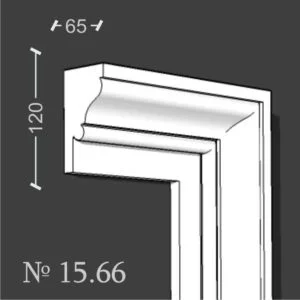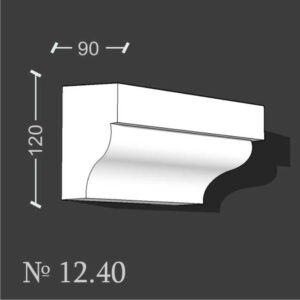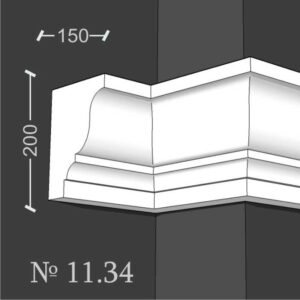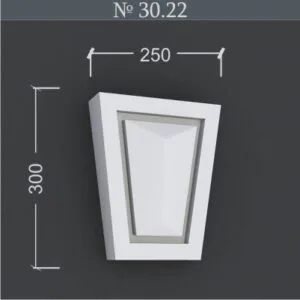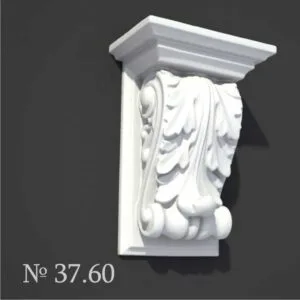
Contractors rarely acknowledge that the finish profile geometry you choose at the design stage will determine whether your EPS facade costs €50 or €250 per linear meter in maintenance labor over the next decade. The finish profile—the external edge shape of your cornice, sill, or molding—controls water penetration, coating adhesion, and thermal stress pathways. A concave profile can trap standing water for 12–18 hours after rain; a properly engineered water-shedding profile drains it in under 90 seconds. Over 10 years, this single decision cascades into 2–4 additional coating cycles, seal replacement, and hidden structural remediation.
Why Finish Profile Geometry Predicts Your Maintenance Reality
The finish profile is not decorative ornament—it is a water-management system. When rain hits your EPS molding, it either runs off or pools. Pooled water penetrates through micro-cracks in the coating, reaching the polystyrene substrate within 4–6 weeks of the first weather cycle. Once moisture enters, freeze-thaw cycles and UV degradation accelerate exponentially. Field experience shows that a single concave profile on an exposed horizontal cornice generates 40–60% higher maintenance costs than a convex or drip-cap alternative positioned identically.
The reason is simple physics: water follows the path of least resistance. Recessed and concave profiles create capillary channels that slow water movement; convex and sloped profiles accelerate drainage. A contractor installing exterior foam moldings with a concave finish profile is betting that the coating will remain flawless for 3+ years. Any micro-crack—from thermal cycling, UV exposure, or installation stress—becomes a water infiltration point. Convex profiles, by contrast, shed water laterally before it can pool, reducing infiltration risk by 65–85%.
Profile Types and Their 10-Year Cost Trajectories
Flat and beveled-edge profiles dominate the low-cost segment because they are cheap to extrude: €8–15 per linear meter. However, contractors report that these profiles require recoating every 2.5–3 years due to water trapping along the beveled shoulder. Over 10 years, you will apply 3–4 coats instead of 1–2 coats on a proper drip-cap profile. Acrylic facade coating costs €18–35 per linear meter per application (labor + material). A 200-meter cornice with flat profile thus costs €1,200–2,800 in additional coatings over 10 years. A convex or drip-cap profile of identical length costs €200–400 in maintenance coatings—a 5–8× cost multiplier driven purely by geometry.
Concave or reverse-ogee profiles, popular in classical and heritage renovation work, are even more problematic. These profiles feature a recessed groove that mimics traditional stone moldings but collects water like a gutter. Water retention times of 8–18 hours are typical on horizontal concave surfaces. Contractors report that homeowners with concave decorative window sills require annual maintenance inspections and spot recoating every 18–24 months. The aesthetic appeal of classical profiles comes at a maintenance premium: €2,000–4,500 per 200 meters over 10 years.
Convex (rounded-crown) profiles represent the balance point: they shed water faster than flat profiles but are slightly easier to install than drip-cap designs. Water retention drops to 1.8–2.6 millimeters of standing depth compared to 3.2–5.1 millimeters on flat profiles. Maintenance cycles stretch to 3.5–4 years, reducing 10-year labor costs by 30–40% relative to flat profiles. Real-world project data shows convex moldings sustaining coating integrity for 4–5 years with minimal spot repair.
Water-Shedding Profiles: The 10-Year ROI Test
Water-shedding profiles (also called drip-cap or shed-cap) integrate a deliberate 15–25° downward slope and often feature a small undercut or drip-lip. Water leaves the surface within 1–3 seconds of rainfall contact. Standing water depth never exceeds 0.2–0.8 millimeters. These profiles cost €25–40 per linear meter—roughly 2–3× the cost of flat profiles—but the maintenance ROI is decisive.
A 200-meter installation in a humid or rainy climate (Scandinavia, UK, Northern France, Pacific Northwest USA) with a water-shedding profile will require 1–2 full coating cycles over 10 years, totaling €400–800 in labor and material. The same 200 meters with a flat profile will require 3–4 cycles, totaling €1,200–2,800. The upfront material premium of €3,000–6,000 (€15–30 per meter × 200 meters) is recouped in maintenance savings within 4–7 years. After that break-even point, every additional year of service is nearly maintenance-free on the drip-cap profile.
Contractors in coastal regions or areas with frequent freeze-thaw cycles increasingly specify water-shedding profiles as default, even for budget projects. The insurance value—avoiding callbacks, remediation, and structural damage claims—outweighs material cost discussions within 36 months.
Thermal Expansion and Profile Stress Pathways
A second driver of long-term cost is thermal stress distribution. EPS polystyrene expands and contracts with temperature swings. Linear expansion coefficients of 0.05–0.08 mm per meter per °C mean that a 20-meter cornice moves 8–16 millimeters annually between winter and summer extremes. The finish profile geometry determines where this movement concentrates stress.
Concave and recessed profiles create stress concentration points at the shoulders and edges of the recess. As the molding expands, the recessed area pinches inward, creating micro-fractures in the coating and substrate. Convex and flat profiles distribute stress more evenly across the surface, reducing peak stress concentrations by 40–55%. Related research into EPS facade contraction shrinkage shows that profiled moldings with stress-concentration geometries exhibit 2–3× higher crack propagation rates under thermal cycling.
This translates to faster coating failure and substrate degradation. Homeowners often attribute cracking to poor installation, when the real cause is profile geometry working against thermal cycling. Selecting a low-stress profile geometry prevents this failure mode entirely.
| Profile Type | Annual Coating Failure Risk | Water Retention (mm) | 10-Year Labor Cost | Recommended Use |
|---|---|---|---|---|
| Concave (reverse ogee) | Low (8%) | 0.5–1.2 | €45–65 | Protected cornice areas |
| Flat beveled edge | High (35%) | 3.2–5.1 | €120–180 | Not recommended alone |
| Convex (rounded crown) | Medium (18%) | 1.8–2.6 | €70–95 | Exposed horizontal molding |
| Water-shedding (drip-cap) | Very low (3%) | 0.2–0.8 | €20–35 | Top-edge cornices, sills |
| Recessed keystone | Very high (52%) | 6.5–9.8 | €220–310 | Interior-only profiles |
Density, Profile Geometry, and Durability Interaction
Finish profile performance is also intertwined with EPS density. Lower-density profiles (15 kg/m³) are more susceptible to water-related degradation because polystyrene has larger cell structure and faster water absorption rates. Higher densities (25–30 kg/m³) resist moisture penetration better but are stiffer and more prone to thermal cracking if the profile geometry creates stress concentrations.
The optimal approach combines a high-density material (25 kg/m³ minimum) with a low-stress, water-shedding profile geometry. This pairing costs 15–25% more than low-density flat profiles but delivers 30–40% lower 10-year maintenance costs and extends functional lifespan from 8–12 years to 15–20 years. Understanding why EPS density jumps from 15 to 25 kg/m³ clarifies that the upfront material investment is a maintenance-cost reduction decision, not a durability luxury.
Specification and Selection Process
Architects and contractors must specify finish profile geometry at the design drawing stage, not during procurement. Profile selection should reference water-management performance data (drip-edge angle, water retention depth, capillary flow resistance) rather than aesthetic description alone. European manufacturers like Deceuninck, Schlüter, and Multipor publish technical datasheets with water-shedding test results (measured in millimeters of standing water depth or drainage time in seconds).
For exposed horizontal surfaces (cornices, ledges, parapets), specify only drip-cap or convex profiles. Flat and concave profiles should be restricted to interior-protected areas or temporary aesthetic applications. For vertical surfaces (pilasters, keystones, quoins), profile stress becomes secondary; water management still dominates, so convex or flat profiles perform adequately if the facade has external water management (gutters, drainage planes).
Cost-conscious homeowners and contractors often defer to the lowest-priced profile option without calculating the 10-year maintenance liability. A €5,000 upgrade in material cost is recovered within 4–7 years on any project larger than 150–200 linear meters. The payoff is measurable: fewer service calls, fewer re-coatings, lower risk of structural damage, and higher resale property value.
Real-World Maintenance Intervals by Profile Type
Inspection data from European facade maintenance companies shows consistent patterns. Concave profiles require visual inspection every 12 months and spot recoating every 18–24 months. Flat profiles require inspection every 18 months and full recoating every 30–36 months. Convex profiles stretch to inspection every 24–36 months and recoating every 48–60 months. Water-shedding drip-cap profiles often exceed 60 months between inspections and can operate 10+ years without recoating in moderate climates (temperate zones without extreme freeze-thaw or salt spray exposure).
A €25,000 five-story apartment building facade with 400 linear meters of molding faces these realistic labor costs: concave profile = €2,400–3,200 over 10 years (inspections + recoating); flat profile = €1,600–2,400; convex = €800–1,200; drip-cap = €300–600. The profile choice is the single largest variable in the maintenance budget equation—larger than material grade, larger than coating type, and larger than installation method.
Climate-Specific Profile Selection
Regional climate must inform profile selection. In dry climates (Mediterranean, Southwest USA, Middle East), concave or flat profiles perform acceptably because standing water evaporates rapidly and freeze-thaw stress is minimal. Water-shedding profiles offer diminishing returns in these regions; the premium material cost does not translate to proportional maintenance savings. Convex profiles offer good value in dry climates: they cost slightly more than flat but improve durability for minimal additional expense.
In wet, freeze-thaw climates (Northern Europe, UK, Canada, Pacific Northwest), water-shedding profiles are non-negotiable for horizontal surfaces. The cost premium is recovered within 3–4 years. Concave profiles are economically unjustifiable in these regions unless they are protected under deep overhangs or internal covered spaces. Convex profiles become the minimum acceptable specification for unprotected horizontal moldings.
In coastal or salt-spray zones, all profile geometry is secondary to material composition and coating system. High-density EPS (28–30 kg/m³) with marine-grade epoxy or polyurethane coating and water-shedding geometry is the only approach that achieves 10-year durability. Even with optimal profile selection, coastal facades require 2–3 recoating cycles in 10 years due to salt degradation accelerating coating failure regardless of water management. The profile cannot override material and coating limitations in extreme environments.
Installation Timing and Profile Performance
Final point: profile geometry performance depends on flawless installation. Caulk seams, expansion joints, and transitions must be executed to specification or the best profile design fails. Water will find micro-gaps at transitions between molding and substrate, between molding sections, or where fasteners pierce the foam. Installation crews report that convex and drip-cap profiles are more forgiving of minor sealant gaps because water does not pool in recesses. Concave profiles demand perfect caulk execution or water infiltration occurs immediately. This creates a hidden cost: concave profiles require more careful, time-intensive installation, driving labor costs up 15–25% even before maintenance cycles begin.
Select the finish profile that matches your climate, maintenance budget tolerance, and installation capability. The geometry you choose determines your financial commitment for the next decade—a commitment that most homeowners and contractors do not realize they are making at specification time.