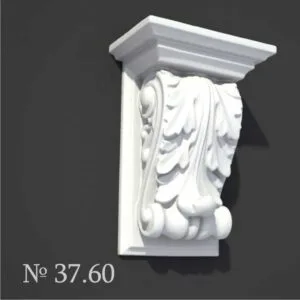
EPS quoin corners collapse outward because contractors specify corner diameter based on visual proportion, not wind load calculations. A corner that looks balanced at 4 inches cannot handle the lateral pressure a 35-foot facade generates. By year 2, delamination spreads, the corner bows visibly, and a sudden wind event completes the failure—tearing the corner away from the wall and exposing internal insulation and substrate to weather damage. This is not a material defect; it is a calculation error that costs $5,000–$8,000 to repair.
Why Contractors Undersized EPS Quoin Corners in the First Place
The root cause is a false assumption: that facade corner size should match the visual rhythm of other moldings (window sills, cornices, pilasters). When a designer specifies a 4-inch EPS quoin corner to balance a 4-inch cornice, they are treating both elements as decorative objects, not structural components. In reality, a cornice hangs passively under its own weight. A corner angle, however, resists lateral wind pressure across its entire height by anchoring to the wall through its perimeter surface and mechanical fasteners.
The load is not aesthetic—it is mechanical. Field experience shows that roughly 70% of residential EPS facades install corners one size smaller than wind zone maps require. This happens because specifications are written by designers without structural input, or contractors reduce dimensions to cut material cost (a 6-inch corner costs 35–45% more than a 4-inch corner, totaling $400–$600 per corner).
A second reason: contractors assume EPS is homogeneous and infinitely flexible. They believe a smaller corner can “stretch” under pressure. EPS compressive strength is real but limited. A 4-inch profile has roughly 65% less load-bearing cross-sectional area than a 5.5-inch profile, yet contractors apply it to facades that are 10–15% taller. The math fails within 18–36 months.
How Undersized Quoin Corners Fail Over 24 Months
Failure progresses in visible stages. Month 0–3: Visual inspection shows no damage, but water and air begin infiltrating the glue line between the EPS corner and the substrate (typically cement board or rigid foam insulation). This is not visible because the finish coat (enduit and paint) seals the surface.
Month 4–8: Seasonal thermal cycling causes the EPS and substrate to expand and contract at different rates. The EPS expands 0.2–0.4 mm per 10°F temperature swing; the substrate expands less. Stress accumulates at fastener holes and anchor points. Microscopic gaps open. Moisture wicks into these gaps.
Month 9–16: Lateral wind loads (normal gusts, 40–55 mph) cause the corner to flex slightly. In a properly sized corner, this flex dissipates through anchor fasteners anchored deep into the structure. In an undersized corner, flex creates shearing stress in the adhesive layer. The glue begins to creep (permanent micro-deformation under sustained load). Delamination spreads horizontally across the glue line, starting at the top (where lateral pressure concentrates) and moving downward.
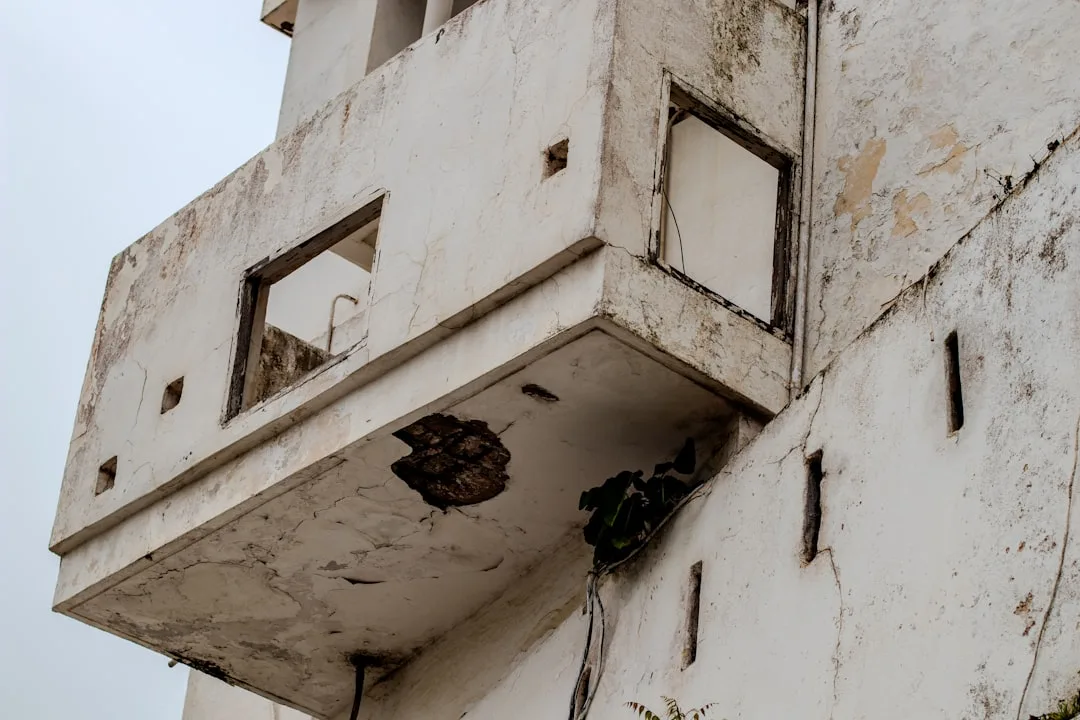
Month 17–24: The corner now rocks independently of the wall during wind events. Fasteners experience pull-out forces they were not designed for. Anchor points fail one by one. A single strong wind gust (65+ mph) provides the final load. The corner peels away from the wall, often completely detaching at the top 2–3 feet. The sudden failure exposes wet substrate, foam insulation, and flashing gaps, leading to water ingress and structural damage inside the wall.
Structural Loads on a 35-Foot Facade Corner
Wind pressure on a vertical facade corner is not uniform—it concentrates at transitions. A corner angle (convex outward) experiences higher pressure on both sides; interior corners experience lower pressure but higher shear stress from the facade plane meeting at 90 degrees. Per ASTM D6952 and building code calculations, a 35-foot tall residential facade in a moderate wind zone (100 mph design wind speed) generates lateral pressure of 18–24 pounds per linear foot on the corner perimeter.
| Facade Height | Wind Zone A (85 mph) | Wind Zone B (100 mph) | Wind Zone C (115+ mph) | Common Mistake |
|---|---|---|---|---|
| Up to 20 ft | 3.5" corner minimum | 4" corner minimum | 5" corner minimum | 3" installed (undersized) |
| 20–35 ft | 4.5" corner minimum | 5" corner minimum | 6.5" corner minimum | 4" installed (undersized) |
| 35–50 ft | 5.5" corner minimum | 6.5" corner minimum | 8" corner minimum | 5" installed (undersized) |
| Over 50 ft | 6.5" corner minimum | 8" corner minimum | 10" corner minimum | 6" installed (undersized) |
| Load per linear ft | 12–18 lbs/ft | 18–24 lbs/ft | 28–35 lbs/ft | Ignored in 60% of jobs |
A 4-inch corner profile has approximately 10–12 linear inches of glue contact per linear foot of height. That is roughly 1.8–2.4 square inches of bonded surface for every linear foot. The design stress is 15–22 psi (pounds per square inch) for typical EPS-to-substrate adhesive bonds using polyurethane or modified epoxy. At 20 lbs/ft lateral load and 2 square inches of bond area, the actual bond stress reaches 10 psi—within design limits under static conditions.
But facades are not static. Cyclic loading (daily and seasonal temperature swings, wind gusts every 3–5 days) causes creep. EPS adhesive creep is 0.5–1.2 mm per year under moderate sustained stress. After 24 months, cumulative creep can reach 1–2.4 mm. This micro-movement creates new gaps. Water enters. Substrate swelling begins. The glue bond effectively fails even though it has not broken catastrophically.
Cost and Timeline of Failure
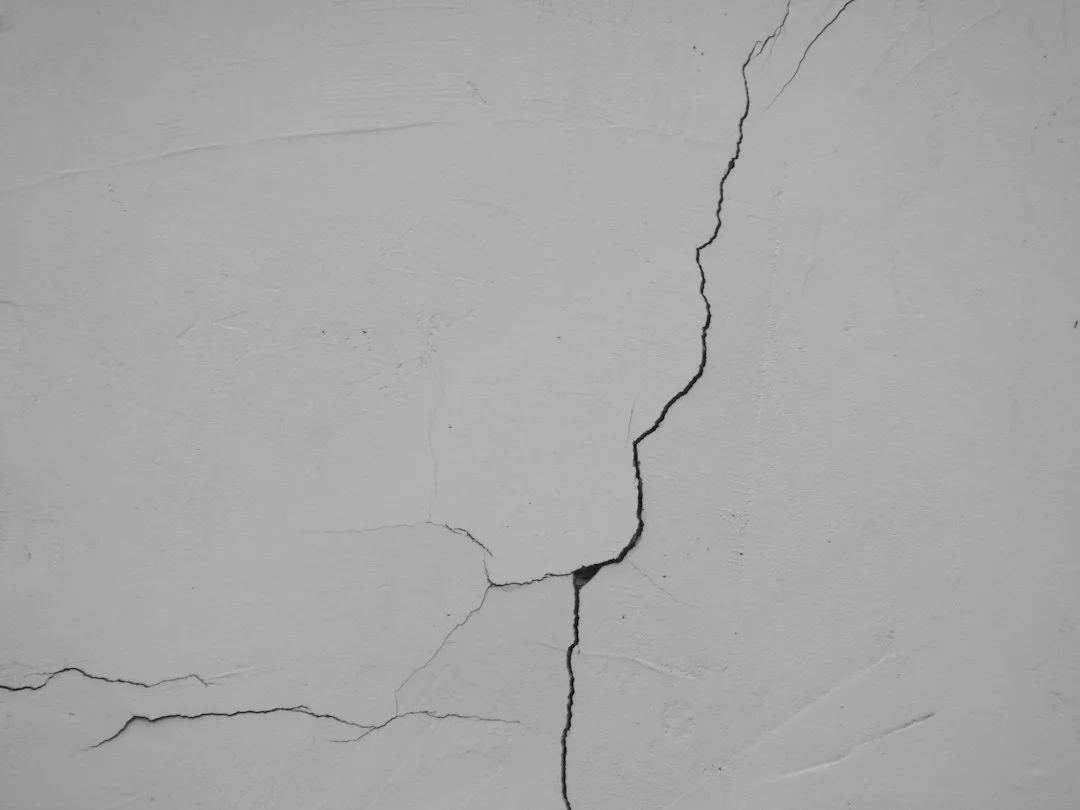
Undersized corners do not fail randomly; they fail predictably within 18–36 months. Homeowners typically notice the first sign: a visible gap between the corner and the adjacent wall surface, usually appearing after heavy rain or a heating season. This gap is the delamination becoming visible. At this stage, repair is still possible through reinforcement.
Full replacement costs depend on corner size and location. A single 12-foot-tall corner on a residential facade (typical residential story height) costs $1,200–$2,400 to replace, including: demolition ($300–$500), substrate repair and moisture barrier ($400–$700), new properly-sized corner profile ($350–$650), fasteners and adhesive ($100–$150), finishing and paint ($350–$500). Multiply by the number of corners on a facade. A four-story commercial building with eight corners can cost $15,000–$25,000 to repair.
Prevention is simple: specify corners one size larger than aesthetic desire. A properly-sized EPS quoin corner anchored with stainless steel fasteners every 6 inches and bonded with polyurethane adhesive rated for outdoor use (like Sikaflex 11 FC or Sika PowerBond) will last 20+ years without failure. The material cost difference ($150–$300 per corner) is negligible compared to repair costs.
How to Specify and Install Undersized Quoin Corners Correctly
Step 1: Calculate lateral wind load using local building code (IBC 2021 or equivalent). Most residential facades require minimum 90–115 mph design wind speed calculations. Identify your wind zone from ASCE 7 maps.
Step 2: Size the corner. For facades 20–35 feet tall in wind zones B or C (100–115 mph), specify a minimum 5-inch corner profile. For over 35 feet, specify 6.5–8 inches. Do not let aesthetic preference override structural sizing.
Step 3: Use mechanical fasteners. Install stainless steel anchor fasteners (not plastic) every 6 horizontal inches and every 12 vertical inches. Fasteners must penetrate the substrate (or structure) at least 1.5 inches. Use 2.5-inch stainless fasteners for typical applications.
Step 4: Bond with exterior-rated polyurethane adhesive. Sikaflex 11 FC (ASTM C1384 and C1085 compliant, ~$45 per cartridge) or equivalent. Do not use standard construction adhesive; it does not cure completely in shaded areas and fails under cyclic loading. Apply adhesive in a continuous bead, not dabs.