EPS facade coatings fail not from structural weakness but from ultraviolet radiation that degrades the protective finish into chalky powder within 4 years. Most contractors and homeowners attribute peeling and flaking to moisture or thermal movement, missing the real culprit: UV light breaks down acrylic polymer chains, compromising adhesion long before weather cycles cause cracking. South-facing EPS cornices, keystones, and quoins show visible peeling by year 3 on standard coatings; premium UV-resistant coatings can extend this to 7–8 years, but only if specified from day one.
How Ultraviolet Light Destroys Acrylic Coatings in 48 Months
Acrylic and polyurethane coatings that protect expanded polystyrene contain polymer chains held together by carbon-carbon bonds. Ultraviolet radiation (wavelengths 280–400 nanometers) carries enough photon energy to break these bonds, a process called photo-oxidation. Once the coating loses molecular integrity, it can no longer adhere to the foam substrate or resist water penetration.
Field experience shows south-facing molding experiences 5–7 hours of direct midday UV exposure during summer months. A standard acrylic exterior coating (without UV absorbers or ceramic microspheres) exposed to this intensity will show surface chalking within 18 months. Chalking is visible as white powder that rubs off on your hand—it signals that the coating surface has converted to calcium carbonate, a sign that polymer degradation has begun subsurface. By year 2–3, chalk accumulates faster and small blisters appear at the coating–foam interface as water vapor escapes.
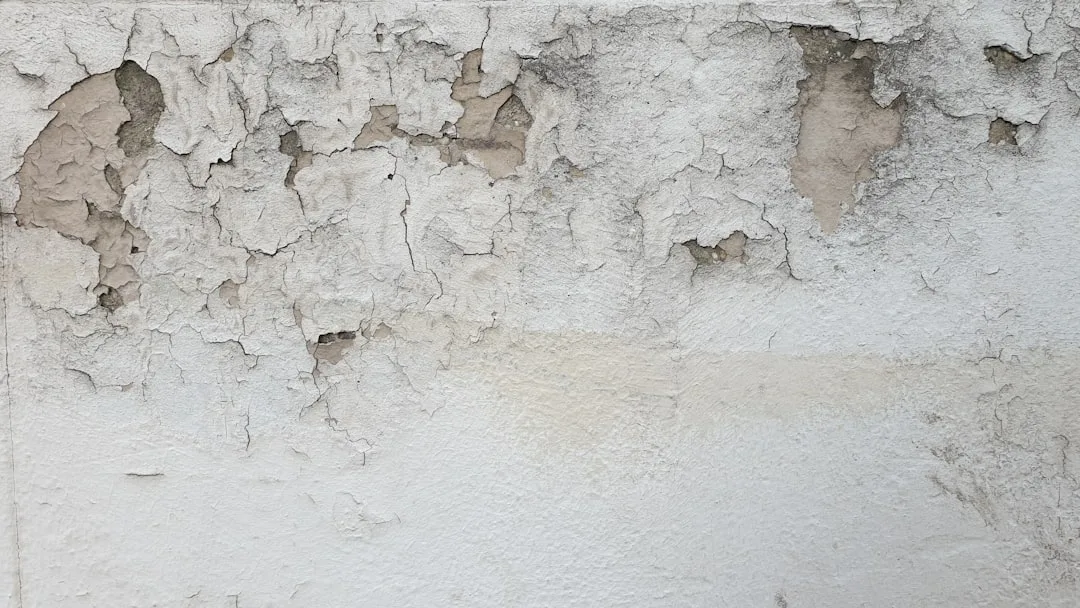
By year 4, peeling and flaking accelerate. The compromised coating separates from the EPS base in sheets because water ingress has weakened the adhesion layer. Unlike freeze-thaw cracking that occurs over a single season, UV peeling is cumulative and accelerates over time. A 2,000 square foot facade with standard coatings on south and west exposures can require $12,000–$24,000 in recoating by year 5, versus $2,000–$4,000 upfront for a UV-resistant specification.
Coating Grade and Exposure Direction Determine Failure Timeline
| Exposure Direction | Year 1 Condition | Year 2-3 Appearance | Year 4+ Status | Typical Cost to Repair |
|---|---|---|---|---|
| South-facing (peak UV) | Minor chalking | Surface crazing, chalk rub-off | Heavy peeling, base foam visible | $8–12/sq ft recoating |
| West-facing (afternoon sun) | Slight color fade | Early peeling at edges | Flaking 30–50% of surface | $6–10/sq ft recoating |
| North-facing (minimal sun) | No visible change | Light weathering only | Minimal peeling if any | $3–5/sq ft recoating |
| East-facing (morning sun) | Faint discoloration | Moderate crazing | Peeling 15–25% of surface | $5–8/sq ft recoating |
| Sheltered overhang | Stable color | Minimal degradation | Slight chalking only | $2–4/sq ft refresh |
Not all EPS surfaces fail simultaneously. Exposure direction and coating quality create predictable failure patterns that contractors can map before installation.
South-facing surfaces (180° to 270° true bearing) receive peak UV intensity between 10 a.m. and 4 p.m. year-round. A standard acrylic coating on this exposure will show heavy peeling by month 36–48. West-facing surfaces receive afternoon UV (strongest at 2–5 p.m.) and fail only slightly slower, typically by month 40–52. East-facing surfaces receive weaker morning UV (less intense spectral composition) and extend coating life to 60–72 months. North-facing surfaces receive almost no direct UV and can maintain a standard coating for 8–10 years or longer.
Coating grade changes this timeline dramatically. A low-grade acrylic (commonly $0.80–$1.00 per square foot, often used on budget EPS renovation projects) offers minimal UV absorber package and fails 18–24 months earlier than mid-grade alternatives. Mid-grade acrylic (often specified on ETICS facades, priced $1.20–$1.60 per square foot) includes titanium dioxide pigment and some UV absorber but still shows peeling by year 4–5. Premium UV-stabilized acrylic (priced $1.80–$2.40 per square foot) incorporates ceramic microspheres, hindered-amine light stabilizers (HALS), and enhanced titanium dioxide loading to extend exterior life to 7–8 years on south-facing exposure.