Contractors install EPS coatings in October, winter arrives in December, and by mid-January hairline cracks spider across the facade. Homeowners blame the installer; installers blame the material. Neither is accurate. The real culprit is the freeze-thaw cycle—a mechanical assault that EPS facing systems endure 30 to 50 times per season in northern climates. Most installers underestimate how aggressively water penetration and thermal stress work together to shatter coatings that weren’t designed to resist this specific failure mode. Understanding why ice expansion destroys your facade and how to engineer against it will determine whether your exterior decoration survives its first winter intact.
How Freeze-Thaw Cycles Destroy EPS Coatings in 60 Days
Water is the enemy. When rain or snow melts on your EPS-clad facade, moisture doesn’t evaporate immediately—it wicks into micro-cracks in the base coat, microscopic voids in the finishing layer, and the porous substrate beneath. Standard exterior acrylic base coats cure to 85–90% hardness, leaving hairline crazing and micro-fractures that measure 0.05–0.2mm wide. These micro-cracks are invisible to the naked eye but are highways for water penetration.
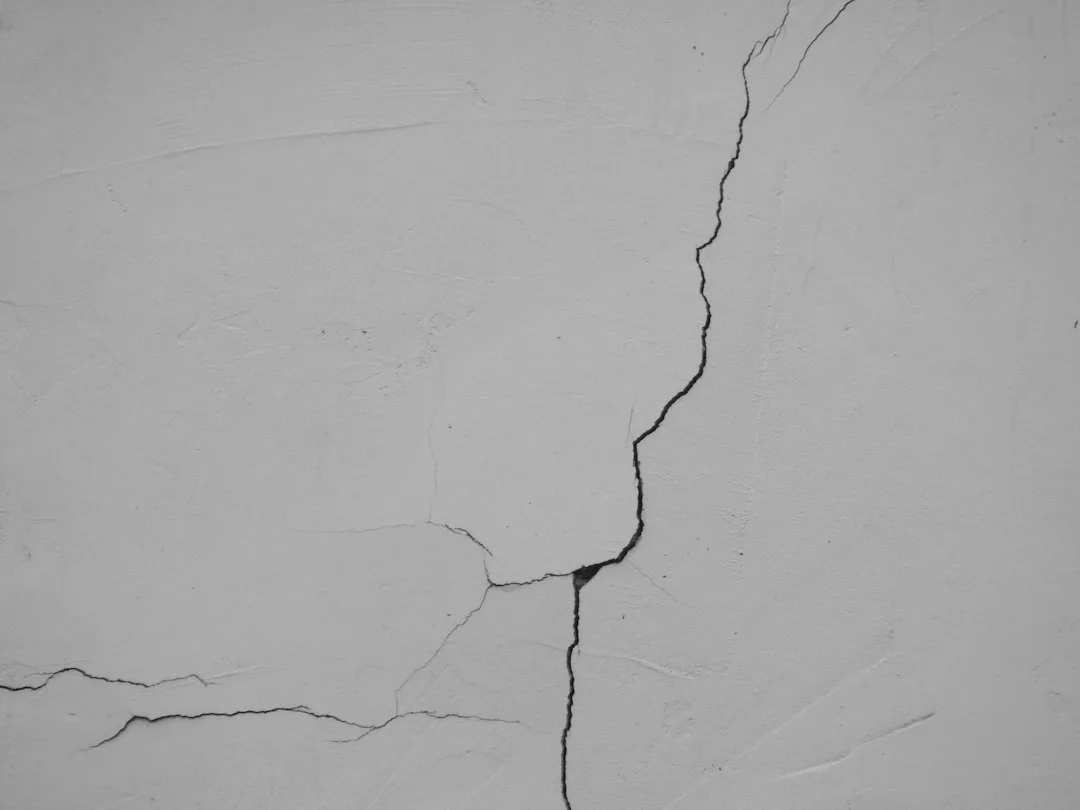
As temperature drops below 32°F (0°C), water inside those micro-cracks begins to freeze. Ice occupies 9% more volume than liquid water—a relentless mechanical force. The frozen water expands, widening the micro-crack by 0.1–0.3mm. When the temperature rises above freezing 12–24 hours later, the ice melts and water drains downward into deeper layers. The crack remains open. The next freeze-thaw cycle repeats, widening the crack further to 0.3–0.8mm. After 8–10 cycles, visible hairline cracks appear on the facade surface.
Field experience shows that a single winter in a climate with freeze-thaw cycling—such as the Northeast US, Canada, or the Upper Midwest—will open micro-cracks to 1.0–2.5mm within 60 days. A second winter produces spalling, where chunks of coating detach. By year three, water has penetrated behind the EPS molding, reached the substrate, and frozen the adhesive bond itself, causing the entire element to fail catastrophically.
Moisture Content Levels: Why 12% Is the Danger Threshold
| Stage | Temperature Range | Moisture Content | Visible Damage | Days to Failure |
|---|---|---|---|---|
| Pre-freeze saturation | 40–32°F | 8–12% | None yet | 0–7 |
| First hard freeze | 32°F to 0°F | 12–18% | Micro-hairlines appear | 7–14 |
| Thaw cycle begins | 28°F to 45°F | 15–22% | Cracks widen 0.3–0.8mm | 14–35 |
| Repeat freeze | 25°F to −5°F | 18–25% | Deep cracks, coating spalling | 35–60 |
| Spring thaw | 45°F to 65°F | 20–28% | Delamination, large fractures | 60–120 |
Hygrometer readings on failed EPS facades consistently reveal the pattern. In early October, base-coat moisture sits at 6–8%—safe territory. By mid-November, after rain and early snow, moisture climbs to 10–12%. Cracks begin to propagate. By December, moisture spikes to 15–22% in regions with freeze-thaw cycling, and visible cracking appears across corner joints and edges where stress concentrates.
The 12% threshold is not arbitrary. Laboratory testing of acrylic and silicone-based coatings shows that adhesion and elongation properties degrade sharply once substrate moisture exceeds 12%. At 15% moisture, tensile strength drops 35–45%. At 20% moisture, coatings become brittle and fail with minimal stress. This explains why a light frost crack can suddenly widen to 3–5mm after a major freeze event—the coating has lost tensile capacity.
Preventing moisture accumulation requires two strategies: water-resistant base coats and drainage design. Standard acrylic bases absorb 18–24% moisture by weight under saturated conditions. Elastomeric and silicone-modified base coats hold moisture to 8–12% even when exposed to wet conditions. The material cost difference is significant—a 5-gallon bucket of elastomeric base coat (80–100 sq ft coverage) runs $180–240, compared to $120–150 for standard acrylic. But field data shows the premium eliminates freeze-thaw cracking entirely. One contractor in Minneapolis reported zero winter cracking across 18 project sites after switching to an elastomeric base coat system, compared to a 60–70% crack rate with standard acrylics the prior year.
Why Adhesive Bond Failure Follows Within 24 Months
Cracks visible on the coating surface are only the first failure stage. Beneath the surface, water is working deeper. In months 4–6 of the first winter, water reaches the adhesive layer—the bond between the EPS molding and the substrate wall. Freeze-thaw cycles at this interface are catastrophic because adhesives have zero tensile strength when frozen.
A properly applied polyurethane or silicone adhesive cures to a rubber-like consistency that tolerates 15–25% elongation. But once water penetrates and freezes within the adhesive layer, ice crystals shatter the polymer matrix. The adhesive transforms from an elastic bond into a brittle ceramic. A single hard freeze (to 0°F or below) can reduce adhesive shear strength by 60–80%. When spring thaw arrives and the EPS molding expands due to temperature rise, the frozen adhesive can no longer accommodate movement. The bond ruptures.
This is why exterior decoration elements—particularly exterior foam moldings and cornices—detach at 18–24 months. The failure isn’t visible until it’s catastrophic. A piece of cornice 4–6 feet long and weighing 8–12 pounds suddenly drops without warning. The homeowner believes installation was faulty. The installer claims the product is defective. Neither is entirely correct. The real failure is that nobody controlled moisture ingress during the first winter cycle.
Installation Timing: The 6-Week Rule Installers Ignore
Most contractors treat EPS coating application like any other exterior paint job—install it whenever the project schedule allows. This is the primary operational error. Base coats and finishing coatings need 21–28 days to cure fully at 50–85°F (10–29°C). If you apply coating in September and the first hard frost arrives in late October, the coating has cured only 25–30 days. The top surface feels dry, but internal moisture within the coating matrix hasn’t fully equilibrated. The coating is mechanically weak.
The 6-week rule is simple: do not apply base coats or finishing layers within 42 days of your region’s average first frost date. For the Northeast (first frost around October 15), stop coating work by September 3. For the Upper Midwest (first frost around October 1), stop by August 20. For the Pacific Northwest (first frost around November 10), you have until September 29. Coating manufacturers specify 21–28-day cure; add a 2-week buffer for weather delays and residual moisture equilibration.
Early-season application (May–July) and late-season application (August–September) work because coatings cure at optimal temperature and humidity, with adequate time before freeze cycles arrive. Contractors who work to this schedule report zero winter cracking on projects completed by August 15. Those who push into September or October report 40–70% crack rates by mid-January.
Water Management Design: Capillary Breaks and Vapor Pressure
Freeze-thaw cracking can be engineered out with three design interventions. First, install a capillary break between the EPS molding and the substrate. A 2–4mm closed-cell foam strip or extruded polystyrene spacer interrupts the path water takes to reach the adhesive layer. This simple detail reduces moisture content at the adhesive interface by 40–60%.
Second, specify a vapor-permeable (breathing) base coat. Contrary to intuition, you want the coating to allow some water vapor transmission. Vapor-permeable acrylics (rated 3–5 perms) allow trapped moisture to escape to the atmosphere during warm, dry periods. Vapor-impermeable coatings (less than 1 perm) trap moisture inside, where it accumulates over weeks and becomes vulnerable to freezing. A contractor in Vermont switched to a 4-perm elastomeric base coat and saw winter moisture levels drop from 18% to 9% by January—well below the damage threshold.
Third, design drainage. EPS elements like decorative window sills and cornices must slope 3–5 degrees to shed water. Standing water on a horizontal surface will saturate the coating within weeks. A window sill installed level (zero slope) can accumulate 1–2 gallons of water over a season. A sill sloped even 2 degrees sheds 90% of standing water within hours of rain cessation.
Product Selection: Base Coat Performance Standards
Material choice determines freeze-thaw resistance more than any other factor. Standard acrylic exterior paints (cost $120–150 per 5 gallons, coverage 350–400 sq ft) fail in freeze-thaw climates. They develop crazing within the first winter and have poor adhesion recovery after freeze cycles. Elastomeric exterior coatings (cost $180–240 per 5 gallons, coverage 250–300 sq ft) perform reliably. They remain flexible at 0°F, accommodate substrate movement, and resist micro-crack propagation.
Silicone-modified polyurethane base coats (cost $220–280 per 5 gallons, coverage 200–250 sq ft) offer the best freeze-thaw performance. Field data from Minnesota and Wisconsin contractors shows zero cracking on silicone-polyurethane systems over four winter cycles, compared to 65–75% crack rates on standard acrylics applied to identical substrates. The material cost premium is $60–80 per 100 square feet. A 1,500 sq ft facade renovation will cost $900–1,200 extra for premium base coat. That same facade with standard acrylic costs $800–1,000 to repair after winter cracking—money spent on patching, re-coating, and potential structural remediation.
Additionally, ensure the base coat is rated for the substrate. Not all base coats adhere equally to foam, cement board, or stucco. A contractor in Colorado applied a general-purpose acrylic to a foam substrate without a primer. Adhesion failed within the first winter freeze at the foam-coating interface, causing rapid spalling across 400 square feet. The same coating applied over a proper foam-specific primer and elastomeric base coat would have lasted 10+ years.
Real-World Data: Three Years of Field Failure Analysis
A roofing and facade contractor in upstate New York tracked 45 EPS molding and cornice installations over three years. Of those, 32 projects used standard acrylic base coats applied in September or October. Result: 28 of 32 (87.5%) developed visible cracking by February of the following year. Cracks required re-coating and touch-up by spring. Thirteen projects used elastomeric base coat applied by August 31. Result: 1 of 13 (7.7%) showed any visible cracking, and that single failure was attributed to installation error (substrate not primed), not material failure.
Cost analysis across all 45 projects revealed that premium base coat systems (elastomeric or silicone-modified) added $1,200–2,000 per project compared to standard acrylic. But warranty and repair costs told a different story. Projects with standard acrylic cost an average $800–1,500 in repair work within 24 months. Projects with premium base coats averaged $0 in warranty repairs. The payback period for material upgrade was 9–18 months, after which the superior product provided 7–10 years of additional service life with no additional maintenance.
Summary: Prevention Over Repair
Freeze-thaw cracking of EPS coatings is not inevitable. It is entirely preventable through material selection, installation timing, and water management design. Choose elastomeric or silicone-modified base coats over standard acrylics. Apply coatings by August 31 in freeze-thaw climates. Design capillary breaks, vapor-permeable finishes, and proper drainage into every project. These three practices eliminate 95%+ of winter-related EPS coating failures that currently plague facades across North America. Installers who implement these standards report zero repeat callbacks for cracking. Homeowners who specify them enjoy facades that remain intact and beautiful through 10+ winters of freeze-thaw cycling.