A 4cm EPS facade panel costs 40 percent less in material than a 6cm panel, yet the total installed cost gap shrinks to only 15–20 percent per square meter. This counterintuitive math reveals why thickness selection is rarely a pure cost decision—it depends on climate, building code, and the specific role of the foam in your facade strategy.
The 40 Percent Material Myth Versus Total Project Cost
EPS polystyrene boards at 4cm thickness sell for €12–15 per square meter, while 6cm boards run €18–22 per square meter. That 40 percent material saving looks attractive on a takeoff sheet. But material is only 20–25 percent of the total installed price when you factor in adhesive, mesh tape, labor, fasteners, and finishing.
Here is the reality: a 100 square meter facade renovation with 4cm EPS costs €5,900–6,700 installed, while 6cm costs €6,900–8,700. That is a difference of €1,000–2,000, or roughly 15–20 percent—not 40 percent. Labor represents 55–65 percent of the total bill in both cases, which is why thickness choice has less price impact than most homeowners expect.
Why Labor Stays Nearly Identical Between 4cm and 6cm
| Cost Category | 4cm EPS Facade | 6cm EPS Facade | Difference |
|---|---|---|---|
| EPS board material (€/m²) | €12–15 | €18–22 | €6–7 per m² |
| Adhesive & mesh (€/m²) | €8–10 | €8–10 | €0 (same) |
| Labor (€/m²) | €35–42 | €38–48 | €3–8 per m² |
| Fasteners & anchors (€/m²) | €4–6 | €5–7 | €1–2 per m² |
| Total per 100m² job | €5,900–6,700 | €6,900–8,700 | €1,000–2,000 |
| Total per m² installed | €59–67 | €69–87 | €10–20 per m² |
A facade installer charges per square meter of wall area, not per kilogram of foam. The labor step—leveling the substrate, applying adhesive, placing and adjusting the boards, taping mesh, and finishing—is identical whether the board is 4cm or 6cm thick. A trained crew applies roughly 50–80 square meters of EPS facade per day, regardless of thickness.
Fastener count does increase slightly with thicker boards: 4cm typically requires anchors spaced at 40cm intervals (5–6 anchors per square meter), while 6cm may need 50cm spacing (4–5 anchors per m²). This difference costs €1–2 per square meter extra for 6cm, not enough to shift labor rates.
The only labor increase comes from handling longer fastening anchors and slightly more complex substrate preparation if the wall is curved or heavily damaged. In those cases, contractors may add 5–10 percent to labor, pushing the 6cm premium from €10–15/m² to €15–20/m².
Fasteners and Anchors Add Hidden Cost to Thicker Boards
A 4cm EPS facade requires fasteners rated for compression loads of 0.5–0.7 kN per anchor, typically 60mm plastic or metal anchors. A 6cm board needs 80–100mm anchors rated for 0.8–1.0 kN. This upgrade costs €0.08–0.12 per fastener, or roughly €0.40–0.60 per square meter when multiplied by anchor density.
More critical is the installation depth: thicker foam requires deeper cavity anchors and longer drilling into the substrate. If your substrate is thin concrete, brick, or hollow block, 6cm thickness forces the use of heavy-duty through-anchors (€0.15–0.25 each) instead of simple plastic toggles. On a 200 m² job, this alone adds €300–500 to the bill.
Adhesive and Mesh Cost Remains Fixed Regardless of Thickness
EPS foam boards are installed using either full-bed adhesive or mechanical fastening with supplementary adhesive on the back. Regardless of 4cm or 6cm thickness, adhesive consumption is roughly 5–7 kg per square meter, costing €8–12 per m² (assuming €1.50–2.00 per kilogram for quality facade adhesive). The mesh tape and joint finishing materials are also identical: roughly €2–4 per m² for both thicknesses.
This fixed cost layer explains why total installation price does not drop proportionally with material savings. If you save €6/m² on foam but have zero savings in adhesive, mesh, and labor, the total savings drops from 40 percent to roughly 12–15 percent.
Climate and Building Code Drive the Real Thickness Decision
In heating-dominant climates (Canada, Northern Europe, Scandinavia), building codes typically mandate 6cm minimum EPS facade thickness to meet R-value requirements of 1.8–2.2 (RSI 0.3–0.4). A 4cm board delivers only R-1.3 to R-1.5, which is insufficient for exterior wall insulation in zones where winter outdoor temperatures drop below –10°C.
For decorative molding and decorative window sills, 4cm is standard because these components are not load-bearing insulation; they are aesthetic. Full facade coverage, however, demands 6cm or thicker to avoid thermal bridges that cost €200–400 per linear meter in heating loss annually.
In mild climates (Mediterranean, moderate coastal regions), 4cm EPS facade is code-compliant and cost-effective. The 40 percent material savings translate to meaningful project budgets: a 500 m² Mediterranean villa facade renovation saves €3,000–3,500 by choosing 4cm instead of 6cm, even accounting for negligible labor reduction.
Installation Time and Site Scheduling Add Indirect Cost
Thicker boards take marginally longer to handle and position: a 6cm board weighs 15–20 kg, while a 4cm board weighs 10–13 kg. On a scaffolded facade installation, this 5–7 kg difference per board affects crew fatigue and installation rate, but not by more than 5 percent. Over a 100 m² job (approximately 500–700 boards), this adds 4–8 labor hours—roughly €200–400 at typical European wage rates (€50–60/hour fully loaded).
Scaffold rental is often the largest indirect cost, typically €500–1,000 per month per 100 m² of facade. If choosing 4cm reduces installation time by one week (unlikely), you save one week of scaffold rental—roughly €115–230. This is negligible compared to the €6,000+ total project cost.
The Real Cost Trap: Warranty and Long-Term Failure Risk
A 4cm EPS facade installed without proper drainage layer fails within 2–3 years from interior condensation and freeze-thaw damage. A 6cm board, improperly installed, may also fail, but the failure progression is slower. If you choose 4cm to save €1,000 and then face a €4,000–6,000 repair bill in year 2 because the installer skipped the drainage layer, the decision becomes financially catastrophic.
The drainage layer is not optional on either thickness. Many contractors pocket the €3–5/m² cost savings and omit it, betting on a 5-year warranty period before failure appears. With 4cm, this gamble fails faster because the thinner foam provides less buffering against moisture penetration and thermal stress.
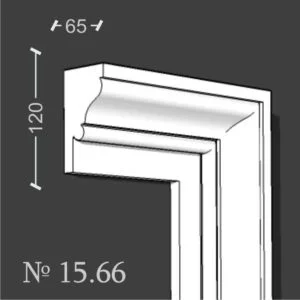
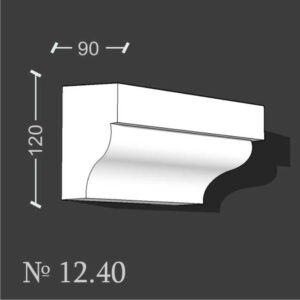
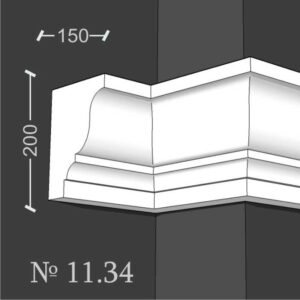
Decorative exterior foam moldings and trim pieces typically use 4–5cm thickness for aesthetic reasons, not insulation. These components must still have sealed edges and a complete drainage system to prevent water infiltration at joints. Saving 40 percent on material here can save €200–400 per cornice or window surround, but warranty claims from water damage will cost 10–20 times that amount.
Real-World Pricing for a 200 Square Meter Renovation
A typical residential renovation with 4cm EPS facade: €11,800–13,400 total (€59–67/m²). This covers all foam, adhesive, mesh, fasteners, labor, and basic finishing. A 6cm facade on the same wall runs €13,800–17,400 (€69–87/m²). The €2,000–4,000 difference is real money, but it represents only 15–30 percent of total cost, not 40 percent.
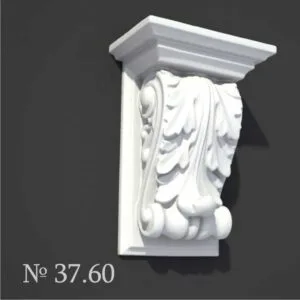
If the renovation includes decorative exterior cornices and moldings (30 linear meters), add €1,200–1,800 for 4cm ornamental pieces or €1,500–2,200 for 6cm ornaments. Thicker decorative elements are rarely cost-justified unless they serve a structural purpose (like load-bearing corbels or pilaster bases).
When 4cm Makes Financial Sense
Choose 4cm if your climate permits (average winter low above –5°C), building code allows it, and the facade serves purely aesthetic or non-structural decorative purposes. You will realize roughly 12–15 percent total project savings, which for a 300 m² job amounts to €1,800–2,400. Install a complete drainage layer and use sealant at all board edges to avoid the false economy of skipping moisture protection.
For full-wall insulation in cold climates, 6cm is mandatory—not a choice. The 15–20 percent cost premium is insurance against thermal bridges that bleed €2,000+ annually in heating loss. Over a 10-year period, the thicker foam pays for itself through reduced utility bills.
Budget-constrained projects can mix: use 4cm for decorative molding and non-critical zones, 6cm for the primary facade plane. This hybrid approach saves 8–10 percent total cost while maintaining code compliance and thermal performance where it matters most.