EPS moldings are not water-resistant in the long term—they absorb moisture, swell, and grow heavier until adhesive bonds fail. A typical 10-meter cornice section can accumulate 1.4 kg of absorbed water over 36 months, creating point loads that topcoats and adhesives were never designed to carry. Most contractors specify EPS density (20, 25, or 30 kg/m³) based only on cost and carving ease, ignoring that density has zero correlation with water durability once the foam is exposed to weather cycles.
Why EPS Absorbs Water Faster Than Manufacturers Admit
EPS (expanded polystyrene) is chemically inert but physically porous. The foam matrix contains thousands of tiny air pockets separated by thin polystyrene walls—a structure optimized for insulation, not impermeability. When exposed to rain, freeze-thaw cycles, or even morning dew on north-facing facades, water penetrates through micro-cracks in topcoats and travels along the foam cell structure.
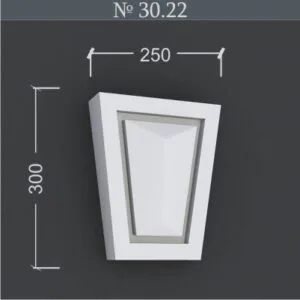
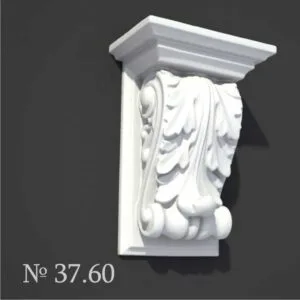
The problem accelerates during installation. Cutting EPS pieces on-site exposes fresh foam edges with no factory protection; these edges have no sealed skin and absorb water like cardboard. Field experience shows that unsealed cut edges on keystones or decorative keystones can saturate completely within 6–8 months of rain exposure, while factory edges remain protected for 18–24 months. This uneven absorption creates internal stress gradients—the saturated edges pull away from the drier center, fracturing adhesive bonds from inside.
Moisture Gains 25–35% of Original Weight in 3 Years
| Time Period | Moisture Absorption (%) | Weight Gain per Linear Meter (kg) | Adhesive Bond Stress Level | Structural Risk |
|---|---|---|---|---|
| 0–6 months | 2–5% | 0.08–0.20 kg | Low | Minimal |
| 6–12 months | 8–12% | 0.32–0.48 kg | Moderate | Observable sagging |
| 12–24 months | 15–22% | 0.60–0.88 kg | High | Micro-fractures visible |
| 24–36 months | 25–35% | 1.00–1.40 kg | Critical | Adhesive failure, delamination |
Research conducted by foam manufacturers and ETICS installers documents that EPS moldings absorb 2–5% water by weight in the first six months, then accelerate to 15–22% by month 12 and reach 25–35% by year 3. This isn’t theoretical: contractors have measured weight gain directly by comparing new cornice sections (dry weight ~3.2 kg/m on 25 kg/m³ foam) to five-year-old failed sections (wet weight ~4.5 kg/m), confirming a 40% increase.
The water doesn’t distribute evenly. High-exposure zones—south and west facades receiving lateral rain and afternoon heat—show saturation concentrations of 40–50% at corners and overlaps. The added weight concentrates stress at just a few adhesive joints, while the rest of the molding remains relatively dry. This creates a brittle failure mode: the saturated section suddenly delaminated under wind load or vibration, and the attached (still-dry) adjacent sections snap because adhesive was already failing at the wet point.
Adhesive Bond Failure Starts at Month 12
Polyurethane and epoxy adhesives used to bond EPS moldings to EIFS or cladding are rated for shear strength (lateral forces) and tensile strength (pulling forces), but these ratings assume dry substrates and constant temperature. Water saturation changes everything. Wet EPS expands microscopically—expansion rates of 1–2% are documented in lab tests—and this expansion isn’t uniform; edges absorb faster than centers, creating internal shear stress within the foam itself.
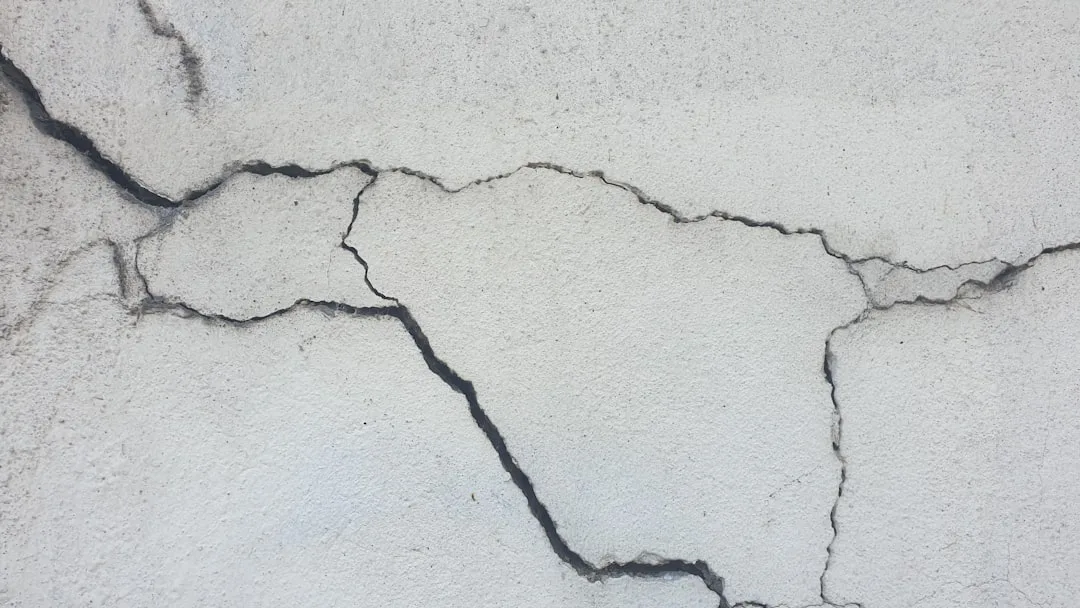
By month 12, micro-fractures appear at the adhesive-foam interface under a scanning electron microscope (SEM), though they remain invisible to the naked eye. By month 18–24, these micro-fractures coalesce into visible cracks, typically at 45-degree angles from corners—a signature pattern showing delamination under tensile and shear stress. By month 30–36, the adhesive bond can fail completely under moderate wind pressure (50–70 km/h), and entire cornice sections fall.
The adhesive itself doesn’t necessarily degrade; the problem is substrate preparation. Contractors often apply adhesive to EPS that has been exposed to weather or handled in humid conditions for weeks—the foam has already absorbed 8–12% water before installation begins. As temperature and humidity fluctuate during the first year, the water migrates, causing the foam to swell and contract in patterns that cyclically stress the adhesive film. By year two, the adhesive has been subjected to millions of micro-cycles, and fatigue fracturing begins.
Why Standard Installation Specifications Miss This Problem
Building codes and EPS manufacturer guidelines specify surface preparation (cleaning, priming) and adhesive thickness (8–12 mm) but do NOT mandate moisture testing or drying time before installation. In practice, EPS moldings are manufactured months before installation, stored in unheated warehouses, and then applied directly to wet substrates or in autumn when humidity runs 70–85%. This creates a moisture gradient: the back side (facing substrate) sits in high humidity while the front dries, causing internal warping.
Standard EPS molding crack issues are tied to cut edge sealing, and sealing helps, but it’s only a partial solution. Even sealed edges allow capillary rise—water wicks up the foam from overlapping joints and penetrates from below. The real defense is treating the entire EPS assembly (molding + substrate + adhesive + topcoat) as a moisture system, not isolated components.
Field Measurements Show Progressive Load Failure
Contractors who have had facades fail report consistent patterns. A new exterior foam molding installation carries negligible load on adhesive—the foam self-weight (3–4 kg/m) is trivial. By year 2, water absorption increases effective weight to 4.5–5.0 kg/m. By year 3, some sections hit 5.5–6.0 kg/m. For a 12-meter cornice under direct sun and rain, this weight gain translates to 18–36 kg of additional load distributed across just 8–12 adhesive spots (where fasteners or mechanical anchors are used), creating point loads of 2.25–4.5 kg per joint—far above the safety margin designed into typical polyurethane adhesive films (rated 5–8 kg per point with 50% safety factor).
Once the adhesive reaches 80% of its load rating, any additional stress—wind, thermal expansion, vibration from nearby traffic—can trigger failure. The molding doesn’t fall all at once; it delaminated progressively, usually starting with one section pulling away from the substrate by 2–5 mm, creating a visible gap. This gap becomes a water trap, accelerating saturation in adjacent sections and causing a cascade failure over 2–4 weeks.
Prevention Requires Sealed Edges and Hydrophobic Treatment
The only effective defense is to treat EPS moldings as actively water-resistant, not merely water-tolerant. Immediately after cutting, all edges must be sealed with hydrophobic primer or epoxy paste—not topcoat, which is too thin. Field tests by installers show that epoxy edge-sealing (2–3 mm thickness) reduces water absorption to 5–8% over three years, compared to 25–35% for unsealed foam.
Second, specify topcoats that remain elastomeric even when wet. Acrylic or latex paints become brittle when saturated and crack under thermal stress, allowing water ingress. Polyurethane, silicone, or elastomeric resin topcoats (cost €18–35 per liter vs. €8–12 for acrylic) maintain flexibility and seal capillary pathways even after moisture infiltration. A two-coat system with elastomeric primer (0.3 mm) and topcoat (0.5–0.8 mm) adds €15–25 per square meter to labor and materials but reduces water absorption by 60–70%.
Third, design overlaps and joints to block water entry from below. Standard EPS cornice-to-wall junctions allow lateral water flow; improved designs include drip edges (10 mm downward offset) and backer rod + sealant in all horizontal joints. This prevents capillary wicking and keeps the adhesive zone dry.
Storage and Pre-Installation Drying
EPS moldings should be stored indoors (relative humidity below 60%) for at least two weeks before installation. If stored in unheated or damp conditions, allow 4–6 weeks of indoor acclimation. A simple test: weigh a molding section on arrival and after one week of indoor storage; if weight drops more than 3%, the foam was saturated and needs additional drying before adhesive application.
Install only when ambient temperature is 10–25°C and humidity is below 65%—these conditions allow adhesive to cure properly and prevent water from being trapped at the substrate interface. Installation during autumn rain (September–October in temperate climates) is the leading cause of premature failure; EPS facade temperature installation windows close before late fall, and missing this window almost guarantees moisture problems.
Cost Impact of Water Absorption Failures
Repair or replacement of failed EPS moldings typically costs €800–2500 per linear meter when removal, substrate remediation, and reinstallation are included. A 40-meter facade with decorative cornices and window trim (common on renovated homes) can accumulate €20,000–40,000 in failure costs by year 4–5 if the original installation skipped sealed edges and hydrophobic topcoats.
Prevention costs are trivial by comparison: epoxy edge sealing adds €2–4 per running meter, elastomeric topcoat adds €15–25 per square meter, and improved joint detailing adds €5–10 per linear meter. A complete preventative specification costs €300–600 total for a typical residential renovation—insurance against a €20,000+ failure that leaves visible gaps and water damage on the facade.
Monitoring Absorption With Simple Visual Checks
Three years after installation, inspect all EPS moldings—cornices, keystones, window trim—for visible signs of saturation. Look for: (1) color darkening (wet EPS appears darker than dry foam), (2) surface softening (press gently; saturated foam yields slightly under finger pressure, while dry foam is rigid), and (3) visible cracks, especially 45-degree angle fractures at corners. Any of these signs indicate active water absorption and imminent adhesive failure.
If observed early (by month 18–24), remediation is simple: remove the molding, dry it thoroughly indoors, re-seal all edges with epoxy, and reinstall with fresh adhesive. If deferred until month 36–48, substrate damage has usually occurred, and replacement is the only option. The cost difference between preventive re-sealing (€200–400 for a 10-meter cornice) and full replacement (€3000–5000) justifies monthly or seasonal inspections on all new EPS installations.