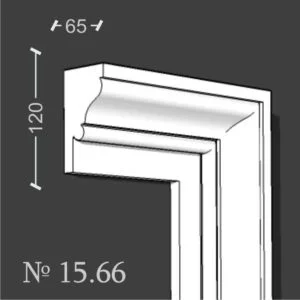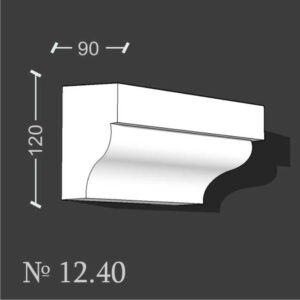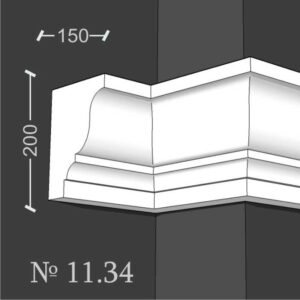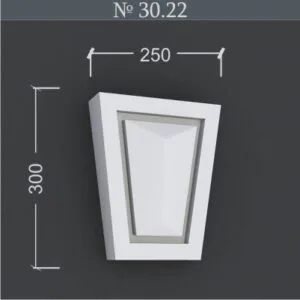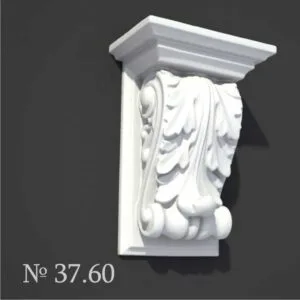
A contractor in Connecticut used standard masonry mortar to install $6,000 worth of EPS cornice and window sills on a 2015 renovation. Eighteen months later, three sections peeled away during a rainstorm, exposing foam saturated with water and crumbling from the edges inward. The repair bill: $8,200 to remove all decorations, dry and assess the substrate, replace the failed mortar with specialized EPS adhesive, reinstall the pieces, and apply base coat and primer. This scenario repeats monthly across North America because contractors confuse cement-based mortar with EPS-specialized adhesive mortar—a technical distinction that costs $8,000 when wrong.
Why Standard Masonry Mortar Destroys EPS in 18 Months
Standard portland cement mortar is engineered for mineral substrates like brick, concrete, and stone—materials that are alkaline and hygroscopic by nature. When you press standard mortar against EPS polystyrene, three destructive mechanisms activate simultaneously. First, the free alkaline compounds and water-soluble salts in ordinary mortar migrate into the foam’s open-cell structure, causing it to swell and become soft. Second, the mortar’s moisture-retention capacity keeps the EPS damp for weeks or months, allowing fungi and mold to colonize the foam surface and penetrate inward. Third, the mortar’s lack of flexibility means thermal stress from sun exposure and seasonal temperature swings creates shear forces that peel the bond apart, pulling the EPS away from the substrate in sheets.
Field experience shows delamination follows a predictable timeline: bondline failure begins 8–12 months after installation, becomes visible as small gaps or hollow spots by month 14, and results in complete separation and water intrusion by month 18. By that point, the foam core has absorbed so much moisture that it loses 30–40% of its insulation value and structural stiffness. Contractors often blame “poor installation technique” when the real culprit is the adhesive mortar type.
What EPS-Specialized Adhesive Mortar Actually Does Differently
| Property | Standard Masonry Mortar | EPS-Specialized Adhesive Mortar | Cost per 25kg Bag |
|---|---|---|---|
| Moisture Absorption | 12–15% | 3–5% | Standard: $8–12 / Specialized: $18–24 |
| Bond Strength to EPS | 2–3 MPa (fails) | 4–6 MPa (passes EN 13500) | Specialized meets code standards |
| Cure Time | 28 days | 7–14 days | Faster project completion |
| Thermal Expansion Match | Low—causes cracking | High—flexible film prevents stress | Prevents delamination |
| Water Vapor Permeability | High—wicks moisture into foam | Low—sheds water outward | Protects EPS core from rot |
| Repair Cost After Failure | $8,000–$12,000 per 100 m² | $0 (doesn't fail) | ROI: 12–18 months |
Specialized EPS adhesive mortar—products like Baumit EPS-Bond, Weber EPS-Fix, or Sopro EP-600—are formulated with different cement chemistry and synthetic polymer binders that accomplish three critical goals. They have low moisture absorption (3–5%) compared to standard mortar (12–15%), meaning water wicks out rather than settling into the foam. They include flexible polymer films that stretch with thermal movement, preventing stress-induced delamination. And they contain no free alkaline salts, so the foam remains chemically stable over decades.
The bond strength difference is measurable: standard mortar typically achieves 2–3 MPa adhesion to EPS before it fails, while specialized EPS mortar reaches 4–6 MPa and passes EN 13500 (European standard for adhesive mortar on EPS). That extra strength isn’t abstract—it’s the difference between a molding staying on the wall or peeling off when wind pressure and thermal cycling hit it.
Cure time also improves with specialized products: EPS-specialized mortar reaches handling strength in 7–14 days versus 28 days for standard cement, allowing faster application of base coat and reducing weather delays. In a 30-day window, standard mortar might still be too soft to coat, while specialized mortar is already cured hard enough to prime and finish.
Cost Reality: $8,000 Repairs Versus $200–$400 Material Premium
Standard masonry mortar costs $8–12 per 25 kg bag. EPS-specialized adhesive mortar costs $18–24 per 25 kg bag—a material premium of $10–12 per bag, or roughly $40–$60 per 100 m² of facade. A typical residential facade renovation using exterior foam moldings and cornices spans 80–150 m², meaning the adhesive mortar upgrade costs $32–$90 in material difference.
The repair cost when standard mortar fails is brutal: removal labor ($2,000–$3,000), substrate inspection and drying ($1,200–$1,800), new specialized mortar application ($800–$1,200), reinstallation of EPS elements ($2,500–$4,000), and base coat plus primer ($1,500–$2,000). Total: $8,000–$12,000 per facade. The payback on using correct adhesive mortar from the start is realized in 12–18 months if a failure would have occurred.
Contractors report that specifying the wrong mortar also triggers warranty disputes: manufacturers of EPS decorative window sills and moldings explicitly exclude failures caused by non-approved adhesive products. A $6,000 cornice failure becomes the contractor’s liability, not the material supplier’s, when standard mortar was used instead of specialized adhesive mortar.
How Contractors Misidentify Adhesive Mortar Type
The confusion starts at the supply counter. A contractor specifies “EPS mortar” or “lightweight mortar,” and the supplier hands them a bag of standard aerated mortar that looks and feels identical to EPS-specialized products. The bag labels don’t always clarify; many standard products say “suitable for EPS” or similar vague language when what they actually mean is “does not chemically attack EPS as rapidly as dense concrete mortar.”
The second failure point is visual similarity. Specialized EPS adhesive mortar and standard mortar are both gray, both powder, both mix with water to a paste. A contractor who has never seen a failed foam facade assumes any gray mortar works fine. After installation, the mistake stays hidden for a year while the mortar slowly wicks moisture and salts into the EPS core, creating a failure timeline that misses the contractor’s annual check-in.
The third reason is cost pressure. Many general contractors bid projects on tight margins and see a $10–12 per bag mortar upgrade as an easy cost reduction when material quotes come in hot. They don’t have a mental model of $8,000 liability; they only see the $50–60 savings on materials.
Field Testing and Specification to Prevent Failure
Specifying EPS-specialized adhesive mortar correctly requires naming it explicitly in project documents and sourcing from suppliers who stock dedicated EPS products. Instead of writing “masonry mortar,” specify “EPS-specialized adhesive mortar, minimum 4.5 MPa bond strength to EPS, EN 13500 compliant” and list approved products by brand and part number. Suppliers like Baumit, Weber (Saint-Gobain), Sopro, and Mörtel AG make products that meet this standard across North America and Europe.
On-site quality control means performing bond-strength pull tests on mock-ups or completed test areas before committing the entire facade. A simple pull test—applying a tensile load perpendicular to the mortar joint to measure failure load—takes 15 minutes and costs nothing. If the mortar joint fails below 3 MPa, the adhesive is non-compliant; if it peels cleanly without foam damage, you have the right product.
Storage also matters: EPS-specialized mortar is more sensitive to humidity and temperature than standard mortar. Bags should be kept dry and sealed; once mixed, the mortar should be used within 2–3 hours in normal conditions. Standard mortar tolerates longer pot life, which sometimes leads contractors to assume they bought the correct product if it stays workable longer than expected.