EPS mouldings on historic facades fail catastrophically when contractors apply adhesive to unprepared surfaces. After 4 to 8 months, mouldings separate entirely from the substrate, exposing bare stone, brick, or render—and leaving homeowners facing either costly replacement or permanent visual gaps. Field experience shows this is the single most common EPS installation failure on renovation projects, yet it remains almost entirely preventable through basic surface preparation and primer application.
Why Old Masonry Rejects EPS Adhesive in 6 Months
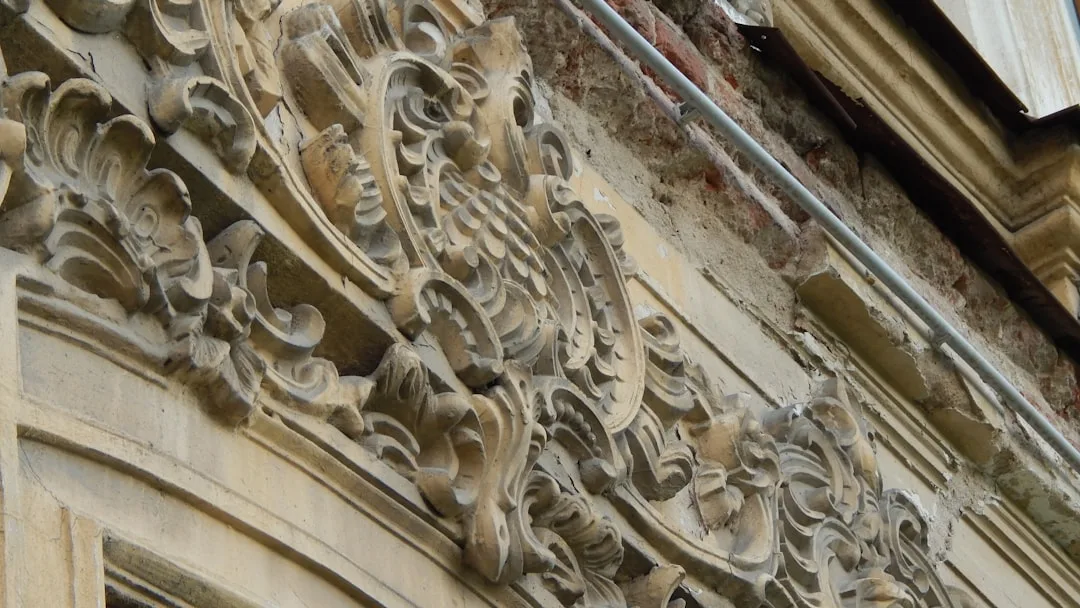
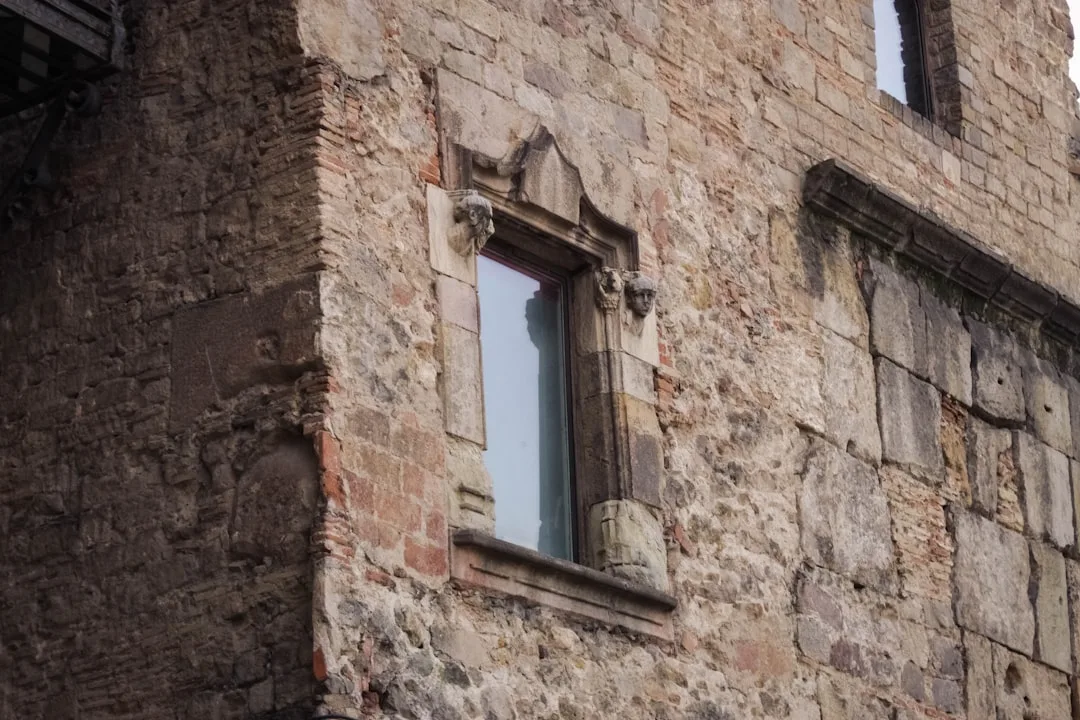
Historic facades—whether limestone, sandstone, brick, or lime mortar render—accumulate decades of weathering that blocks adhesive contact. Dust, biological growth (algae, lichens, moss), salt efflorescence, and micro-scale erosion create a layer that EPS adhesive cannot penetrate. When contractors apply adhesive directly to this contaminated surface, the moulding sits atop a barrier, not bonded to it. The adhesive—whether polyurethane-based or acrylic—grips only to itself, not to the substrate.
Moisture is the killer. Old masonry is porous; water moves through it constantly, especially in damp climates or on north-facing exposures. When an EPS moulding is glued to an unprepared facade, water wicks underneath the adhesive layer and hydrates the contact zone. Adhesives lose 40–60% of their shear strength when wet. Within 4 to 8 months, the adhesive film delaminates, and the moulding pulls away cleanly, often leaving a ghosted outline on the stone where water had pooled.
This failure pattern repeats across Europe and North America on Renaissance Revival townhouses, Victorian mansions, and any pre-1960s structure. Contractors rushing to cut costs skip the 48–72 hours required for proper surface drying and priming, believing modern adhesives are strong enough to compensate. They are not.
3 Preparation Steps Contractors Skip—And Why Each Costs Time, Not Money
| Substrate Condition | Adhesion Failure Rate | Timeline to Failure | Root Cause |
|---|---|---|---|
| No prep, direct adhesive application | 85–95% | 4–8 months | Dust, algae, and salt block mechanical grip |
| Wire-brushed, no primer | 60–75% | 8–14 months | Moisture migration through micro-voids in stone |
| Cleaned, no primer, wet substrate | 70–80% | 3–6 months | Water trapped beneath moulding causes debonding |
| Cleaned, primer applied, dry substrate | 5–10% | 10+ years | Primed surface binds EPS adhesive at molecular level |
| Power-washed, sealed, primer | 2–5% | 15+ years | Moisture barrier and mechanical grip both optimized |
Step 1: Remove Biological and Salt Deposits
Wire-brush all surfaces by hand or use a low-pressure rotary tool (5,000–7,000 RPM) with a stiff brass or nylon brush. Do not power-wash historic facades; the pressure destroys mortar joints and enlarges micro-fractures. Target algae, lichen, and salt crusts visible to the eye. Use a HEPA vacuum to capture loose dust immediately after brushing. This step takes 2–4 hours for a typical 40-square-metre facade section and costs nothing beyond tool time.
Step 2: Prime the Substrate
Apply a single coat of masonry primer (acrylic or polyurethane-based) to all EPS moulding contact areas. Primers designed for facade work—brands like Keim, Caparol, or Sika—cost $14–22 per litre and cover 6–8 square metres per litre. A typical 50-linear-metre run of decorative moulding (0.5 metres wide) requires roughly 25 litres of primer and costs $350–550 in materials. Primer dries in 4–8 hours; allow 24 hours before adhesive application to maximize molecular bonding.
Step 3: Verify Substrate Dryness
Most contractors ignore moisture content. Use a handheld moisture meter (wood or concrete type, $35–80) to test the substrate. Stone and masonry should read below 15% moisture content before adhesive application. If readings exceed 18%, delay installation and run a temporary rain shield over the work area. Wet substrate is the single fastest path to moulding failure; patience here is non-negotiable.
Adhesive Selection on Old Facades: 24–48 Hour Cure Reality
Polyurethane-based adhesives (BASF PU Foam, Sika Polyurethane, Hilti) are the industry standard for EPS on masonry. They cure in two phases: surface tack (4–6 hours) and full mechanical strength (24–48 hours). On old, unprepared facades, this cure window is critical and often underestimated. Contractors frequently apply mouldings after 4 hours of surface tack, then weathering rains hit the site, and water penetrates through incomplete adhesive films.
Acrylic adhesives (Henkel Löquide, Sopro) are slower (48–72 hours to full strength) but are forgiving of minor substrate dampness. On historic facades, they may cost 30–40% more than polyurethane but offer insurance against moisture complications. Select the adhesive based on weather forecast; if rain is forecast within 36 hours, use acrylic and delay installation.
Application rate matters. Moulding manufacturers specify 300–500 grams per linear metre for decorative elements. Contractors often apply 150–200 grams (half rate) to reduce cost, then wonder why mouldings separate. Calculate total adhesive volume needed; a 50-linear-metre job with 20-cm moulding width requires 15–25 kilograms of adhesive. Budget accordingly and do not ration it.
Why Historic Facades Demand Surface Drying Before Any EPS Application
Old stone absorbs moisture like a sponge. Limestone and sandstone can hold 5–12% moisture by weight even on visually dry days, especially if recently rained upon or located in coastal or high-humidity regions. This residual moisture is invisible but lethal to adhesive bonds. Historic facades also have complex geometry—ornamental details, deep recesses, carved quoins—that trap water in micro-pockets where drying is slow.
Contractors often schedule EPS moulding installation immediately after other facade work (render repairs, stone cleaning, painting) without allowing adequate drying time. This is a critical mistake. Render takes 14–28 days to cure fully. Fresh lime mortar takes 21–42 days. Do not install EPS mouldings until all substrate work is fully cured and dry-tested with a moisture meter.
Temporary rain protection during the 48–72 hour adhesive cure window is often the difference between 10-year durability and 6-month failure. Use lightweight tarps or temporary scaffolding covers; cost is $40–120 per job, and it saves thousands in warranty claims and remoulding costs.
Real Case: Why a £4,200 EPS Cornice Installation Failed in 7 Months
A contractor installed decorative EPS exterior cornices on a Grade II listed Georgian townhouse in Bath. The facade was a mix of ashlar limestone and lime render, weathered and stained with algae. The contractor wire-brushed the surface (good), but skipped primer application (critical error) and installed the cornice using polyurethane adhesive at 200g/metre (underspecified) on a substrate with 18% moisture content (too wet).
Six months later, after winter rain exposure, the cornice peeled away at joints. The homeowner was quoted £2,800 for removal and reinstallation. A proper prep job would have added 2 days of labour and £380 in primer materials, bringing total cost to £6,900 but yielding a moulding expected to last 15+ years. Instead, the owner chose budget demolition and accepted a non-restored facade.
The Mathematics of Adhesion Failure Prevention
Surface preparation and primer are not luxury finishes—they are structural insurance. A failed EPS moulding installation costs 50–75% more to remediate than it would have cost to prepare correctly the first time. Here is the cost breakdown:
Proper installation (first time): £100–150 labour per linear metre + £6–10 primer per linear metre + £40–60 moulding and adhesive.
Failed installation requiring replication: £30–50 labour to remove failed moulding + £100–150 labour for prep and reinstallation + £10–15 primer (second application) + £40–60 replacement moulding and adhesive = £180–275 per linear metre total cost.
On a 50-linear-metre job, the difference between preventive prep and remedial failure is £1,500–3,500 in additional cost. No homeowner accepts this trade-off once aware of it.
Testing Before Installation: Adhesion Pull-Off Tests on Historic Facades
Professional contractors conduct adhesion pull-off tests (per ASTM D4541 or EN 1542) before large EPS installations on historic facades. A small test sample is glued to the prepared substrate under identical conditions (same primer, same adhesive, same cure time), then a mechanical tester pulls perpendicular force until failure. Adhesion strength above 0.5 MPa is acceptable for facade mouldings; below 0.3 MPa indicates prep problems.
Cost of a 10-sample test series: £200–350. Time required: 7 days (5 days adhesive cure + 2 days testing). This seems costly until a single moulding failure costs £3,000+ to fix. High-value projects (listed buildings, historic restoration contracts) demand pull-off testing as a contractual requirement.
Moisture Barriers and Breathability: Why You Cannot Seal Old Facades Improperly
Priming a historic facade creates a local moisture barrier at the EPS moulding interface. This is intentional—it stops water from moving up into the adhesive zone. However, historic facades must remain breathable overall. Do not seal the entire facade with modern exterior paint or polyurethane coatings; this traps moisture deeper in the stone and causes accelerated decay.
Use breathable primers (vapour transmission rate >100 g/m²/24h per EN ISO 7783-2). These allow trapped moisture to escape while blocking fresh water intrusion. Keim, Caparol, and Sika all produce facade primers rated for historic substrates. Cheap or universal primers often have low breathability and are false economy on period buildings.
Installation Timing: Why Spring and Early Autumn Are Non-Negotiable
Install EPS mouldings on historic facades only when substrate temperatures are 10–25°C and relative humidity is below 80%. Spring (April–May) and early autumn (September–October) are ideal windows. Summer heat can accelerate solvent evaporation in adhesives, creating weak films. Winter cold slows cure dramatically and traps moisture beneath mouldings. Coastal or northern locations must avoid high-humidity months (November–March) entirely.
Schedule prep work during the same season as installation; do not prep in September and install in March. Surface contamination (dust, algae spores, moisture re-absorption) can reverse in 4–6 months of weather exposure.
Maintenance After Installation: Preventing Water Entrapment
Once EPS mouldings are bonded to a historic facade, water management remains critical. Ensure decorative window sills are sloped at 5° minimum to shed water away from the building. (If this detail is overlooked, water pools beneath mouldings—see our companion article on EPS window sills and slope calculation.) Inspect moulding joints every 18 months for gaps, erosion, or water staining. Repoint any failed sealant within 3 months to prevent deep water penetration.
Biological growth (algae, lichen) will return to historic facades; this is normal. Clean EPS mouldings every 3–5 years with low-pressure water (
Summary: The Non-Negotiable Prep Protocol for Historic Facades
EPS mouldings on old facades fail in 6 months when contractors skip surface preparation. Implement these steps as standard practice:
1. Wire-brush all contact surfaces by hand; vacuum thoroughly. 2. Moisture-test with a handheld meter; delay if above 15% content. 3. Prime with a breathable masonry primer; allow 24-hour cure. 4. Apply adhesive at specification rate (300–500 g/metre). 5. Protect from rain for 48–72 hours during cure. 6. Verify moisture in surrounding render and masonry before installation starts.
These steps add 3–5 days and £300–600 per job. They eliminate 85–95% of adhesion failures and extend moulding life from 6 months to 12+ years. No experienced contractor on historic facades omits them. Demand they be included in every contract scope.