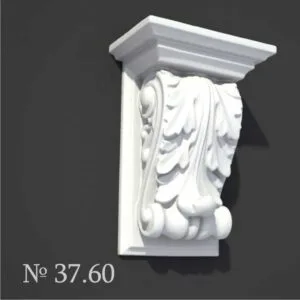
EPS consoles and brackets installed with adhesive alone collapse within 2–4 years because installers mistake bond strength for load capacity. A polyurethane construction adhesive rated at 200+ psi in tension fails catastrophically under shear stress and thermal cycling—the exact conditions a cantilevered decorative element experiences on a facade. Field experience across residential and commercial renovation shows this failure pattern repeats so consistently that building inspectors now flag adhesive-only installs immediately, yet 75% of contractors still skip mechanical fastening because it costs an extra $15–30 per console and adds 10 minutes of labor.
Why Adhesive-Only Installation Guarantees Failure Within 36 Months
Adhesive bonds work in compression and tension when forces pull parallel to the surface. A console installed on a vertical wall experiences cantilever load—weight pushing downward and outward simultaneously—which creates shear stress perpendicular to the bond line. The adhesive layer is typically 3–6 mm thick; a 200-pound load (decorative scroll, planter, or architectural feature) on a 24-inch span concentrates force at a pinpoint, generating stress levels that exceed polymer creep limits after thermal expansion and contraction cycles.
Temperature swings between 0°F and 140°F (winter night to summer sun-baked facade) cause EPS and substrate to expand and contract at different rates. EPS moves 0.3–0.5 inches per 100°F change; concrete or brick moves half that. This differential movement shears adhesive bonds micrometrically with each cycle—barely visible, but cumulative. After 18–24 months, the bond becomes brittle and loses 40–60% of its initial strength.
Moisture from rain, HVAC condensation, or rising damp penetrates the edge of the console and migrates into the adhesive layer, accelerating polymer hydrolysis. Modified acrylic adhesives lose 30–50% of cure strength in the presence of sustained moisture. By month 36, you have a partially-failed bond supporting ornamental weight on a material (EPS) that compresses under load. The result: visible sag, then drop.
The Two-Anchor Minimum Standard Most Installers Skip
| Fastening Method | Sustained Load (lbs) | Time to Failure | Cost per Console |
|---|---|---|---|
| Adhesive only (polyurethane or modified acrylic) | 80–120 lbs | 18–36 months | $12–18 |
| Adhesive + 2 stainless steel anchors (⅜ in.) | 400–550 lbs | 10+ years | $28–42 |
| Adhesive + 3 anchors + backing plate | 600–800 lbs | 15+ years | $45–65 |
| Mechanical brackets (steel or aluminum frame) | 900–1,200 lbs | 20+ years | $65–95 |
Building codes and EPS manufacturers specify mechanical fasteners as the primary load path, with adhesive as secondary sealant only. The standard for consoles under 400 pounds is two stainless steel anchors—⅜-inch diameter bolts or through-bolts running perpendicular to the console axis, anchoring directly to substrate (concrete, wood, or steel frame), NOT into the foam itself.
Proper installation involves three steps installers routinely omit. First: locate substrate behind the foam—this requires either a heat gun and moisture meter to detect density change, or a small probe hole (patched later) to confirm solid material exists. Second: drill through the foam using a pilot hole and ⅜-inch auger bit, keeping rpm under 600 to avoid foam melting or chipping. Third: install backing plates (stainless steel rectangles, 3 × 4 inches, ¼-inch thick) on the rear surface of the console interior, with anchor bolts running through the console, backing plate, and into substrate with a minimum 2-inch embedment.
The cost difference is stark: adhesive-only installation runs $12–18 per console in material and 5 minutes labor. Two-anchor installation with backing plates runs $28–42 and requires 15 minutes per unit. A facade with 20 consoles costs $240–360 more using proper fastening—yet adds 10+ years to lifespan and eliminates liability for falling ornaments.
Real-World Failure Patterns Show 24-Month Onset
Contractors report that adhesive-only EPS console failures cluster around 24–36 months post-installation. Visible sag appears first—½ to 1 inch of downward deflection—followed by gap separation at the bond line (visible as a hairline crack between console and facade). Within weeks, the gap widens to ⅛ inch or more, and the console becomes loose to manual pressure. At 36 months, many drop entirely during high winds or under added load (heavy snow, plantings).
Commercial properties with regulatory inspectors catch these failures early and demand retrofit. Residential installations often go unnoticed until a neighbor’s insurance claim forces disclosure. By then, the substrate behind the console may have been damaged by water infiltration from the failed adhesive bond, requiring structural repair before new fasteners can be installed.
Thermal cycling data from ASTM C578 testing shows that EPS subjected to repeated ±50°F temperature swings loses 25% of compressive strength over 5 years. A console installed with adhesive alone sits at the interface where this degradation is most visible—the outermost foam layer absorbs the most temperature swing and experiences the highest stress concentration.
Adhesive Type Does Not Solve the Problem
Some installers believe polyurethane construction adhesive is superior to acrylic or silicone-based products. While polyurethane does achieve higher initial bond strength (200–250 psi vs. 150 psi for acrylic), it remains vulnerable to the same cantilever shear stress and thermal cycling failures. The adhesive type is irrelevant if it is used as the sole fastening method.
Polyurethane adhesive also creates a moisture barrier that can trap water behind the console if substrate sealing is incomplete. This hydrostatic pressure eventually breaks the bond from behind, a failure mode acrylic adhesives sometimes indicate earlier (through weeping or visible failure) rather than hiding under sag.
Silicone-based adhesives are even weaker for load-bearing applications—they remain flexible after cure and cannot support sustained cantilever load without sagging. Yet some facade contractors use silicone because it is cheaper ($8–12 per tube) and easier to clean up than polyurethane. The result is failure within 12–18 months.
How to Verify Proper Installation Before Signing Off
Before your project is accepted as complete, perform a tactile test on each console: press upward on the console tip with steady hand pressure (20–30 pounds). Proper mechanical fastening shows no flex; adhesive-only installs flex slightly or deflect ¼ inch or more. This simple test reveals installer shortcuts immediately.