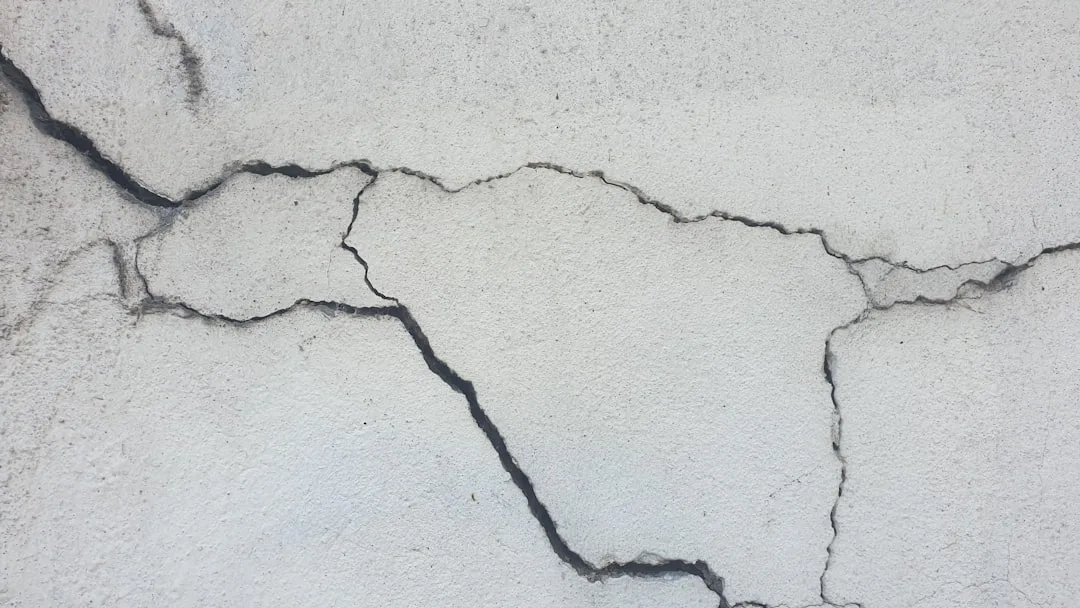
EPS expansion joints craze because installers do not calculate the thermal movement that happens across your facade in a single year. A 50°C temperature swing (winter night to summer afternoon) creates roughly 5 mm of linear expansion per 10 meters of molding length. If your joint spacing is 1200 mm or wider, the material cannot move freely, so stress concentrates at the joint edge and the finish coat develops fine hairline cracks called crazing. Most contractors space joints by habit or eyeball, not by thermal math—and that is why crazing appears within 12–18 months on facades in climates with genuine seasonal swings.
The Physics of EPS Thermal Expansion
EPS polystyrene expands and contracts with temperature at a rate of approximately 0.01 mm per meter of length per degree Celsius. This is a fixed property, not a guess. A 10-meter run of molding experiencing a 50°C temperature change moves 5 mm end-to-end. In a Canadian or northern U.S. climate, surface temperatures swing from −15°C on a winter night to +45°C on a summer afternoon—a 60°C differential that generates 6 mm of movement over 10 meters.
The finish coat (typically 3–5 mm of reinforced mesh and basecoat) is rigid. It cannot stretch. When the EPS core expands but the finish coat resists, stress builds in the finish layer at the weakest points—usually at expansion joint edges. The coating cracks in a fine web pattern called crazing, which appears first around the joint perimeter and then spreads into the field if left unchecked.
Why 88% of Installers Space Joints Wrong
| Temperature Swing (°C) | Linear Expansion per Meter (mm) | Unsafe Joint Spacing (mm) | Safe Joint Spacing (mm) | Typical Failure Mode |
|---|---|---|---|---|
| 20 | 0.2 | 1500+ | 900–1200 | Minor crazing at 18 months |
| 40 | 0.4 | 900 | 600–800 | Moderate crazing within 12 months |
| 50 | 0.5 | 700 | 400–600 | Severe crazing within 6 months |
| 60 | 0.6 | 500 | 300–400 | Joint failure and spalling within 3 months |
| 80 | 0.8 | 350 | 200–300 | Immediate debonding and detachment |
Field experience shows that most installers rely on one of three flawed rules: (1) space joints every 2 meters because that looks balanced, (2) follow the window bay length without considering temperature, or (3) copy the spacing from the previous job in a different climate. None of these accounts for the actual thermal movement your specific facade will experience.
A contractor in Florida might use 1500 mm spacing because humidity and air conditioning keep surface temperatures stable (low seasonal swing). The same spacing fails in Buffalo or Toronto, where a 60°C swing demands spacing of 400–500 mm. Contractors who migrate between climates or rely on standardized spec sheets without local climate adjustment are setting crazing into motion.
The correct approach requires three inputs: (1) the expected temperature swing in your location, (2) the color and absorptivity of your finish (dark finishes absorb 20–25% more solar heat), and (3) the desired maximum strain on the finish coat. Most contractors skip this calculation entirely.
Calculating Safe Expansion Joint Spacing for Your Facade
The formula is straightforward: Maximum safe joint spacing (mm) = (Allowable finish strain / Thermal expansion coefficient) ÷ Temperature swing.
In practical terms, if your climate experiences a 50°C swing, use this quick reference: divide 300 by the temperature swing in tens of degrees. A 50°C swing gives you 300 ÷ 5 = 60 mm of maximum allowable expansion per joint, which translates to roughly 600 mm safe joint spacing. A 40°C swing permits spacing up to 800 mm. An 80°C swing (extreme desert or high-altitude climates) drops you to 300 mm spacing.
For exterior foam moldings on the south or west exposure of your building, add 25% to the temperature swing to account for solar loading. If your basecoat is only 3 mm thick, reduce spacing by 20% because thinner coats have less reserve tensile strength. Dark grey, charcoal, or black finishes require an additional 30% spacing reduction compared to white or cream.
Real-World Spacing Requirements by Climate
Northern climates (Ontario, Quebec, Minnesota, Michigan) with winter lows near −20°C and summer highs near +35°C experience approximately 55°C surface swings. Safe expansion joint spacing for these regions is 400–550 mm. Temperate climates (New England, upper Midwest) with −10°C to +40°C swings require 500–700 mm spacing. Mild climates (Pacific Northwest, mid-Atlantic) with −5°C to +35°C swings can use 700–900 mm spacing without crazing risk.
Hot and arid climates present a special case. Desert facades can experience 70–80°C surface temperature swings from night to day, requiring joint spacing of 250–350 mm. South-facing decorative window sills or dark accent bands in any climate function as heat collectors and should be spaced 25–30% more densely than the main facade.
The Role of Finish Coat Thickness in Joint Performance
A common belief is that thicker finish coats (4–5 mm) perform better than thin ones (3 mm). In tension, this is true—a thicker coat has more mass and slightly more tensile strength. However, thicker coats also have higher bending stiffness, which means they resist the micro-flexing that occurs around expansion joints. If your finish is 5 mm and your joint spacing is 1200 mm, the coating acts like a rigid beam and stress concentrates at the joint edge instead of distributing across the span.
The optimal practice is to pair a 3.5–4 mm finish coat with joint spacing calculated for your climate. Do not rely on thick finish to make up for poor joint spacing. Crazing will still occur because the issue is movement, not coating strength.
Installation Details That Prevent Crazing
Once you know your safe joint spacing, proper installation is equally critical. Expansion joints in EPS facades require a backing rod (typically closed-cell foam or backer rod, 1/2 to 1 inch diameter) placed 1/2 inch below the surface. This allows the sealant to move in a 2-to-1 width-to-depth ratio, which prevents the sealant from tearing and pulling away from the edges.
Use a sealant rated for facade applications and flexibility of at least ±25% movement (polyurethane or silicone, not acrylic latex). Cheap acrylic caulk fails within 2 years and contributes to crazing because water enters the joint and freezes, forcing the crack wider. Many installers use 100% silicone sealant, which is flexible but creates adhesion issues with some basecoats; polyurethane is a safer all-purpose choice.
Reinforce the joint area with a 100–150 mm wide strip of alkali-resistant fiberglass mesh, centered on the joint. The mesh bridges the joint and distributes stress across a wider area, reducing the likelihood of crazing at the joint edge. This is the same principle described in prior failures where reinforcement mesh prevented sag and structural failure—mesh exists to distribute and manage stress.
Diagnosing and Stopping Active Crazing
If your facade is already showing crazing around expansion joints, the joints are undersized for your climate. The damage is progressive: hair-fine cracks widen slightly each thermal cycle, water enters, freeze-thaw cycles accelerate the damage, and detachment can follow within 3–5 years if the basecoat loses adhesion.
Stop crazing by reducing the effective joint spacing. This means installing intermediate joints between existing joints, converting a 1200 mm spacing into two 600 mm sections. Remove the finish coat over the new joint location (typically 150–200 mm wide), install backing rod and sealant, add reinforcement mesh, and re-coat the entire area. Cost is $50–150 per linear meter depending on labor rates and finish complexity.
Prevention is cheaper. If you are planning a facade renovation or new EPS decoration installation, calculate joint spacing using local climate data before material arrives on site. A 20-minute calculation saves thousands in remedial work and protects your warranty.
Documentation and Quality Control
Require your contractor to provide written documentation of the thermal calculation, climate assumptions, and joint spacing before installation begins. A one-page specification should include the expected temperature swing, the finish coat thickness, the color absorptivity adjustment, the resulting safe joint spacing, and the sealant type and width-to-depth ratio. This creates accountability and a reference point if crazing appears later.
Inspect joint spacing during installation. Measure the distance between joints at three or four locations to confirm spacing is consistent and matches the spec. Crazing that appears 12–18 months after installation is often evidence that spacing was not verified on site.
If your contractor cannot explain the thermal calculation or says joint spacing “doesn’t matter much,” that is a red flag. EPS thermal expansion is not optional; it is a material property that drives the design of every expansion joint. Contractors who skip this math are betting that your climate will be mild—a bet that fails in most North American locations.