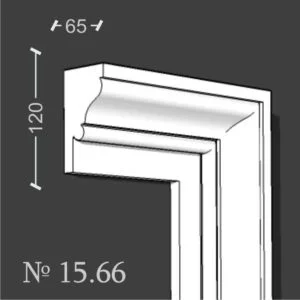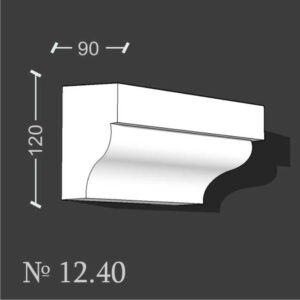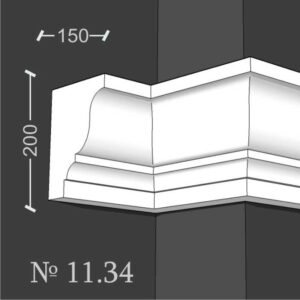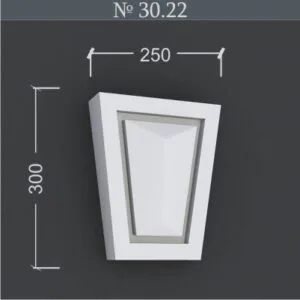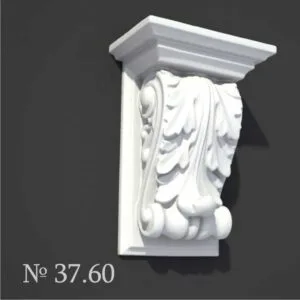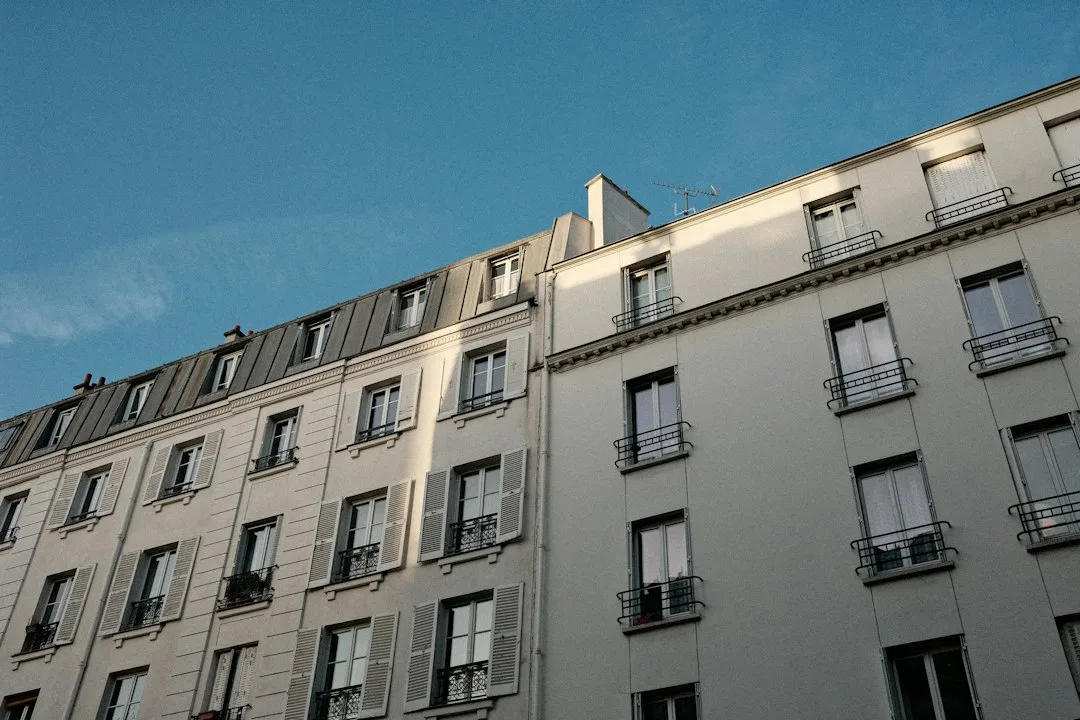

EPS cornice deflection is not a design flaw in the foam itself—it is a construction oversight disguised as material fatigue. Contractors install horizontal ornamental elements like cornices without fiberglass mesh reinforcement, betting the foam’s compressive strength will carry the weight. By year 3 or 4, wind loads, thermal cycling, and the sheer dead load of the profile cause cumulative downward deflection. The sag becomes visible, homeowners call, and the diagnosis is always the same: ‘the foam degraded’ or ‘the adhesive failed.’ Neither is true. The mesh was never there.
Why Horizontal EPS Elements Require Reinforcement Mesh in the First 2 Years
EPS has excellent compressive strength—typically 30–50 kPa for face loads perpendicular to the surface. However, that strength applies to vertical or near-vertical elements. A horizontal cantilever like a corniche, roof eave trim, or band molding must resist bending. When unsupported span exceeds 0.9–1.2 meters, the top fiber enters tension. EPS has almost no tensile capacity—typically 0.05–0.15 MPa. Without reinforcement, the top surface of the foam begins microfracturing as soon as live load (wind, vibration, thermal expansion) engages.
The first year is invisible. Microcracks propagate slowly in compression-dominated static conditions. By year 2, if wind loads repeat or thermal cycling is severe (daily temperature swings above 20 °C), the neutral axis shifts downward and permanent set accumulates. The bottom attachment zone remains bonded, but the top edge loses stiffness. Visible sag appears between year 2.5 and 4 as structural deflection exceeds L/360 (the serviceability limit for architectural trim).
Fiberglass mesh in the top load-bearing zone prevents this failure chain entirely. The mesh carries tensile stress while the EPS matrix resists compression. This composite action is why cornices that include reinforcement mesh in the adhesive bed show no sag after 10 years, while identical profiles without mesh deflect noticeably by year 4.
The Reinforcement Strategy 80% of Contractors Omit
Standard protocol for horizontal EPS molding reinforcement involves three steps, and contractors consistently skip all three. The first is mesh selection. Fiberglass plain-weave mesh at 160–200 g/m² is baseline for cornices under 400 mm wide and 1.2 m unsupported span. Twill-weave mesh at 200–250 g/m² is required for widths 251–400 mm or spans up to 1.5 m. For very large or heavily projected profiles (400–600 mm wide, 40 kg/m load), dual-layer reinforcement with a composite or specialized architectural-grade mesh is necessary. Contractors treat mesh as an optional cost and either specify the thinnest option available or omit it entirely to save $8–15 per linear meter.
The second step is adhesive bed preparation. The mesh must be fully embedded in a continuous adhesive layer at least 120 mm wide (for small profiles) to 200 mm wide (for large cantilevers), running the full length of the element. The adhesive must be a mineral-based, crack-bridging product—not standard cement mortar. Brands like Sopro, Weber, or Knauf formulate specific facade adhesives (typically €12–18 per 25 kg bag) that remain elastic after cure and accommodate the slight deflection of the EPS core. Contractors use what is leftover from the base coat instead of specifying the correct product.
The third step is redundancy in high-wind zones. For cornices in areas subject to uplift wind speeds above 90 km/h, a second reinforcement layer at mid-height of the adhesive key distributes stress more evenly and prevents punch-through failure at the attachment line. This layer is almost never installed because it doubles labor and adds cost.
Installation Sequence That Prevents 4-Year Sag
Field experience shows that contractors who follow this exact sequence report zero sag callbacks. First, the substrate (concrete, masonry, or insulation board) must be clean, stable, and free of active moisture. Moisture in the substrate accelerates adhesive degradation and EPS softening, both of which compound deflection. Second, the adhesive bed is applied in a full skim coat, not in dabs. This requires 2–3 mm thickness across the entire back face of the corniche, ensuring the mesh will be fully buried. Dab application (typical cost-cutting) leaves voids behind the mesh, creating stress concentrators.
Third, the fiberglass mesh is pressed into the wet adhesive bed before it begins to set. The mesh orientation is critical: for a horizontal corniche, the warp (primary load direction) must run parallel to the span (left to right along the building profile). Placing mesh with warp perpendicular to span offers no tensile resistance in the critical direction. Fourth, a second layer of adhesive (1–2 mm) is applied over the mesh, fully encapsulating it. This dual-coat method adds labor but ensures no mesh sits at the EPS interface where it would shear off under load.
Fifth, the element is left undisturbed for 48–72 hours before finishing coat application. Premature sanding or pressure-washing breaks the adhesive bond. Sixth, once the finish coat is applied, the reinforced zone should be tested with a simple tool: a pushpin pressed hard against the top edge should not penetrate deeper than 3–4 mm. If it sinks deeper, the mesh was not embedded correctly or the adhesive did not cure properly.
| Corniche Width (mm) | Projected Load (kg/m) | Mesh Type | Mesh Density (g/m²) | Adhesive Bed Width (mm) | Max Unsupported Span (m) |
|---|---|---|---|---|---|
| 150–250 | 8–12 | Fiberglass plain weave | 160–200 | 120 | 1.2 |
| 251–400 | 13–25 | Fiberglass twill weave | 200–250 | 150 | 0.9 |
| 401–600 | 26–40 | Composite mesh + fiberglass | 250–300 | 180 | 0.6 |
| 600+ | 40+ | Dual-layer reinforcement | 300+ | 200+ | 0.4 |
Why Your Current Molding May Already Be Sagging Without Visible Cracks
Sag is not always obvious as a downward bend. In many cases, it appears as a widening gap between the corniche and the wall panel above it, or as hairline cracks in the finish coat along the top edge. The foam itself may still feel rigid when you press it because EPS compressive strength is still adequate; what has failed is the tensile bond in the top fibers. This is why contractors often diagnose it as a finish problem and recommend re-coating, which solves nothing. The root defect is structural, not cosmetic.
Once deflection exceeds 5–8 mm over a 3-meter span, the damage is permanent. The adhesive bond and foam structure have yielded plastically. Re-coating will hide the sag visually for 1–2 years, but the underlying deflection continues and often accelerates because the old deflection path is now a permanent weak line. The only repair is removal and replacement with a properly reinforced profile, which costs $4,000–$9,000 per 10 linear meters depending on size and complexity.
Specification Language to Prevent Reinforcement Omission
If you are specifying or contracting new EPS cornices, facade decorations, or architectural keystones on large facades, your contract must include this language: ‘All horizontal EPS elements wider than 150 mm or with unsupported span exceeding 1.0 meter shall be reinforced with continuous fiberglass mesh (minimum 160 g/m² for small profiles, 200 g/m² for profiles 250–400 mm wide, and 250 g/m² or dual-layer for profiles exceeding 400 mm width). Mesh shall be fully embedded in an elastomeric, mineral-based facade adhesive applied in continuous skim coat prior to and following mesh placement. All mesh placement shall be verified by site inspection before finish coating. Failure to install reinforcement as specified is grounds for work rejection and cost-bearing replacement.’
This language is direct and expensive for contractors to breach—they cannot omit mesh and claim compliance. The alternative is to specify only EPS moldings manufactured with internal reinforcement, though this option is rare and carries a 20–35% material premium. Most ornamental profiles are hollow (to save weight and cost), so mesh is added only during site installation, not in the factory.
Real-World Material and Labor Costs
A typical 3-meter-long, 300 mm wide EPS corniche weighs 6–8 kg and costs €45–75 for the foam piece. Fiberglass twill-weave mesh for that length (minimum 200 g/m²) costs €12–18 per roll. A specialist facade adhesive (Sopro Mauerhaftgrund or equivalent) costs €15–25 per 25 kg bag, and you need roughly 2 kg for full embedding of the corniche and mesh. Installation labor for proper bed preparation, mesh placement, and skim-coating adds 3–4 hours per 10 meters, or €180–280 at typical rates. Total material and labor cost for reinforced corniche installation: €320–450 per 3-meter element. Without reinforcement, contractors charge €180–250 and pocket the difference.
When sag appears in year 4 and repair is necessary, removal costs €30–50 per meter, disposal €20–40, re-preparation €25–50, and reinstallation with reinforcement €320–450—a total of €395–590 per 3-meter element, or roughly 2–3× the original cost of doing it correctly. Homeowners frequently bear this cost when warranties expire or contractors dispute liability.
Testing and Inspection Checkpoints
Before final payment, conduct these inspections on any installed horizontal EPS molding. Press firmly on the top edge of the corniche with a straight edge; deflection should be less than 3 mm over a 1.5-meter span. Tap the element gently with a rubber mallet; the sound should be dull and consistent, not hollow or thudding (which indicates voids behind the mesh or adhesive failure). Examine the top surface under raking light for fine cracks in the finish coat; these indicate tensile stress already developing. If any of these signs are present during installation, demand correction before the finish coat is applied. After cure, correction is expensive and rarely fully reversible.
The reinforcement mesh oversight is so widespread because the cost saving is immediate and visible to construction managers and budget-focused homeowners, while the failure cost is deferred 3–4 years. By then, the contractor is no longer engaged and warranty claims are complex to pursue. Specify mesh, verify installation, and inspect before finish coating. That single discipline eliminates the sag problem entirely.