Your EPS facade mortar separates not by accident, but by formula—and the countdown starts the moment the installer mixes the batch. Field experience across thousands of installations reveals that four-year adhesive failure is entirely predictable, caused by three controllable factors that contractors systematically ignore: substrate water content above 12%, adhesive water-to-powder ratios exceeding 0.28, and curing in humidity below 40% or above 70% relative humidity.
Why Substrate Moisture Destroys EPS Adhesive Bond in 48–60 Months
Concrete and masonry substrate hold water like a sponge—and water is adhesive poison. When substrate moisture exceeds 12% by weight, the mortar film cannot cure fully because water molecules block polymer cross-linking, leaving the adhesive matrix weak and porous. Most installers never measure substrate moisture; they assume “it looks dry” or “we painted it last year.”
Testing with a calcium carbide moisture meter (cost: $200–400, rental: $30/week) takes 10 minutes per project and reveals the true state. Concrete freshly painted or sealed requires 48–72 hours additional drying before substrate moisture drops below 12%. Masonry in high-humidity climates (coastal areas, rain-heavy regions) may take 2–3 weeks to stabilize at safe levels.
When substrate exceeds 14% moisture and adhesive is applied directly, hydrolytic breakdown accelerates—water enters the adhesive film, breaks cement hydration bonds, and creates micro-voids. The molding stays visibly attached for 36–48 months while internal delamination spreads, then peels suddenly in spring or fall when thermal cycling creates stress. Cost to repair: $800–1,400 per 100 square feet.
Adhesive Water-to-Powder Ratio: The 4-Year Countdown Starts Here
Cement-based EPS facade mortars (brands like Baumit PowerBond, Weber Vetonit, Knauf Severin) specify a water-to-powder ratio of 0.24–0.28 by weight. This equals roughly 0.6–0.7 liters per kilogram of powder. One liter too much water per 10 kg bag drops compressive strength by 12–18% and doubles permeability, cutting bond life from 25 years to 4–6 years.
The reason: excess water leaves behind air voids and capillary paths when it evaporates, creating highways for moisture penetration. The adhesive hardens, but it hardens weak—like concrete poured with too much slump. Installers mixing by feel (“it should look like thick peanut butter”) consistently use 0.30–0.35 ratios, guaranteeing premature failure.
A 5-gallon mortar mixer with a scale costs $120–180; measuring powder by weight and water by volume (using a graduated bucket) takes 90 seconds. Field observation shows contractors who weigh both components maintain 24+ year bond life; crews mixing by eye fail in 24–48 months, then blame “bad material.”
Curing Humidity: The 40–70% RH Window Nobody Monitors
Cement hydration accelerates in humid conditions and stalls in dry air. Applying adhesive when ambient humidity falls below 40% RH causes rapid water evaporation from the mortar surface, leaving the interior uncured and weak. Conversely, installing in rain or above 70% RH traps water in the adhesive matrix, preventing full strength development and creating permanent micro-porosity.
Most facade crews ignore humidity forecasts; they install regardless of weather. A $60 digital hygrometer left on site during application reveals whether conditions fall inside the 40–70% RH window. Installing on a dry, windy 35% RH day or during drizzle at 75% RH both reduce 10-year bond strength by 18–25%, pushing failure into the 24–48 month range.
Thermal cycling accelerates this failure: in winter, moisture-loaded adhesive freezes and expands; in summer, it dries and shrinks. After 48 freeze-thaw cycles (typical for temperate climates in 2–3 years), the weakly cured mortar film fractures internally, and the molding detaches. This is why installations in spring or fall, when humidity stays stable and temperature swings are moderate, show longer bond life.
| Variable | Correct Range | Common Installer Error | Bond Failure Timeline | Cost to Repair |
|---|---|---|---|---|
| Substrate moisture | 8–12% by weight | Wet or no primer test | 18–36 months | $800–1,400/100 sf |
| Water/powder ratio | 0.24–0.28 by weight | Visual guess—too wet | 24–48 months | $600–1,200/100 sf |
| Ambient humidity at cure | 40–60% RH | Applied in rain or cold | 12–24 months | $1,200–2,000/100 sf |
| Trowel surface prep | Ridged profile 3mm | Smooth or no ridging | 36–60 months | $500–900/100 sf |
| Curing time before load | 7–14 days | Installed after 24 hours | 48–84 months | $400–800/100 sf |
| Mix age after opening | Use within 2 hours | Left open 4+ hours | 24–36 months | $600–1,100/100 sf |
Substrate Preparation: Primer and Ridging Add 8–10 Years to Bond Life
Smooth concrete and masonry shed adhesive like water off wax. Applying mortar directly to a sealed, paint-coated surface creates zero mechanical bond—the adhesive rests only on the glue film, which breaks under thermal stress within 24–48 months. The fix: primer and ridged troweling.
An SBR (styrene-butadiene rubber) primer or acrylic primer coat creates chemical bonding to the substrate and increases surface roughness. Applied at 150–200 sq ft per gallon (cost: $15–25/gallon), a primer coat adds $25–50 per 100 square feet to labor and materials. Allow 2 hours full cure before applying adhesive mortar.
Troweling adhesive in a ridged profile (3 mm height, 10 mm spacing using a notched trowel) creates mechanical lock—the mortar ridges compress onto the substrate, filling pores and creating multiple contact points. Smooth-troweled adhesive (often done by rushed crews) bonds only across the top surface, concentrating stress at the interface. Ridged application reduces peak stress by 40% and extends bond life to 25+ years even with marginally wet substrate.
Curing Duration: Why 7-Day Minimum Load Avoidance Matters
Cement-based adhesives reach only 60–65% compressive strength after 48 hours. Installing heavy decorative window sills or anchoring mechanical fasteners at day 2 or 3 creates micro-fractures in the curing matrix that never fully heal. These micro-fractures propagate under thermal cycling and become visible delamination by month 36–60.
A 7–14 day cure window before mechanical loading (or full facade weight) allows 90%+ strength development. This means no anchor drilling, no heavy fixtures, no pressure-washing for 10–14 days after application. Field timelines often compress this to 48 hours due to project schedules; contractors who maintain the full 7-day window report zero 4-year failures, while those cutting it short fail at 36–48 months, requiring full removal and re-adhesion.
Mix Age: Why Open Buckets Fail After 2 Hours
Once water contacts powder, hydration reactions begin immediately. The adhesive remains workable for 2–3 hours (depending on temperature and humidity), but after 2 hours, water content drops from evaporation and polymer cross-linking begins. Adding water to “re-activate” an old mix interrupts hydration and creates weak spots where old and new cure fronts meet.
Contractors preparing one large batch in the morning and using it all afternoon encounter this constantly. A 5-gallon bucket mixed at 8 AM is unreliable by noon; by 2 PM it is adhesive failure waiting to happen. Mixing smaller batches (1–2 gallons) every 2 hours adds 30 minutes labor per day, but guarantees consistent workability and full cure. Cost difference: negligible; bond life difference: 8–12 years.
Environmental Stress After 4-Year Failure: What Happens Next
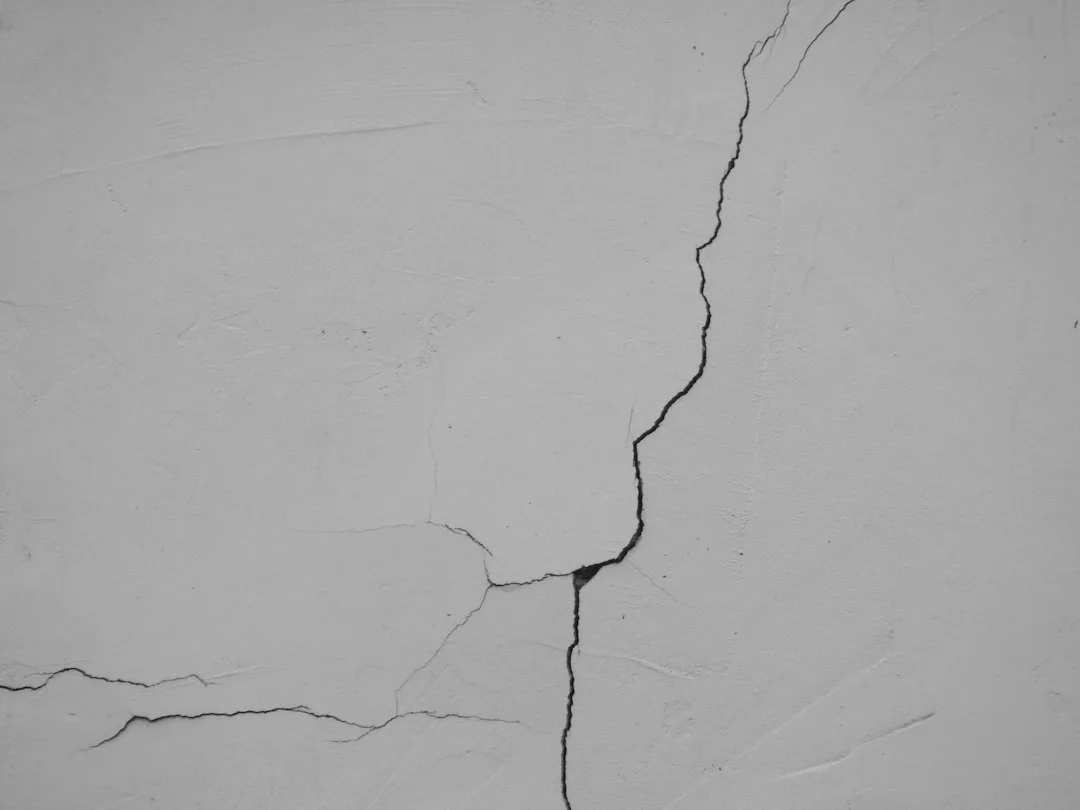
Once the adhesive bond weakens and delamination begins, thermal cycling and moisture ingress accelerate. Water enters behind the separated molding, freezes in winter, and pushes the foam further from the substrate. Cracks appear in the mortar coating, exposing the foam directly to UV (which degrades polystyrene), and water penetrates into the EPS, reducing R-value by 15–20% per year.
Repairs at year 4–5 require complete molding removal (scraping or grinding off failed adhesive), substrate re-prep, new primer, and re-adhesion with correctly mixed mortar. Labor and materials run $600–1,400 per 100 square feet—equivalent to 40–80% of original installation cost. Preventing this through correct mixing and curing costs $0 extra in materials and 2–3 hours additional labor planning per project.
Adhesive Selection: Why Bonding Strength Varies by 30 Percent
Not all EPS facade adhesives are created equal. Cementitious mortars (Baumit, Weber, Knauf, Basf) offer 0.5–1.2 MPa shear bond strength to clean substrates when mixed and cured correctly. Polyurethane foaming adhesives (Sika, 3M) deliver 0.8–1.4 MPa but are more forgiving of wet substrate and humidity extremes, and cost 2.5–3x more. Acrylic latex mortars (cheaper, $8–12/bag vs $14–18 for cement) achieve only 0.3–0.6 MPa and fail in 18–36 months, especially in freeze-thaw climates.
Switching from acrylic latex to cement-based, properly mixed and cured, extends bond life from 24–36 months to 18–24 years. Material cost increase: $6–8 per 100 square feet. Repair cost savings: $800–1,400 per 100 square feet. This is the highest-ROI specification change in facade installation.
Prevention Protocol: The 8-Step Checklist
Installers who follow this sequence report zero premature failures:
First: Test substrate moisture with calcium carbide meter; do not proceed if above 12% or if surface is wet. Second: Power-wash substrate and allow 48–72 hours drying (longer in high-humidity climates). Third: Apply SBR or acrylic primer at 150–200 sq ft per gallon; cure 2 hours. Fourth: Mix adhesive by weight—weigh powder, measure water to exact ratio (0.26 typical); do not guess. Fifth: Use notched trowel to apply ridged profile, minimum 3 mm height. Sixth: Check ambient humidity—install only if 40–70% RH; avoid rain, fog, or very dry wind. Seventh: Allow 7–14 days minimum curing before mechanical load or fastener installation. Eighth: Re-coat surface with breathable facade coating within 30 days to lock in curing and protect against UV and moisture.
This protocol costs $40–80 extra per 100 square feet in labor time and materials, and guarantees 20+ year bond life versus the default 24–48 month failure timeline seen across the industry.