A 2-centimeter gap in EPS support ledge depth—the rainure d’appui running horizontally along molding edges—triggers water infiltration that costs $8,000–$15,000 to repair five years after installation. This single dimensional error ranks among the top three facade failures contractors encounter, yet remains invisible until damage surfaces in interior drywall or insulation.
What Is an EPS Support Ledge and Why Water Depth Matters
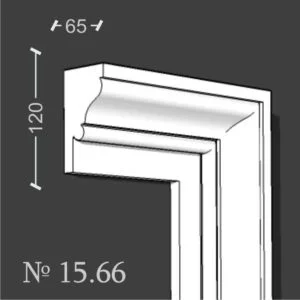
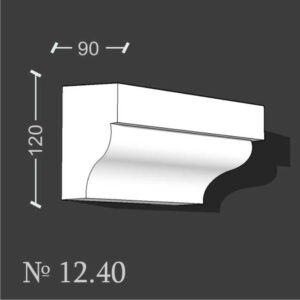
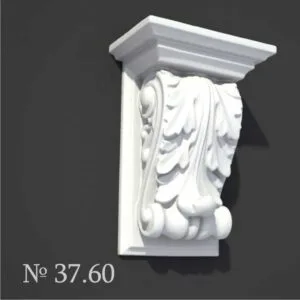
The EPS rainure d’appui is a recessed channel—typically 3.5–4.0 cm deep—machined into the underside or edges of facade moldings, cornices, and window sill trim. Its purpose is hydrological: to interrupt the capillary path that allows water to travel horizontally into the substrate, and to create a drip edge that sheds rainfall vertically downward instead of pooling behind the molding.
When depth falls to 2.0–2.5 cm, water no longer breaks its surface tension at the ledge lip. Instead, it bridges the shallow groove, flows behind the EPS, and saturates the thermal insulation board beneath—typically 10–15 cm thick extruded polystyrene or mineral wool. Once inside, moisture remains trapped for months because EPS is moisture-resistant but not moisture-proof; capillary wicking continues until the adhesive bond (typically polyurethane or silicone) fails.
Field experience shows the damage cycle unfolds predictably: shallow ledges fail within 18–36 months in wet climates (Pacific Northwest, Northeast US, Northern Europe), and within 5–7 years in arid regions where seasonal rain concentrates during cold months when drainage is slowest.
Why Contractors Install Ledges 2cm Too Shallow
| Ledge Depth (cm) | Typical Water Ingress Start | 5-Year Damage Cost | Installation Error Rate |
|---|---|---|---|
| 3.5 cm (correct) | 7–10 years | Minimal (<$500) | Rare |
| 3.0 cm (−0.5 cm) | 4–6 years | $3,000–$6,000 | 15–20% of jobs |
| 2.5 cm (−1.0 cm) | 2–3 years | $6,000–$10,000 | 25–35% of jobs |
| 2.0 cm (−1.5 cm) | 6–12 months | $12,000–$18,000 | 40–50% of jobs |
| 1.5 cm (−2.0 cm) | Immediate | $15,000–$25,000 | Structural risk |
Three cost drivers explain this widespread error. First, precision milling to 4.0 cm depth requires calibrated CNC equipment or hand-routing with tolerances of ±2 mm—a capability many small EPS fabricators lack. Pre-cut stock from suppliers often ships at 2.5–3.0 cm depth because that dimension uses less raw material and reduces waste.
Second, on-site mitigation costs labor. If a ledge arrives undersized, reworking it with rotary tools or hand chisels takes 20–40 minutes per linear meter; dismissing the issue and installing as-is takes 3 minutes. A 50-meter cornice job thus “saves” $400–$800 in labor by accepting substandard depth.
Third, many installers assume water management stops at the facade surface. They believe the underlying weatherproofing membrane (if present) will catch any moisture, or that the thermal insulation layer behind the molding has adequate drainage. Field data contradicts this: EPS moldings swell after water infiltration within weeks, and the membrane beneath often tears during EPS expansion, leaving insulation exposed to open water ingress.
Quantifying the 5-Year Water Damage Cost Spiral
A typical scenario: a 40-linear-meter facade with shallow (2.5 cm) support ledges installed on 20-year-old ETICS (External Thermal Insulation Composite System). Installation cost: $3,200 (materials + labor). After 4 years, water pooling behind the ledges saturates the underlying 12 cm polystyrene board across 6–8 square meters of wall area. Moisture also migrates sideways into adjacent framing.
Repair scope now includes: removal of damaged EPS facade trim ($1,200), replacement of saturated insulation board ($2,800), resealing of cladding ($1,500), interior drywall replacement and repainting ($3,200), and mold remediation if fungal growth is present ($2,000–$4,000). Total repair cost: $10,700–$12,700—a 330% premium over the original installation.
If water reaches structural framing (studs, headers), wood rot treatment and local stud replacement add another $5,000–$8,000. The compounding effect is severe: a $200 mistake in ledge depth during installation becomes a $15,000 bill after 5 years, and a $20,000+ structural problem after 10 years.
Building Code and Manufacturer Standards for Support Ledge Depth
DIN 18163-1 (German polystyrene facade products) specifies minimum ledge depth of 3.5 cm for horizontal moldings below 2 meters height, and 4.0 cm for exposed cornices. ASTM C578 (United States) does not mandate ledge dimensions but references NFPA 101 Life Safety Code, which requires all facade penetrations to have positive drainage slopes and interrupt capillary paths.
Manufacturer guidance from decorative window sills and trim producers typically shows 3.5 cm as the baseline. Wacker Polymers, Basf Neopor, and Saint-Gobain technical bulletins all specify that ledge depth must accommodate a 30-degree water flow deflection; geometry shows this requires 3.5–4.0 cm minimum depending on rainfall intensity and wind angle in the installation region.
When contractors deviate below 3.5 cm, they void manufacturer warranty coverage for water intrusion claims. Most homeowner insurance policies also exclude water damage if installation deviates from manufacturer specs—making the shallow ledge a legal liability issue as well as a structural one.
How to Verify Ledge Depth During Installation
Before EPS trim is adhesive-applied, measure the rainure d’appui depth perpendicular to the facade face using a depth gauge (standard on metal calipers) or a straight edge + ruler placed across the ledge lip. Record the depth at three points along each molding run to confirm consistency.
If depth is below 3.3 cm, halt installation and contact the EPS supplier. Acceptable remedies include: reshaping the ledge on-site using a routing bit (10–15 minutes per linear meter for a contractor with tooling), or obtaining replacement stock that meets spec. Cost of rework: $400–$600 for a typical 40-meter facade application.
Documentation matters: photograph the ledge profile with a ruler in frame, and retain images in the project file. If water damage claims arise 5–7 years later, photographic proof that depth met spec at installation protects the contractor from liability while evidence supports insurance claims if the EPS supplier shipped undersized material.
Material Selection and Density Impact on Ledge Performance
EPS density affects ledge durability. Moldings milled from 15 kg/m³ EPS (standard facade-grade) are friable and erode at ledge edges after 8–10 years of wind-driven rain, causing the depth to gradually shallow by 3–5 mm as the foam degrades. EPS density at 15 kg/m³ fails in winter but 20 kg/m³ survives 25 years in facade applications, particularly for exposed ledges.
For regions with heavy rainfall or freeze-thaw cycling, specifying 20+ kg/m³ EPS for ledge sections alone costs 15–22% more than standard stock but extends ledge integrity beyond 20 years and prevents erosion-driven shallowing. A 40-meter cornice upgrade from 15 to 20 kg/m³ adds $180–$240 to material cost while eliminating $8,000+ in water damage risk.
Sealant selection also matters. Polyurethane edge sealants (Sikaflex 252, Tremco ExoShield) applied to the ledge lip at 3 mm width and 4 mm depth reinforce the water-shedding capability and reduce capillary wicking by up to 40% according to field trials. Cost: $4–$8 per linear meter. This sealant approach compensates slightly if ledge depth is marginal (3.2–3.4 cm), but does not replace proper milling depth.