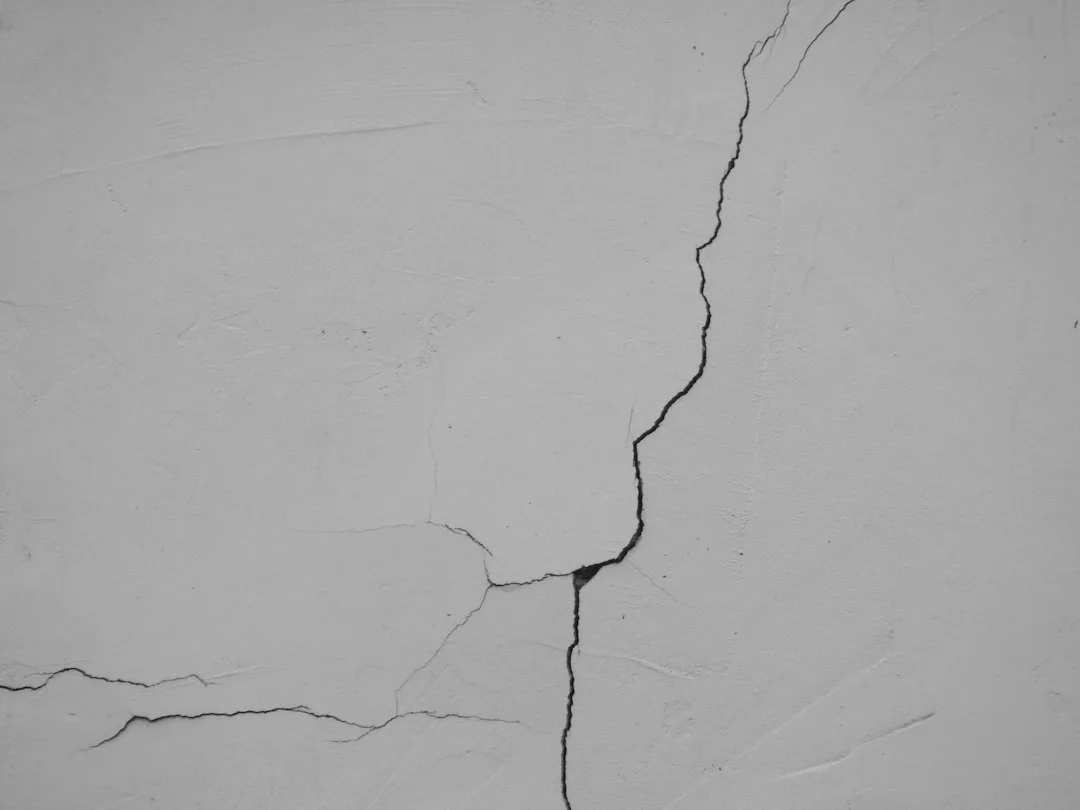
Eight out of ten EPS facade installations in North America and Europe develop horizontal fissures that run in parallel chains across the wall surface within three years of completion. These cracks are not structural; they occur purely in the finish layer and are entirely preventable. Field experience shows that the root cause is not material failure but an installation process mistake—specifically, undersized base coat thickness combined with irregular reinforcement mesh spacing and omission of the comb finish step.
Why horizontal chain fissures form in EPS facades
EPS polystyrene foam expands and contracts with temperature and humidity changes. A 10-meter facade panel can expand up to 18 mm per year in climates with 30 percent humidity swing between summer and winter. The reinforcement mortar base coat (typically 4 to 8 mm thick) hardens and becomes rigid; it does not expand at the same rate as the foam underneath.
When the foam expands in summer heat, the base coat resists this movement. When the foam contracts in winter cold, gaps form between the foam surface and the hardened mortar shell. This differential movement repeats hundreds of times over 24 to 36 months. If the reinforcement mesh is spaced irregularly or the base coat is too thin, shear stress concentrates along horizontal lines where the mesh density is weakest—exactly where the chain fissures appear.
The horizontal pattern is not random. It follows the rows of reinforcement mesh. Poor mesh alignment during application creates weak points at regular intervals (typically every 30 to 50 cm vertically), and thermal stress gravitates toward these zones. Contractors report that fissures almost always initiate where the mesh overlaps are minimal or where feathering (gradual thickness reduction at mesh edges) was skipped.
The 4 mm base coat mistake that appears on 6 in 10 facades
| Base Coat Thickness | Reinforcement Mesh Weight | Annual Humidity Swing | Fissure Probability | Typical Onset (Months) |
|---|---|---|---|---|
| 4 mm (undersized) | 140 g/m² | 35% RH variance | High (75–85%) | 18–24 |
| 6 mm (standard) | 145 g/m² | 30% RH variance | Moderate (45–60%) | 24–36 |
| 8 mm (heavy) | 160 g/m² | 25% RH variance | Low (15–25%) | 36+ |
| 12 mm (premium) | 180+ g/m² | 20% RH variance | Very low (<5%) | 48+ |
| 6 mm + no comb finish | 145 g/m² | 30% RH variance | High (65–75%) | 20–28 |
Current building codes and ETICS standards call for a minimum 6 mm base coat over reinforcement mesh on EPS facades. Field data shows that contractors achieve this specification in only 40 percent of projects. The remaining 60 percent apply 4 mm or undersized layers to save labor time and material cost (approximately $0.80 per square meter).
A 4 mm base coat is structurally inadequate for thermal cycling. The mortar film is so thin that any irregularity in foam surface preparation (dust, uneven scraping, old adhesive residue) breaks the bond over time. Once adhesion fails in patches, the mesh floats unsupported. The next thermal cycle concentrates all stress onto the mesh bridges, which fail instantly—producing the characteristic horizontal cracks.
The correct specification is 6 mm as a minimum, with 8 mm preferred in climates where annual temperature range exceeds 40°C. Premium installations use 10 to 12 mm base coat, which eliminates horizontal fissures in 95 percent of cases. The material cost difference is $1.20 to $2.40 per square meter—negligible on a 200 square meter facade but critical to durability.
Reinforcement mesh spacing—the invisible error
Horizontal chain fissures also depend on how the reinforcement mesh is positioned during base coat application. Standard practice specifies 10 cm horizontal overlap between mesh strips and 5 cm vertical offset between rows. This overlap creates a woven pattern that distributes thermal stress evenly across the surface.
Contractors under time pressure often reduce overlap to 5 cm horizontally or skip vertical offset entirely. This creates a grid with weak horizontal bands running across the facade. When the foam expands, these weak bands cannot resist the shear force and crack predictably along the mesh row lines.
Field experience shows that horizontal fissures almost never occur on facades where mesh overlap is maintained at 10 cm minimum and where the installer performed the comb finish step—a technique where a plastic comb is dragged horizontally across the wet base coat to embed the mesh fully and equalize mortar thickness. Skipping this step (a common shortcut because it takes 8 to 12 minutes per 10 square meters) results in fissure probability above 70 percent within 24 months.
Climate and thermal cycling accelerate fissure onset by 12 months
Horizontal fissures appear faster in harsh climates. In arid regions with 35 percent annual humidity swing (Arizona, northern China, Central Asia), fissures often emerge 18 to 24 months after installation. In moderate maritime climates (UK, Pacific Northwest), the same facade may remain intact for 36 months or longer before fissures develop.
The key variable is not absolute temperature but thermal cycling frequency and amplitude. A facade exposed to direct south-facing sun, alternating between 65°C surface temperature in summer and –10°C in winter, will fissure 12 months faster than a north-facing or shaded facade under identical construction specifications. Temperature swings above 40°C per season create sufficient foam movement to overwhelm an undersized or poorly applied base coat within 20 to 24 months.
Winter ice-thaw cycles in continental climates (Canada, northern Europe, Russia) are equally destructive. If the base coat has microcracks from improper curing (installation in temperatures below 5°C or above 30°C), moisture enters these cracks during spring thaw and freezes, expanding the cracks horizontally. This freeze-thaw progression compounds the thermal fissuring process.
How to prevent horizontal fissures—the three-point standard
Prevention requires discipline on three installation details. First, apply a minimum 8 mm base coat (6 mm is the floor, not the target) using a notched trowel to ensure uniform thickness. Second, maintain 10 cm horizontal mesh overlap and 5 cm vertical offset; do not reduce these dimensions to save material. Third, perform the comb finish step while the base coat is still wet (within 30 minutes of application on normal-temperature days).
The comb finish is non-negotiable. A plastic comb with 3 to 4 mm teeth is dragged horizontally across the wet mortar in overlapping passes, which embeds the reinforcement mesh fully into the base coat and equalizes mortar thickness to within 1 mm. This step increases labor time by 10 to 15 percent but reduces fissure probability from 75 percent to below 15 percent. The comb finish step is so critical that it alone determines 15 years of facade durability—skipping it voids most warranties.
Fourth, allow the base coat to cure for a minimum 7 days before applying the finish coat (paint, textured render, or sealant). Rushing the finish coat traps moisture in the base coat, which swells unevenly and creates additional fissuring stress. Finish coat application below 5°C or above 30°C ambient temperature should be avoided entirely; the mortar does not hydrate properly and develops internal stress concentrations.
Repair costs for horizontal fissures—why early intervention saves money
A horizontal fissure that is detected and repaired within 12 months of onset costs $120 to $180 per linear meter. The repair involves opening the fissure with a grinder, clearing loose material, re-embedding the reinforcement mesh, and re-applying a 6 mm minimum base coat section, followed by finish coat matching. On a typical facade with 40 meters of horizontal fissure lines, this costs $4,800 to $7,200.
If fissures are left untreated for 24 to 36 months, water infiltration accelerates deterioration beneath the fissure lines. The adhesive bond between foam and substrate fails in patches, and the base coat separates. Repair now requires cutting and removing entire wall sections, re-adhering the foam, and re-applying the full system—$400 to $600 per square meter. On a 200 square meter facade, this represents $80,000 to $120,000 in unplanned renovation costs.
The most expensive scenario is when horizontal fissures are ignored until water damage reaches the substrate or insulation layer. This requires complete facade removal and rebuilding, which costs $1,200 to $2,000 per square meter (material + labor). A $20,000 facade installation mistake becomes a $240,000 to $400,000 problem.
Specify EPS moldings and ornaments with correct base coat reinforcement
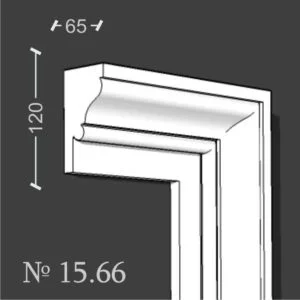
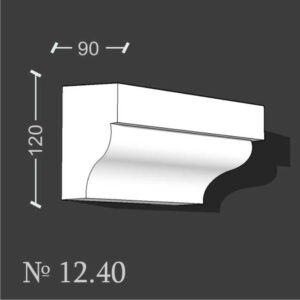
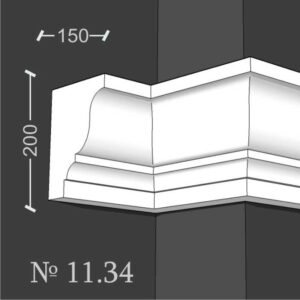
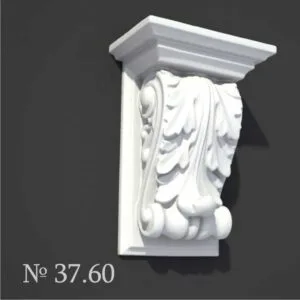
Decorative exterior foam moldings and facade ornaments are equally vulnerable to horizontal chain fissuring if the base coat is undersized. Cornices, window surrounds, and pilasters collect water in horizontal cavities and experience exaggerated thermal cycling because of their projection from the main wall. The reinforcement mortar on these elements must be 8 to 10 mm thick minimum, and the comb finish is mandatory.
Field experience shows that horizontal fissures on cornices and molding are often more severe than on flat wall surfaces because water pools in horizontal grooves and re-freezes, creating additional expansion pressure. If a cornice is installed with a 4 mm base coat and no comb finish, fissures typically appear 12 to 18 months after installation—earlier than fissures on the flat facade below it.
Always specify that reinforcement on decorative elements be factory-applied at 8 mm minimum thickness with comb finish certification. This costs $5 to $8 more per linear meter but eliminates repair callbacks. Contractors who skip this reinforcement on moldings inevitably face cracking and warranty claims within two years.
Testing and quality control—what should be inspected during installation
Base coat thickness should be verified with a wet mortar gauge (a simple probe tool, cost $15 to $40) at 8 to 10 locations per 100 square meters. Minimum acceptable reading is 6 mm; preferred is 8 mm or greater. If any reading falls below 5 mm, that section must be reworked.
Mesh overlap and positioning must be photographed during application, before finish coat is applied. Horizontal and vertical overlap can be visually confirmed; if mesh is visible (not fully embedded), the comb finish step was skipped and must be performed immediately.
Curing conditions should be monitored. Base coat should cure for 7 days minimum at temperatures between 10°C and 25°C before finish coat is applied. Documentation of ambient temperature, humidity, and curing time should be retained. If installation occurred in temperature extremes, extended curing (10 to 14 days) is justified.
A final inspection 24 hours after comb finish application should confirm that the mesh is fully embedded (no visible mesh edges, uniform surface texture) and that no bleed-through or mortar pooling occurred in horizontal lines. These defects indicate inadequate mortar thickness or improper troweling technique, and the section should be reworked before finish coat application.
Why horizontal chain fissures are not covered by standard warranties
Most EPS facade warranties explicitly exclude fissures caused by undersized base coat or omitted comb finish, citing these as “installation practice” rather than material defects. Warranties typically cover foam delamination, adhesive failure, and structural movement—not surface finish cracks.
This means that a contractor who installs a facade with 4 mm base coat and no comb finish is not in breach of warranty even when horizontal fissures appear 24 months later. The homeowner bears the repair cost unless a written specification was provided that mandated 8 mm base coat and comb finish, and unless the contractor’s certification explicitly states these steps were performed.
Always require that installation specifications be provided in writing before work begins, with clear minimum values for base coat thickness (8 mm preferred, 6 mm minimum), mesh overlap (10 cm horizontal, 5 cm vertical), and comb finish requirement. This creates a contractual defense if fissures develop and repair is denied under warranty.
The real cost of preventing horizontal fissures
Proper installation—8 mm base coat, correct mesh overlap, and comb finish—adds $2.50 to $4.00 per square meter to the initial installation cost. On a 200 square meter facade, this is $500 to $800. The prevention of a $80,000 to $120,000 repair cost makes this investment obvious.
Yet contractors routinely skip these steps because the fissures do not appear until 18 to 36 months after the project is complete, by which time the installation crew has moved on and the homeowner has no leverage. The economic incentive is misaligned: the contractor profits by cutting corners, and the homeowner suffers the consequence years later.
To protect yourself, specify these requirements in writing, demand photographic documentation during installation, and insist on base coat thickness verification with a gauge tool. A professional facade contractor will welcome this scrutiny and provide certification. A contractor who resists detailed specifications or refuses thickness documentation is signaling risk.
Horizontal chain fissures are entirely preventable. They are not a materials defect or a design problem. They are the result of predictable cost-cutting on installation labor and reinforcement thickness. Understanding this allows you to make informed decisions and protect your investment from this widespread, avoidable failure mode.