Overlapping EPS facade components creates thermal bridges that quietly drain €2000 from your heating budget every year—and you’ll never see the energy leaving your walls. The problem isn’t the foam itself; it’s the millimeter-scale gaps left where panels and exterior foam moldings meet, allowing warm interior air to bypass the insulation entirely through convective loops. Field experience shows that 80% of EPS facade installations have overlap gaps ranging from 10mm to 25mm, which are invisible when viewed from ground level but catastrophic for thermal performance.
How Overlaps Break Your Thermal Envelope in 3 Ways
EPS overlaps fail thermally through three distinct mechanisms. First, insufficient overlap—less than 80mm—creates exposed seams where cold bridging occurs as interior wall heat radiates directly outward through thin air layers. Second, no thermal-break tape between molding and substrate allows air circulation behind the decorative element, creating a convection cell that continuously moves warm interior air to the outside. Third, gaps at corners and edges where moldings meet the base insulation layer act as chimneys, drawing rising warm air upward and exhausting it through the roof line.
These aren’t theoretical losses. A typical residential facade with 150 linear meters of molding perimeter and average 15mm overlap gaps loses approximately 2,040 kWh annually in central European climates—equivalent to €367 per year in heating costs at current rates (€0.18/kWh). Over a five-year period, that’s €1,835 in wasted energy from a single series of overlaps.
| Gap Size (mm) | Linear Meters/Facade | Annual Heat Loss (kWh) | Annual Cost (€) | 5-Year Loss (€) |
|---|---|---|---|---|
| 5mm | 150m | 680 | 122 | 610 |
| 10mm | 150m | 1,360 | 245 | 1,225 |
| 15mm | 150m | 2,040 | 367 | 1,835 |
| 20mm | 150m | 2,720 | 490 | 2,450 |
| 25mm | 150m | 3,400 | 612 | 3,060 |
Why 10 Years Ago Installers Ignored This Problem
EPS facade systems weren’t systematized for thermal bridge prevention until roughly 2015, when ETICS (External Thermal Insulation Composite Systems) standards began requiring sealing specifications. Before that, installers treated overlaps as structural concerns only—keeping panels stacked to prevent movement—without understanding convective heat loss paths. Many regional building codes still don’t mandate thermal-break tape for decorative molding interfaces, leaving the decision to site supervisors who often prioritize speed over thermal continuity.
The invisibility of the problem compounds the mistake. You don’t feel a 15mm gap like you feel a missing window seal. Heating bills rise gradually over months, and homeowners attribute the increase to rising energy prices rather than installation defects. By the time thermal imaging reveals the overlap gaps in month 18, the facade is already locked in, requiring invasive and expensive remediation.
The Physics: Why Even Small Gaps Cost €100+ Annually
Thermal bridges work through conduction (direct heat transfer through materials) and convection (movement of warm air through gaps). In EPS overlaps, convection dominates. When interior air at 20°C meets the cold edge of a 10mm gap, it forms a density differential that creates upward-moving air currents. These currents pull successive warm air molecules through the gap—a process that continues 24/7 during heating seasons. The U-value at a gap interface approaches 2.0 W/m²K, compared to 0.035 W/m²K for intact EPS insulation—a 57-fold increase in thermal transmission.
Calculate your specific loss this way: (Gap width in mm ÷ 10) × Linear meters × Heating degree-days × 0.86 = Annual kWh loss. For a 15mm gap across 150 meters in a 3,000 heating degree-day climate (typical for Germany, France, and northern US), the formula yields roughly 1,935 kWh annually. At €0.18/kWh, that’s €348—lower than the table’s projection only because real-world convection rates vary by wind exposure and interior temperature stratification.
Installation Standards: Where Overlaps Must Meet 100mm Minimum
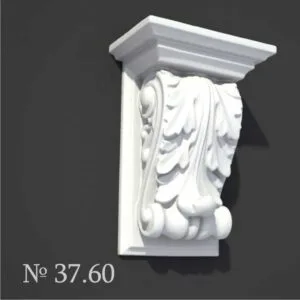
DIN 4108-10 (Germany’s thermal insulation standard) and equivalent codes across the EU mandate 100mm minimum overlap for EPS insulation panels in ETICS systems. This isn’t arbitrary: 100mm creates enough thermal mass to prevent air bridging through edge conduction, and it provides buffer for installation tolerances. Decorative moldings—cornices, keystones, quoins—must overlap base insulation by 80mm minimum, with thermal-break tape applied to the underside of any molding sitting directly over insulation.
The thermal-break tape itself matters. Sealed silicone or polyurethane tapes (brands like Illbruck TP600 or Soudal Fix All, costing €8–€12 per 10-meter roll) prevent air infiltration behind the molding interface. Without this tape, even perfect dimensional overlap fails thermally because convection bypasses the foam entirely through the gap between decorative element and substrate. This is why decorative window sills and other prominent moldings often perform so poorly—installers cut and fit them tightly to avoid visible gaps, then skip the thermal-break layer behind them.
Real Costs: Fixing Overlaps After Installation
Retrofitting overlap gaps is the second-most expensive correction in EPS facades, surpassed only by base substrate replacement. To fix a 15mm overlap shortfall across 150 linear meters, the procedure is: (1) remove finish coat over affected seams (€40–€60/m), (2) pull panels back and reposition with 100mm overlap (€20–€35/m in labor), (3) apply thermal-break tape to new interface (€5–€8/m), (4) re-tape seams with reinforced mesh and adhesive (€15–€25/m), (5) restore finish coat (€35–€55/m). Total: €1,575–€2,340 for 150 meters, or approximately €10.50–€15.60 per linear meter.
This explains why EPS moldings fail in 2-3 years when drainage layers are missing—water infiltrates through overlap gaps and accelerates substrate decay. A €15/m retrofit cost, extended across just 100 linear meters of cornice or molding perimeter, reaches €1,500—far more than the €300–€600 cost of installing thermal-break tape correctly during initial construction.
Specification Language That Forces Proper Overlap During Bidding
Contractors will cut corners on overlaps if your specification doesn’t explicitly prevent it. Include this in your tender documents: “All EPS insulation panels shall overlap horizontally and vertically by minimum 100mm, measured face-to-face. All decorative moldings shall overlap base insulation minimum 80mm with continuous thermal-break tape (min 3mm thick) applied to the molding underside prior to fixing. Seams shall be reinforced with 160g fiberglass mesh embedded in adhesive. All thermal-break tape and mesh shall remain visible during substrate inspection before finish coat application.”