
What a Facade Band Actually Does to a Wall
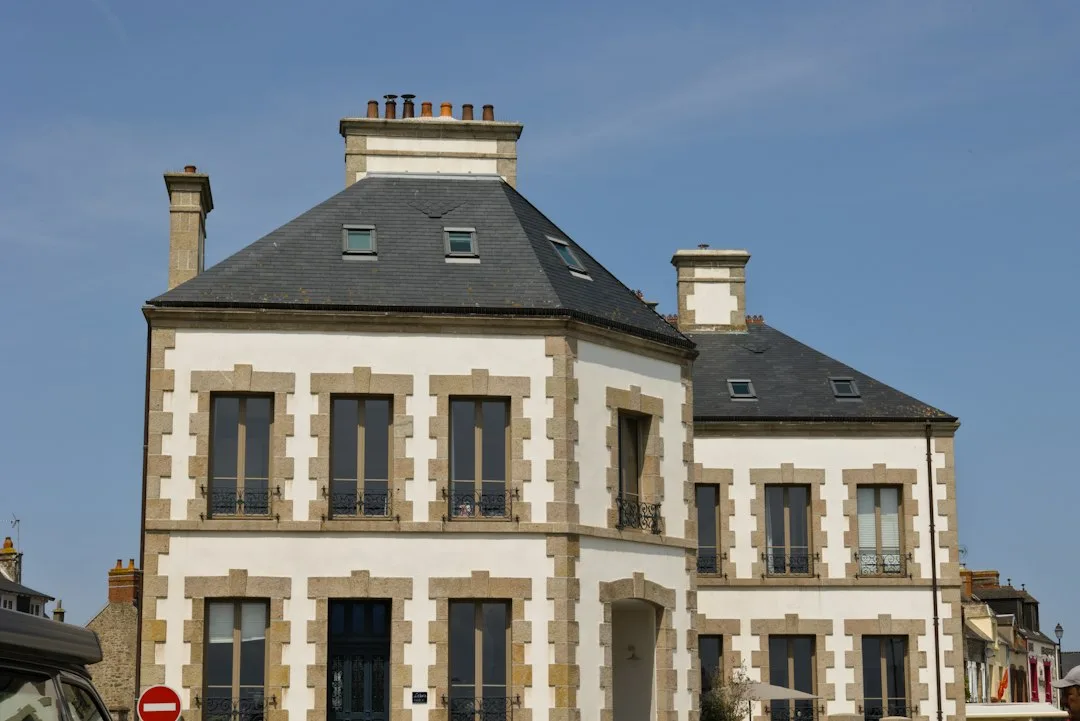
A facade band — sometimes called a string course or belt course — is a horizontal molding applied across the exterior wall face, typically at floor-line height, window sill level, or just below the roofline. Its primary job is to interrupt a flat plane visually, creating shadow lines that give the building mass and dimension. Without it, a two-story rendered wall reads as a single featureless surface regardless of paint color.
The secondary job is technical: a properly installed EPS polystyrene facade band creates a physical drip edge that directs rainwater away from the wall surface below. This matters on EIFS (Exterior Insulation and Finish System) walls where water infiltration at horizontal joints is a leading cause of substrate rot.
Why EPS Outperforms Concrete and Wood for This Application
Traditional cast concrete belt courses add 15–40 lbs per linear foot to a wall assembly — a load that requires lintel support and complicates retrofit projects. Solid wood profiles rot, split, and require repainting every 3–5 years in wet climates. An EPS polystyrene facade band weighs roughly 0.2–0.5 lbs per linear foot, needs no structural support, and carries a service life of 50+ years when protected with a polymer basecoat and acrylic finish.
EPS also has an R-value of approximately R-4 per inch, so a 2-inch-thick band adds a small but real thermal break at the floor line — exactly where thermal bridging through slab edges is most common in concrete-frame construction. Brands like Polyrey, Sto, and Mapes Architectural Products supply pre-profiled EPS bands in densities from 1.0 to 2.0 pcf; use a minimum 1.5 pcf for exterior applications to resist impact and moisture absorption.
Choosing the Right Profile and Size
Band height typically runs 3–8 inches for single-story emphasis and 6–12 inches for main floor-line breaks on two-story homes. The projection from the wall face should be at least 1 inch to cast a visible shadow line — less than that and the effect disappears in flat light. A 45-degree or coved top surface is strongly preferred over a flat top: flat tops collect standing water and accelerate coating failure.
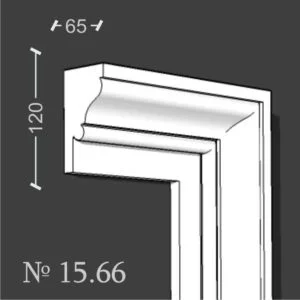
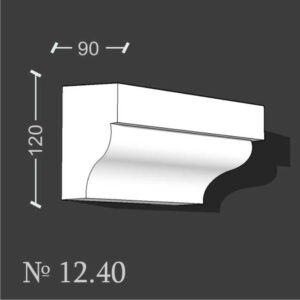
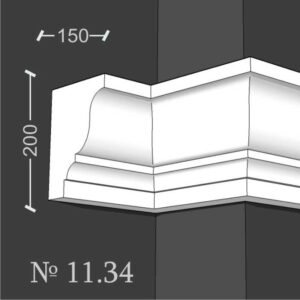
Profile options include simple rectangular, beveled, ogee, and compound crown-style sections. Rectangular and single-bevel profiles are the most practical for DIY or small contractor installs because they require no miter cuts at inside corners — you simply butt cut pieces and fill the joint. Compound profiles look more traditional but demand accurate 45-degree miter cuts and a decent miter saw with a long fence extension.
Surface Prep — the Step Most Installers Skip
The substrate must be clean, dry, and structurally sound before any adhesive goes on. On existing EIFS or stucco, grind off any efflorescence and check for hollow spots by tapping — a hollow sound means delamination, and bonding over it will cause the band to fail within two seasons. On bare OSB or sheathing, apply a self-adhered weather barrier first; do not bond EPS directly to unprotected sheathing.
Prime the back face of the EPS band with a diluted polymer basecoat (roughly 1 part basecoat to 10 parts water) and let it tack before applying full-strength adhesive. This step is skipped on most job sites and it directly causes premature bond failure — the raw EPS surface is too porous and absorbs adhesive faster than it can wet out the substrate.
Adhesive Selection and Application Method
Use a polymer-modified adhesive mortar specifically rated for EPS bonding — Sto BTS, Mapei Mapetherm AR1, or equivalent. Standard tile adhesive and construction adhesive (including PL Premium) are not appropriate: they either shrink and crack or, in the case of solvent-based products, chemically dissolve EPS. Apply adhesive in a continuous perimeter bead plus three interior dabs per 4-foot section — this is the EIFS industry standard pattern that prevents water from being trapped behind the molding.
Press the EPS polystyrene facade band firmly into position and hold for 30–60 seconds. For long runs, use temporary screws driven through the EPS into the substrate to hold alignment while the adhesive cures — fill the screw holes with basecoat before finishing. Check level every 6 linear feet with a 4-foot level; a 1/8-inch error per 6 feet becomes very visible at 20 feet of run.
Finishing for Durability and a Clean Look
Embed fiberglass mesh (minimum 4.5 oz/sq yd alkaline-resistant type) into the first coat of polymer basecoat applied over the EPS band. Lap the mesh 2 inches onto the adjacent wall surface to create a monolithic coating that bridges the joint — this is what prevents cracking at the band edges. Apply a second basecoat, sand lightly when dry, then finish with an acrylic texture coat matched to the surrounding wall.
Caulk all end joints, inside corners, and the band-to-wall interface with a paintable polyurethane sealant rather than silicone — silicone cannot be overcoated and will show as a permanent line through any finish paint. Budget $0.80–$1.50 per linear foot for materials alone (EPS profile, adhesive, mesh, basecoat, finish coat); installed contractor pricing runs $6–$12 per linear foot depending on profile complexity and access.
Common Failure Modes and How to Avoid Them
The three most common failures are: bond failure from skipped primer, cracking at joints from missing mesh lap, and water infiltration from flat-top profiles without a drip edge. All three are entirely preventable with correct specification. If you are buying pre-finished bands, verify the factory finish includes embedded mesh — some suppliers ship uncoated EPS and expect the installer to finish on-site, which is the correct approach for quality control.
An EPS polystyrene facade band installed correctly is essentially maintenance-free for the life of the building. Inspect the caulk joints every 5–7 years and reapply as needed — that is the entire maintenance program.