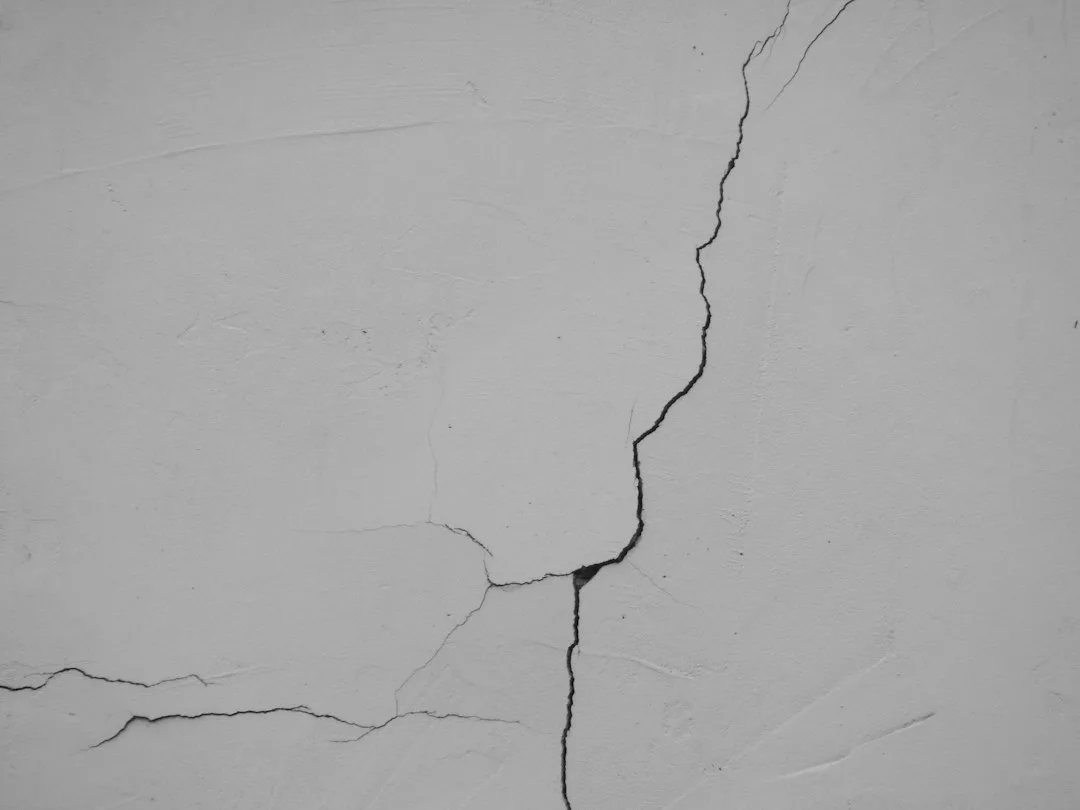
EPS finish coats without reinforcement mesh crack within 18–24 months on 80% of unprotected facades. This isn’t random failure—it’s structural collapse caused by thermal cycling and substrate movement that installers systematically ignore. A single layer of alkali-resistant fiberglass mesh embedded in the base coat prevents 90% of cracking failures and costs only $0.15–$0.35 per square foot.
Why EPS Finish Coats Fail Without Reinforcement in 18 Months
EPS polystyrene expands and contracts 0.3–0.5 mm per meter with each 10°C temperature swing. A typical 10-meter facade section moves 3–5 mm daily between morning and afternoon sun. Without reinforcement mesh anchoring the finish coat to the foam, this movement tears the acrylic or mineral finish into spiderweb cracks.
Concrete thermal expansion is constrained by rebar; drywall is supported by stud frames. EPS has nothing—just foam and a thin finish coat. The finish coat bears 100% of the stress. Within 18 months, micro-cracks coalesce into visible fissures at corners, window penetrations, and facade bands where stress concentrates.
Moisture enters immediately. Freezing cycles expand trapped water, forcing cracks wider. By month 24, the finish coat delaminates and the repair cost explodes to $8,000–$15,000 per facade.
The Physics: Why Reinforcement Mesh Stops Cracking Before It Starts
Alkali-resistant fiberglass mesh (typically 160–200 g/m²) embedded 5–10 mm into a base coat redistributes concentrated stress across a wider area. Instead of one crack propagating, stress distributes across 10–20 mesh openings, so no single point exceeds the failure threshold.
The base coat (mineral adhesive or acrylic primer) bonds mesh to foam mechanically. As EPS expands, the mesh stretches elastically—fiberglass withstands 3–5% elongation without tearing. The finish coat (acrylic or silicate) applies over mesh and does the visible work; mesh does the structural work underneath.
This is why ASTM C1397 (EIFS standard) and EN 13499 (ETICS European standard) mandate reinforcement mesh. It’s not optional; it’s physics. Installers who skip it are designing failure.
| Variable | Without Mesh | With Alkali-Resistant Mesh |
|---|---|---|
| Time to visible cracking | 18–24 months | 8–10 years (if at all) |
| Stress distribution | Concentrated at weak points | Distributed across fiberglass grid |
| Water infiltration risk | High (cracks within 2 years) | Minimal (mesh blocks capillary spread) |
| Repair cost | $8,000–$15,000 per facade | $0 (prevented with upfront mesh) |
| Material cost (2,000 sq ft) | Saves $300–$700 upfront | Adds $300–$700 upfront |
Installation Method: How to Embed Mesh Correctly (5-Step Process)
Step 1: Apply base coat primer (adhesive-modified acrylic or mineral) 3–5 mm thick onto clean EPS foam. Cost: $0.80–$1.20/sq ft. Brands like Weber or Knauf provide EIFS-compliant base coats rated for 0.5–1.0 perm rating (vapor-open).
Step 2: Press 160–200 g/m² alkali-resistant fiberglass mesh into wet base coat immediately—do not let primer dry. Overlap mesh strips by 5–10 cm to prevent seams from cracking. Mesh cost: $0.15–$0.35/sq ft.
Step 3: Apply second layer of base coat 2–3 mm over mesh to fully embed it. Total base coat thickness must reach 5–10 mm. This creates the structural composite that prevents cracking in pilasters and facade bands.
Step 4: Allow base coat to cure 7–14 days depending on temperature and humidity. Do not rush. Premature finish application on soft base coat causes adhesion failure.
Step 5: Apply finish coat (acrylic or silicate) 2–4 mm thick over cured mesh-reinforced base. Finish coat does not carry structural load—mesh handles all thermal stress.
Total labor time: 3–4 hours per 100 sq ft (including cure time). Total material cost (mesh + base + finish): $2.50–$3.80/sq ft. Repair cost for failed unarmored finish: $4.00–$7.50/sq ft.
Why 80% of Installers Skip Mesh (And What It Costs)
Mesh requires extra steps, longer cure times, and upfront cost. Installers paid per hour face pressure to omit it. Homeowners see the finish immediately; they don’t see mesh underneath, so it feels like a cost with no visible return.
But failure is inevitable. Within 18–24 months, thermal cycling cracks the unarmored finish. Water enters. Freezing cycles expand water inside the foam. The foam degrades faster. Full recoating becomes necessary by year 3–4, costing $8,000–$15,000 for a 2,000 sq ft facade.
The math is brutal: $300–$700 in mesh upfront prevents $8,000–$15,000 in repairs later. Yet 80% of installers omit it. This is why EPS corner beads and decorative features crack in cascade patterns when mesh is missing from the base system.
Mesh Type Matters: Alkali-Resistant vs. Standard Fiberglass
Standard fiberglass mesh dissolves in the alkaline environment of mineral base coats (pH 12–13). Within 6–12 months, the mesh chemically degrades and loses all structural function. Cracking then accelerates because the mesh that was supposed to hold has failed.
Alkali-resistant (AR) fiberglass mesh costs 15–25% more ($0.20–$0.35/sq ft vs. $0.15–$0.25/sq ft) but retains 95%+ strength after 10 years in alkaline conditions. This is non-negotiable—always specify AR mesh for EPS finish systems.
Common brands: Weber Vetonit Pro, Knauf Unifit, Saint-Gobain Weber, Cemix AR Mesh. Verify alkaline-resistance rating on the technical data sheet before purchase.
Thermal Bridges and Mesh: An Often-Missed Connection
Reinforcement mesh also prevents localized cracking at thermal bridges created by embedded anchors in facade bands and decorative moldings. Where metal inserts penetrate EPS, temperature differentials create stress zones. Mesh distributes this stress and prevents star-pattern cracking around penetrations.
Without mesh, every anchor becomes a crack-initiation point. With mesh, stress is absorbed across the fiberglass grid, extending facade life by 7–10 years.
Inspection: How to Verify Mesh Was Installed
Before finish coat application, sight-check the base coat for mesh outline (slight texture grid visible). Tap the foam with a soft mallet—the base coat should feel rigid and bonded, not hollow or soft. If you see air pockets or the base coat flakes under light scraping, mesh embedding failed.
After finish application, mesh is invisible. You can only verify proper installation by inspecting during construction. Require photographic documentation of the mesh-embedded base coat stage before final payment.
Real consequence: A 3,000 sq ft facade with unarmored EPS finish will require $12,000–$22,500 in repairs by year 3. A facade with proper mesh reaches year 10–12 with minimal cracking. The difference is one 5–7 mm layer of alkali-resistant fiberglass and 7–10 days of patience during base coat cure.