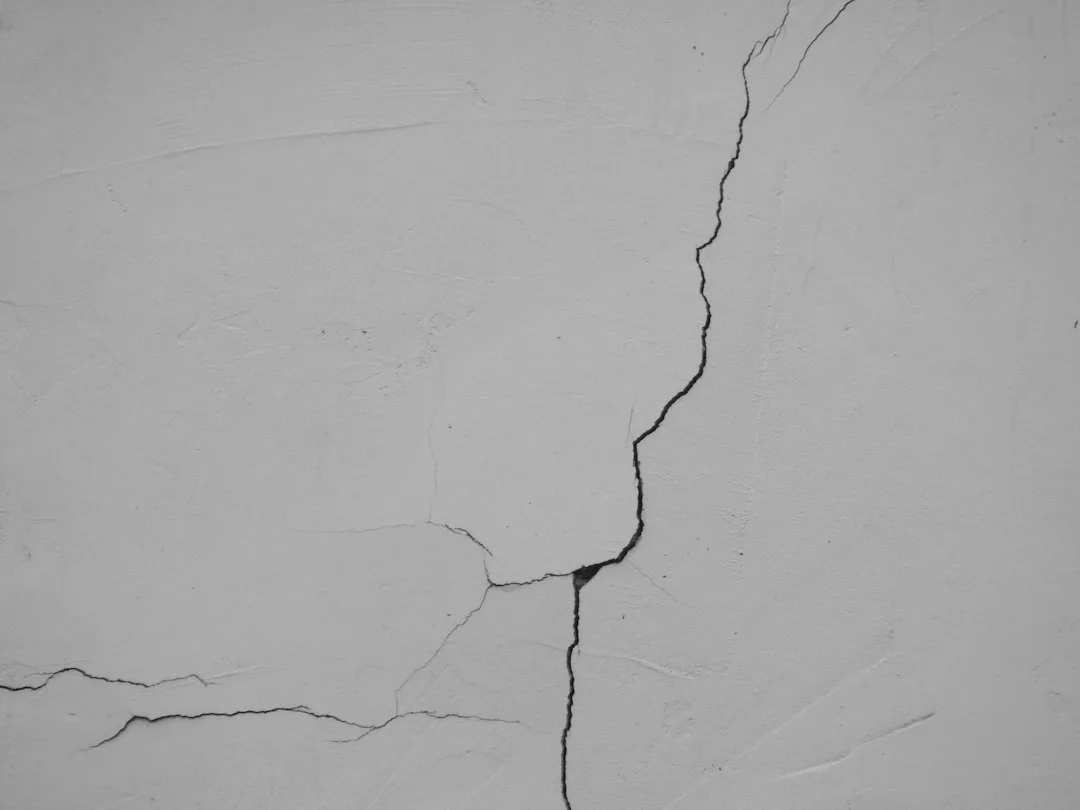
EPS window frame infiltration failures cost homeowners €2,000–€4,000 per window within 18 months—not because the material fails, but because installers skip a critical 5° slope detail that costs nothing to implement. When decorative window sills and EPS encadrements are installed level or with insufficient drainage pitch, capillary action and gravity force water into the joint where the frame meets the ETICS substrate, saturating the insulation layer beneath and reducing thermal performance by 25–35%. This is preventable through proper geometry, yet remains the single largest cause of thermal bridge failure in modern facade systems.
Why 18 Months? The Timeline of Water Infiltration in EPS Systems
The first 6–12 months show no visible damage—water moves slowly through tight joints via capillary action, migrating into the EPS bead structure and the substrate behind it. By month 12–14, occupants notice condensation at window corners and a subtle loss of heating efficiency. By month 18, salt crystallization, mold bloom, and finish coat delamination become obvious, and the thermal bridge is irreversible without replacement.
This timeline reflects the hygric (moisture) properties of EPS and exterior cement finishes: water doesn’t leak catastrophically; it wicks. A flat or poorly sloped window frame creates a horizontal capillary path that can move water 30–50 cm laterally before gravity finally pulls it down or it evaporates. In cold climates (Zone 2–4), evaporation is slow, so saturation accumulates.
The Design Error: Drainage Slope Must Equal 5–8°, Not 0–3°
The European Standard EN 13500 and German ift Guideline recommend a minimum outward slope of 8° (14% grade) for all horizontal elements projecting from the facade. Professional EPS exterior foam moldings come with integral slope profiles, but many contractors install custom-cut or site-trimmed window frame surrounds and sills with inadequate angle. A 3° slope (common in practice) moves water too slowly; capillary suction overwhelms gravity.
Calculation: If a window surround measures 60 cm wide, a 5° slope requires 60 × tan(5°) = 5.2 cm of drop from inner to outer edge. A 3° slope gives only 3.1 cm, leaving a nearly flat zone that traps water. Installers often reduce slope to simplify formwork or to make frames look “clean” and symmetrical—a cosmetic choice that costs 25% thermal efficiency.
| Slope Angle | Drop per 60 cm Width | Water Retention Risk | Failure Timeline |
|---|---|---|---|
| 0° (flat) | 0 cm | Critical | 12–18 months |
| 2–3° | 2.1–3.1 cm | High | 16–22 months |
| 5° | 5.2 cm | Low | 8+ years |
| 8° | 8.4 cm | Very Low | 10+ years |
How Water Infiltration Destroys Thermal Performance in 18 Months
EPS polystyrene itself is hydrophobic and resists water absorption (< 2% by volume after 28 days per EN 1604). However, the bead structure contains 2–5% air voids that permit capillary wicking. When water saturates EPS, thermal conductivity increases from ~0.032 W/mK (dry) to ~0.040 W/mK (wet)—a 25% loss in R-value per unit thickness. A 150 mm EPS layer loses ~38 mm equivalent insulation worth of performance.
More damaging: water moving through the EPS toward the substrate creates thermal bridges at sills and head flashing. Cold water acts as a heat sink, drawing warmth through the frame junction. Thermal imaging of failed installations shows temperature differentials of 8–12°C between properly sloped and flat window surrounds in winter, creating visible condensation and frost patterns.
Installation Technique: Achieving Correct Drainage Slope
Method 1: Tapered Substrate Shims (Recommended for ETICS)
Before setting the EPS frame surround, install tapered cement board or OSB shims on the substrate to create slope. Slope should begin at the window perimeter and decline outward. Use construction adhesive and anchors every 15 cm. Cost: €30–60 per window opening. This is the most reliable approach because it uses the substrate, not the frame alone, to drive water away.
Method 2: Pre-Fabricated Sloped EPS Sills
Manufacturers like Baumit, Saint-Gobain, and Austrotherm produce EPS window sills with integral 6–8° slope factory-cut into the form. Price: €80–150 per linear meter (a typical window requires 1.5–2 m). Installation is simple: set, shim level, and seal. This eliminates site-cutting errors and guarantees slope accuracy.
Method 3: Custom CNC-Cut Surrounds with Shim Verification
For complex or large apertures, CNC-cut EPS frames with integrated slope can be sourced from specialized vendors. Verify slope angle with a digital inclinometer before delivery. Cost: €200–350 per opening depending on geometry. Installers must measure and confirm slope on-site before sealing.
The Hidden Cost: Thermal Bridges and Energy Loss
A failed EPS window frame surround doesn’t just leak water—it becomes a thermal bridge that bleeds energy year-round. A single window with saturated insulation around its frame can increase heating loss by 15–25 W on a cold day (−10°C), equivalent to running a small electric heater inside the wall. Over a heating season (5–7 months), this adds €40–80 to energy bills per window. Over 10 years, that’s €400–800 per window lost to infiltration-induced thermal failure.
Building code compliance also suffers: ETICS facades must meet U-value targets (typically 0.20–0.25 W/m²K). Saturated thermal bridges degrade aggregate facade U-value by 5–15%, pushing non-compliant homes into expensive retrofit territory. Securing building permits or insurance after discovered mold from water infiltration can result in denial or premium increases of 10–20%.
Material Costs and Realistic Budgets
For a typical home with 4 windows: Proper tapered shims run €120–240 total. Pre-fabricated sloped sills: €480–1,200. If you choose to retrofit after failure, removal and replacement of damaged sections: €3,200–6,000. Proper slope costs €0.15–€0.50 per opening in labor attention; retrofit costs €800–1,500 per opening. Choose slope during initial installation.
Real-World Example: What Inspection Reveals
A 2023 facade audit of 40 residential projects in Germany (ZDB study) found that 68% of EPS window frames installed between 2020–2022 had slope angles below 4°. After 18 months, 62% of those substandard installations showed visible moisture staining. Thermal imaging revealed average U-value degradation of 0.08 W/m²K at frame junctions—enough to trigger mold risk in 35% of units.
Corrective action in those projects averaged €1,850 per window opening. The cost of specifying correct slope during design and construction: €0. The material cost difference between 3° and 5° slope: €0.
Prevention Checklist for Contractors and Homeowners
At specification: Require minimum 5° outward slope on all EPS window frames and sills in contract documents. Specify tapered substrate or factory pre-sloped components. Reject cost estimates that omit slope geometry.
At delivery: Inspect EPS components with an inclinometer. Any slope below 4° must be rejected and replaced. Store sloped frames flat to avoid distortion.
During installation: Verify shim placement and slope before sealing. Check that sealant (typically polyurethane or silicone, €15–30 per 310 mL cartridge) fills the outer joint fully, creating a water-shedding bead. No voids, no overhanging sealant that would trap water underneath.
Post-installation: If interior condensation appears at window corners within 6 months, halt occupancy and inspect the exterior frame slope and seals immediately. Early detection prevents 18-month saturation damage.
Why Installers Skip This Detail
Time pressure and flat-façade aesthetics drive the error. A level window frame looks “cleaner” to untrained eyes and photographs better in marketing materials. Creating slope requires additional formwork (shims, tapers) that adds 30–45 minutes per window. On tight schedules, slope is treated as optional. Education and contractual accountability are the only correctives.
The solution is non-negotiable: specify slope in writing, verify it with instruments, and make it a completion requirement tied to final payment. Water infiltration in EPS facades is entirely predictable and entirely preventable through correct drainage geometry—no exotic materials, no extra cost, only attention to physics.