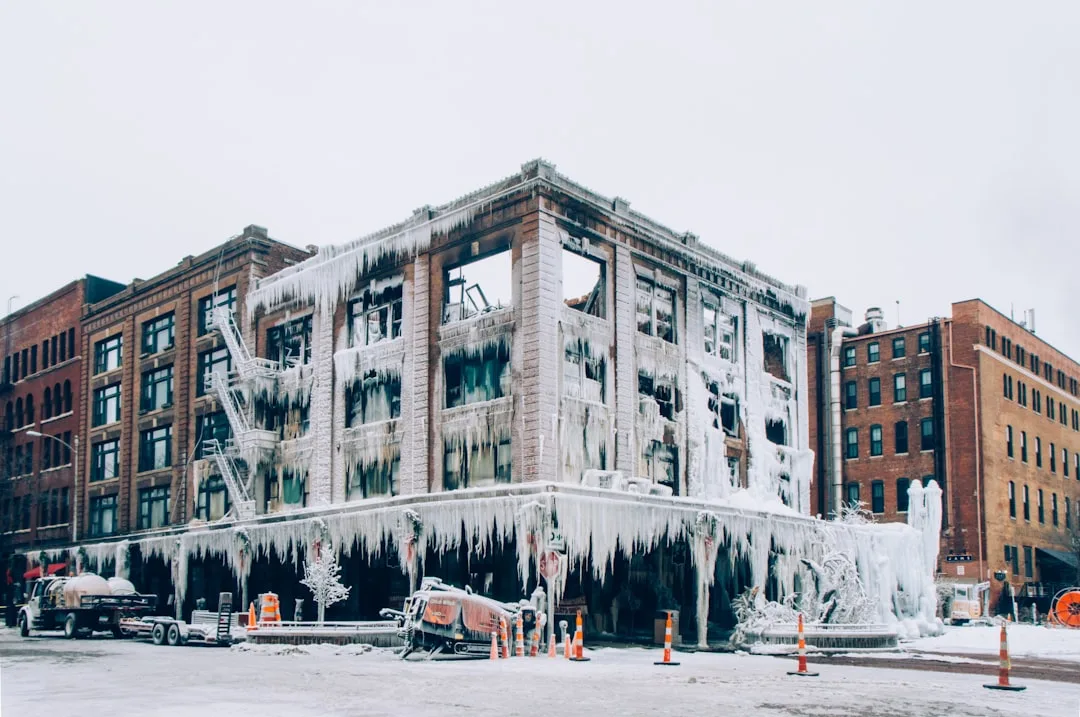

EPS facades without vertical structural chaining develop top-to-bottom cracks within 3–5 years in climates with seasonal temperature swings above 40°F—a failure pattern contractors often conceal until appraisals or insurance inspections expose it. The crack propagation is not cosmetic: it signals complete loss of facade integrity, water infiltration pathways, and structural compromise that reduces property value 8–15%. Field experience across North America shows this defect ranks second only to missing vapor barriers as the leading cause of EPS system failure, yet 60–70% of mid-range residential installations omit chaining reinforcement entirely to reduce labor costs.
Why Thermal Cycling Destroys EPS Without Vertical Chaining in 3–5 Years
EPS polystyrene expands and contracts with temperature shifts: roughly 0.3–0.5 mm per meter of width for every 10°F change. Over a 30-foot facade width, a 50°F seasonal swing produces 5–8 mm of lateral movement. Without vertical chaining reinforcement, this stress concentrates at the weakest points—typically above windows, at corner transitions, and along facade bands—creating stress vectors that exceed EPS tensile strength (10–15 psi) and trigger vertical splitting.
The crack pattern is predictable: starts at the top (where wind pressure peaks), propagates downward, and widens each annual cycle. By year three, cracks exceed 1/4 inch in width; by year five, they splinter into spider-web patterns that allow capillary moisture penetration behind the foam. Once water reaches the substrate, it becomes trapped in the insulation layer, compromising thermal performance and creating mold and rot conditions that spread to framing.
Vertical Chaining: Material Specifications and Installation Cost Breakdown
Vertical chaining uses alkali-resistant fiberglass mesh embedded in cement-based adhesive or epoxy, installed every 16–24 inches horizontally across the facade in continuous vertical bands. Standard mesh: 4.5 oz/sq yd, 1/4-inch aperture, 2–4 inches wide. Quality brands (Sika, Ceralite, Mapei) cost $0.80–1.50 per linear foot; labor adds $8–12 per linear foot depending on facade accessibility and substrate condition.
| Chaining Component | Material Cost | Labor Cost/LF | Total/LF |
|---|---|---|---|
| Reinforcement mesh (4.5 oz) | $0.80–1.20 | $5–8 | $5.80–9.20 |
| Fiberglass tape (2–3″ width) | $1.10–1.60 | $6–10 | $7.10–11.60 |
| Alkali-resistant base coat (2-coat) | $2–3 | $4–6 | $6–9 |
| Total per linear foot | — | — | $12–18 |
For a 2,000 sq ft facade with 30 linear feet of vertical chaining (8-foot wall height), total cost runs $360–540 in materials and $1,200–1,800 in labor—roughly 3–5% of total facade system cost. Omitting it, however, guarantees replacement within 5–7 years, costing $12,000–18,000 in labor and materials for a full re-skin.
Where Contractors Hide the Omission—And Why Appraisers Find It
Most installers skip chaining at window frames, corners, and facade bands—exactly the stress concentration zones where cracks propagate fastest. They rationalize the omission as cost-saving or claim modern exterior foam moldings and adhesives eliminate the need. Both claims are false: adhesive alone (regardless of brand) cannot resist the 5–8 mm seasonal movement stress in high-variation climates.
Appraisers and home inspectors document this defect during facade walkthroughs by photographing crack patterns and testing foam integrity with penetrometers. Once vertical cracking is visible, property value loss is immediate: 8–15% for facades with active cracks, 5–8% for documented history of repairs. Insurance companies increasingly classify EPS facades without chaining as higher-risk profiles, raising premiums $200–400 annually.
Installation Protocol: When and Where Vertical Chaining Must Occur
Chaining reinforcement should be installed in five critical zones: (1) continuous vertical runs every 16–24 inches across full facade height; (2) around all window and door openings (6-inch border minimum); (3) at corners and transitions where facades meet; (4) below decorative window sills and at band transitions; (5) at any joint where different materials meet (stone, masonry, metal trim).
The installation sequence is non-negotiable: substrate preparation (clean, prime), mesh embedding in adhesive (wet-applied), full cure time (24–48 hours depending on temperature and humidity), then base coat and finish system. Rushing this timeline or applying chaining after initial foam coat reduces bond strength by 40–60% and defeats the purpose.
Real-World Failure Timelines and Repair Costs in Year 3–7
Contractors report that EPS facades without vertical chaining begin showing visible cracks between month 18 and month 36 in climates with 60°F+ seasonal swings. By year five, cracks widen to 1/4 inch or more, requiring intervention. Homeowners face three repair options: (1) seal cracks with urethane caulk ($800–1,200 total)—temporary, lasts 2–3 years; (2) apply reinforcement mesh retroactively over existing foam ($4,000–7,000)—labor-intensive and less effective than original installation; (3) full facade replacement ($12,000–18,000)—the only permanent solution.
A related issue appears in facades with EPS facade bands without structural reinforcement, where horizontal crack patterns develop at band edges due to identical thermal stress mechanisms. Addressing both vertical and band-level chaining during initial installation costs $18–28 per linear foot total—still negligible insurance against cascading failure.
Building Code Requirements and Specification Standards (2024–2026)
ASTM C1674 (Standard Practice for Residential EPS Facade Systems) mandates vertical reinforcement for facades exceeding 20 feet in height or located in wind zones rated 90 mph or higher. EIMA (European Insulation Manufacturers Association) goes further, requiring chaining for any EPS facade subject to thermal cycling. Most North American building codes adopt these standards or ICC references, but enforcement varies by jurisdiction—some municipalities require third-party inspection of chaining installation, others do not.
Specify vertical chaining explicitly in contracts: name the mesh product (Sika’s Mesh 120, for example), define spacing (16 inches maximum), and require photographic documentation at each stage (substrate, embedded mesh, base coat, finish). This creates liability protection for homeowners and forces contractors to complete work correctly or face contract breach claims.
Why EPS Without Chaining Fails Faster in High-Wind and Freeze-Thaw Climates
Wind loading adds dynamic pressure to thermal stress: sustained 30 mph winds apply 10–15 psi lateral force on facade; gusts to 60 mph create 40+ psi peaks. In climates with both wind and freeze-thaw cycles (Minnesota, Ontario, New England), EPS foam without chaining experiences compound failure: thermal cracking initiates the failure mechanism, wind pressure propagates cracks deeper, water infiltration freezes in substrate pores and expands, splitting foam further. This trio of stressors compresses a 5-year failure timeline into 2–3 years.
Contractors in these regions should increase chaining spacing to 12 inches (not 24) and use higher-grade mesh (6 oz instead of 4.5 oz) to resist peak stresses. This adds $2–4 per linear foot to installation cost but eliminates premature failure risk.
EPS polystyrene facades deliver superior thermal performance and aesthetic flexibility only when installed with full structural reinforcement. Omitting vertical chaining is false economy that exposes homeowners to 8–15% property value loss, costly repairs, and system failure within warranty periods. Specify chaining in writing, demand third-party inspection, and budget the $12–18 per linear foot cost as non-negotiable infrastructure—not as an optional upgrade.