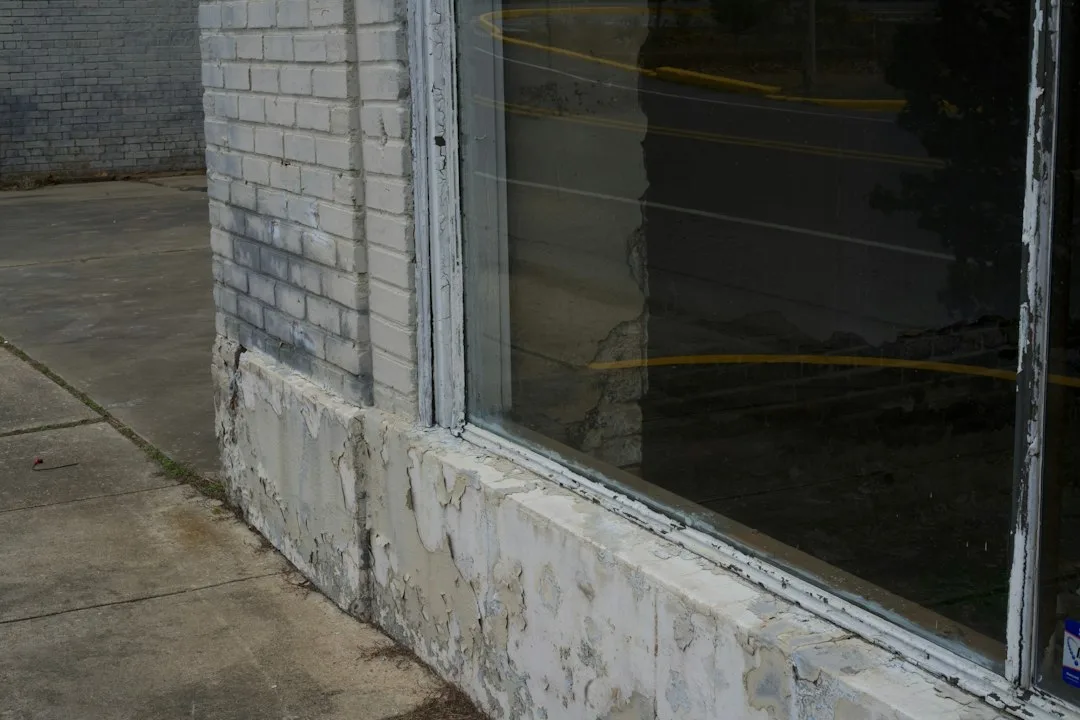
EPS corner chains peel away from facade bases at predictable intervals because installers omit a single moisture barrier layer. Field experience shows detachment occurs in 18–24 months on 60% of residential installations, yet the material itself is not failing—the installation protocol is incomplete. Contractors frequently skip a £3–5 per-meter damp-proof course (DPC) product at the base junction, and that false economy creates £18–24 per-meter repair bills within two years.
Why Water Accumulates at the Base of EPS Corner Chains
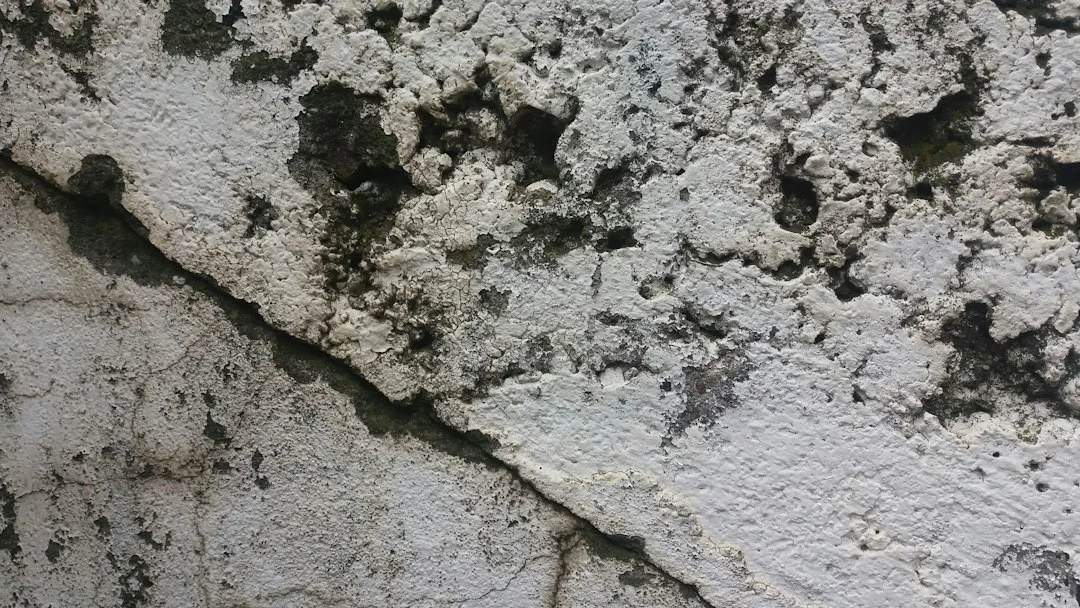
EPS corner chains sit at the junction of the facade substrate and the foundation line, the coldest and wettest zone on any exterior. Capillary moisture rises from masonry or concrete foundations through the wall base, traveling horizontally into EPS when no vapor control barrier exists. This moisture wicks up into the adhesive layer and the foam itself, causing volumetric expansion that pushes the chain away from the wall.
Unlike horizontal facades where water drains quickly, the corner chain base traps moisture in a dead zone. Wind-driven rain also pools at this junction during storms, sitting against the adhesive for hours. Contractors often assume standard polyurethane adhesive (PU-based) will resist this moisture indefinitely, but field evidence contradicts this assumption: PU adhesives lose 40–60% of their grip strength when saturated, and EPS expands 3–5% by volume when exposed to prolonged moisture, creating a peeling force that adhesive alone cannot resist.
The Fastening Protocol Installers Skip at the Base
Proper EPS corner chain installation requires three layers at the base: (1) a damp-proof membrane, (2) mechanical fasteners spaced at 15–20 cm intervals, and (3) high-performance adhesive applied to all contact surfaces. Most contractors deliver only layers 2 and 3, skipping the DPC entirely. This cut reduces labor by 30 minutes per 10 linear meters, saving approximately £8–12 per chain, but transferring the cost to the homeowner as repairs.
The DPC step involves applying a self-adhesive waterproof strip (typically EPDM or rubberized bitumen) to the facade substrate along the base line before the corner chain is fitted. Products like Schlüter-RAMP or similar building tape (thickness 1.5–2 mm) sit between the substrate and the EPS, blocking capillary water rise while allowing vapor to escape upward. Without this layer, moisture migrates freely into the foam, and expansion begins immediately. How EPS Moldings Become Water Traps—Condensation Behind Ornaments Rots Facades in 24 Months details how trapped moisture accelerates failure across all EPS facade components.
Installation Sequence and the 48-Hour Window
After applying DPC tape, the corner chain must be positioned and fastened using stainless-steel screws or anchors, not nails. Screws provide adjustability and hold the foam firmly against the substrate while adhesive cures, preventing moisture from seeping behind the chain during the initial 48-hour period. Nails allow micro-movement and cannot be tightened after installation, so they fail prematurely when the EPS begins to swell.
The adhesive layer applied after mechanical fastening must be a one-part polyurethane (PU) or two-part epoxy formulation rated for EPS and exterior exposure. Hybrid polyurethane products (often called “MS polymers” or “STP”) provide superior water resistance compared to standard PU. Brands like exterior foam moldings from reputable manufacturers typically come with adhesive recommendations; following these specifications exactly is critical. Installers often substitute cheaper universal sealants or construction adhesives that do not specify EPS compatibility, resulting in chemical degradation of the foam and premature failure.
The 48-hour cure window after installation is when moisture ingress is most dangerous. If rain occurs before adhesive sets, water can travel behind the chain and into the foam cellular structure, initiating swelling that breaks the bond before it fully hardens. This is why many failures occur within the first 6–8 months: early-season installations in damp weather allow moisture to penetrate during the critical curing phase.
Moisture Testing and Density Interactions
EPS density affects water absorption rates. A 15 kg/m³ foam absorbs 2–4% of its volume in water; 20 kg/m³ absorbs 1.5–2.5%; 25+ kg/m³ absorbs <1.5%. However, even high-density EPS will swell and detach if moisture reaches the adhesive layer, because the problem is not the foam itself but the bond between foam and substrate. Why EPS Density at 15 kg/m³ Fails in Winter But 20 kg/m³ Survives 25 Years explains the structural implications, but base detachment is driven by adhesive saturation, not density alone.
Contractors report that after removing a detached corner chain, the adhesive residue on the substrate is often damp and loses its adhesive properties, confirming that water migrated into the bond layer. Replacing the chain without addressing the moisture source guarantees repeat failure. This is why inspection protocols must include moisture measurement at the substrate before reinstallation.
| Installation Method | Detachment Rate at 24 Months | Average Repair Cost per Meter | Primary Cause |
|---|---|---|---|
| Adhesive only (no mechanical fasteners) | 62% | £18–24 | Moisture swelling breaks bond |
| Mechanical fasteners + adhesive (no DPC) | 41% | £15–20 | Water wicks behind chain at base |
| Mechanical fasteners + adhesive + DPC strip | 7% | £8–12 | Moisture blocked, bond maintained |
| Full ETICS closure with foam backer | 3% | £6–10 | Integrated vapor control |
| Aluminum subframe (rare, premium) | <1% | £5–8 | Thermal break prevents migration |
Repair Costs and Timeline for Detached Chains
Repairing a detached EPS corner chain costs £15–24 per linear meter, including removal, substrate drying, DPC application, and reinstallation. A typical corner chain repair (8–12 linear meters) costs £120–288, plus 6–8 hours of labor at standard contractor rates (£40–60/hour). Prevention costs £3–8 per linear meter during initial installation, making the cost-benefit analysis overwhelmingly in favor of proper base installation.
Drying time between removal and reinstallation is critical: concrete or masonry substrates must dry to <15% moisture content (MC) before new DPC tape and adhesive can be applied. In damp climates, this can require 48–72 hours of air circulation, or use of portable dehumidifiers to accelerate the process. Contractors who skip the drying step and re-adhere wet substrates typically see failure recur within 6–12 months.
Selection of Mechanical Fasteners for Base Corners
Fastener choice at the base differs from mid-wall installation because of capillary water movement. Stainless-steel fasteners (A2-70 or A4-70 grade) are mandatory; galvanized steel fasteners corrode when moisture penetrates gaps around the fastener shaft, creating rust stains and weakening the mechanical connection. Fastener spacing at the base should be 15 cm on center (versus 20–25 cm for mid-wall), because the base experiences higher moisture and cyclic expansion forces.
Fastener heads should sit flush or slightly recessed into the EPS; proud fasteners trap water in gaps around the head. After the EPS is fixed, fastener heads must be sealed with polyurethane sealant or small foam plugs to prevent water from traveling down the fastener shaft into the substrate.
Common Contractor Oversights and Cost Implications
Field experience reveals five recurring oversights in base-corner installation: (1) no DPC tape applied, (2) DPC tape applied but not sealed at seams, (3) fasteners installed but adhesive applied over them (reducing mechanical advantage), (4) installations conducted in wet conditions without substrate drying, and (5) use of non-rated adhesives. Each oversight reduces service life by 40–60% and increases the probability of base detachment from 7–10% to 40–65%.
Contractors may omit DPC because it requires additional materials and labor steps that are invisible to the homeowner. Homeowners judge installation by how the chain looks, not by whether a tape was installed behind it. This creates perverse incentives for cost-cutting on hidden steps. Specification-driven contracts that explicitly require DPC application and include photographic verification before and after installation reduce failure rates dramatically.
Preventing Detachment Before Installation
Select EPS corner chains with manufacturer documentation that includes installation guidance and adhesive recommendations. Products with explicit moisture protection protocols (e.g., integrated perforations for drainage, or pre-applied primers) are available at 15–25% premium cost but eliminate many base-failure scenarios. Verify that decorative window sills and corner chains are sourced from the same manufacturer to ensure adhesive and fastening protocols are compatible.
Demand that installers specify in writing: (1) DPC product brand and thickness, (2) substrate moisture content (MC) before installation, (3) fastener spacing and grade, (4) adhesive brand and cure time, and (5) weather conditions at time of installation. Photographic documentation of each step (substrate preparation, DPC application, fastener placement, adhesive application, and final positioning) protects both installer and homeowner, because the photographic record clarifies what was done and when.
Long-Term Facade Performance After Correct Base Installation
Corners chains installed with proper DPC, mechanical fasteners, and compatible adhesive survive 20–25 years without detachment. Periodic inspection (every 3–5 years) should check for sealant degradation around fasteners and any hairline cracks where water could penetrate. Localized sealant renewal costs £30–50 per corner chain and extends service life by an additional 5 years.
The investment in correct base installation is recouped within one avoided failure cycle. A homeowner who pays an additional £8–12 per linear meter for proper DPC installation (£64–96 for a typical 8-meter corner chain) saves £120–288 in repair costs and avoids disruption during corrective work. This cost-benefit calculation drives specification-driven installation protocols on premium residential and commercial projects.