EPS moldings blacken in urban environments not because the foam degrades, but because the material’s porous cellular structure becomes a magnet for airborne soot, diesel exhaust, and fungal spores. A 3-year-old cornice or fascia trim in a city center accumulates visible black streaking while identical profiles 20 kilometers away remain cream-colored. The restoration process—cleaning, fungicide treatment, and sealing—costs €200–€800 per facade section and avoids complete replacement, which runs €3,500–€8,000 depending on molding profile complexity and height access.
Why Urban Pollution Targets EPS Foam in 12 to 36 Months
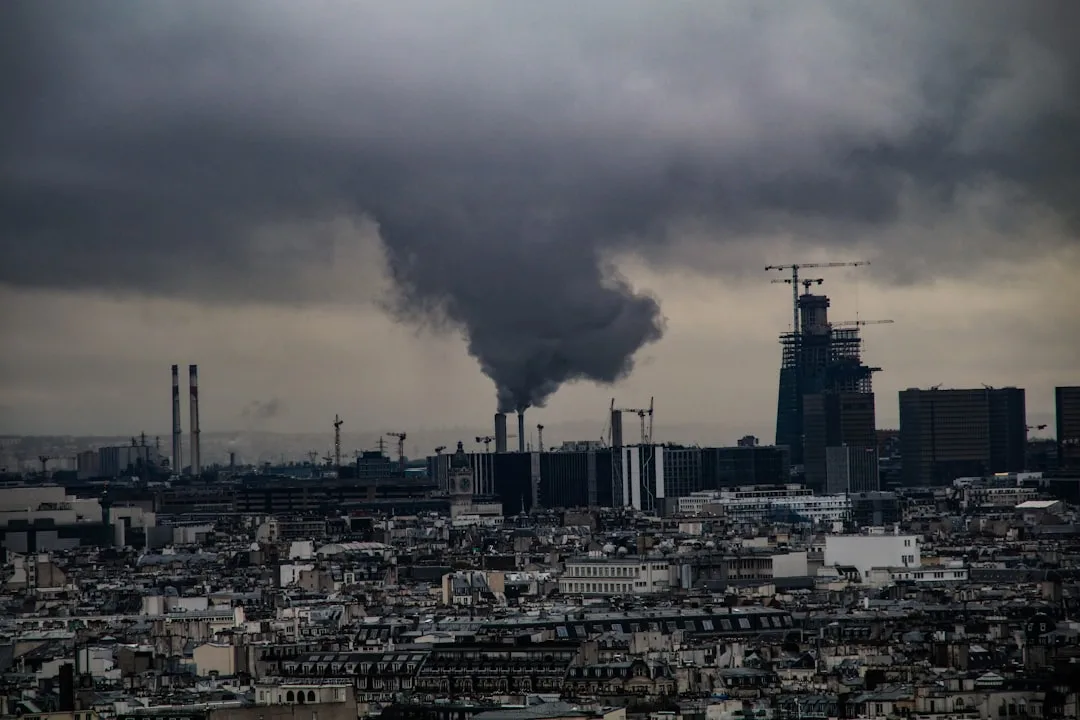
Expanded polystyrene contains 98% trapped air in a closed-cell or open-cell matrix, creating millions of microscopic pores. Atmospheric particulate matter—soot from traffic, industrial emissions, and fungal spores—adheres permanently to these pore walls because the foam surface is slightly sticky when exposed to moisture. Urban air in cities like Paris, London, or Frankfurt contains 5–10 times more particulate matter than rural zones, accelerating visible blackening.
Mold colonization compounds the problem. Fungal spores land on damp EPS surfaces during rain or high humidity, germinate within 48–72 hours, and penetrate shallow foam pores. Aspergillus niger and Cladosporium species are the dominant outdoor molds on building facades and produce dark pigmentation as they metabolize. A single rain event followed by warm temperatures can trigger mold blooming across an entire cornice section, turning beige EPS black within 2–3 weeks in summer.
Thermal cycling—daily temperature swings of 10–15°C in cities—causes tiny moisture condensation cycles that keep foam surfaces damp. This perpetual moisture gradient is the reason blackening appears faster on north-facing moldings (less UV drying) and protected soffits than on sun-exposed profiles. Once mold establishes itself, it feeds on airborne algae, lichen spores, and organic dust, deepening the black patina every year.
3 Cleaning Strategies for Blackened EPS Moldings Without Chemical Damage
Low-pressure rinsing alone removes loose soot but fails to kill subsurface mold embedded in pores. Contractors report that water-only approaches (30–40 bar pressure, <60°C temperature) restore appearance for 3–6 months before mold re-blooms. The correct sequence pairs enzymatic cleaners, fungicides, and protective sealants.
Method 1: Enzymatic Cleaner + Acrylic Sealer (Budget Restoration) costs €180–320 total and suits light surface soot and new mold colonies. Spray-apply broad-spectrum enzymatic cleaners (e.g., Filacid Fassaden Reiniger, available at European supplier networks at €35–55/liter) that break down organic matter without caustic damage to foam. Let dwell for 15–30 minutes, then low-pressure rinse at 25–35 bar, keeping nozzle 50 cm from surface. Once dry (24–48 hours), apply water-based acrylic latex facade paint rated for foam (e.g., Caparol Baufinish ELF, €50–80/10L). Acrylic-latex sealers create breathable barriers that repel dirt for 3–5 years in moderate-pollution zones.
Method 2: Commercial Facade Restorer + Polyurethane Seal (Mid-Range Durability) targets heavy mold and algae buildup. Products like Kiesel Fassadenreiniger or Sika Cleaner 205 (€120–180/5L) dissolve organic staining chemically while remaining safe for EPS when diluted 1:3 to 1:5 with water. Apply with soft-bristle brush or low-pressure spray, scrub gently for 10–15 minutes, then rinse thoroughly at 30–40 bar. Dry fully, then seal with water-based polyurethane (e.g., Sika Sikacryl, €80–140/10L) or premium acrylic-silicone hybrid facade sealers. Polyurethane penetrates pores deeper than acrylic, blocking moisture ingress and extending protection to 5–8 years in urban conditions. Total material cost: €350–550 per 50–80 m² of molding.
Method 3: Professional UV-Resistant Epoxy Coating (Extreme Pollution, Long-Term) is chosen for facades in heavy-traffic or industrial zones where 2–3 year re-staining cycles are unacceptable. Two-part epoxy facade coatings (e.g., Sika Sikafloor PurCrete, €200–280/10L kit) cure to extreme hardness and repel dirt, soot, and moisture for 7–10 years. Epoxy requires meticulous surface prep: aggressive enzymatic cleaning, drying to <15% substrate moisture, and primer application before topcoat. Labor intensity rises to 10–16 hours per 100 m² of molding, making this approach viable only for premium historic facades or high-visibility commercial buildings. Total cost: €600–900 per 50 m² section.
| Restoration Method | Material Cost (€) | Labor Time | Durability | Best Use Case |
|---|---|---|---|---|
| Low-pressure wash + acrylic sealer | 180–320 | 4–6 hours | 3–5 years | Light surface soot, mold prevention |
| Enzymatic cleaner + fungicide + polyurethane seal | 350–550 | 6–10 hours | 5–8 years | Heavy mold, algae, industrial pollution |
| Commercial facade restorer (Fassadenreiniger) + UV-resistant epoxy | 500–800 | 8–12 hours | 7–10 years | Extreme urban soot, high-traffic areas |
| Full EPS molding replacement (new profile) | 3500–8000 | 16–32 hours | 20+ years (new) | Structural damage, irreversible staining |
Sealing EPS Moldings After Cleaning: Material Selection and Durability
Once cleaning removes mold and soot, the sealant becomes the defense against re-staining. Acrylic latex coatings are breathable (allow vapor transmission), cost €50–80 per 10-liter pail, and suit EPS because they remain slightly flexible during foam’s small thermal movements. Polyurethane and epoxy sealers are harder and longer-lasting but trap moisture if the EPS substrate was not fully dried before application—a common contractor error that causes mold to return within 12–18 months beneath the seal.
Field experience shows that two-coat systems (primer + topcoat) outperform single-coat applications on heavily stained moldings. A thin epoxy primer (100–150 μm) followed by acrylic-latex topcoat (200–250 μm) cost €120–200 in material per 80 m² and achieve 6–8 year re-stain resistance in most urban contexts. Exterior foam moldings installed after 2015 often have factory-applied primer coats, which reduces on-site prep time and improves sealant adhesion. Always confirm existing coatings with visual inspection or small solvent tests before applying new sealers; incompatible old coatings can peel away new applications within weeks.
Fungicide additives (e.g., Zinkoxid, copper biocides) mixed into topcoat sealers slow mold re-colonization but do not eliminate cleaning. Contractors in Scandinavian cities and the Alps report 1–2 year extensions in protection when fungicide-enhanced sealers are used, but cost increases by €15–40 per liter. For typical urban facades, standard polyurethane or acrylic-silicone sealers without additives are cost-effective; annual visual checks catch mold blooming early when light cleaning can reverse it.
When to Clean and Reseal: Maintenance Intervals in Urban Climates
Heavy-pollution zones (within 2 km of highways, industrial parks, or train stations) require visual molding inspections every 6–12 months. If black streaking covers >30% of visible molding surface, cleaning and re-sealing should be scheduled within that season, ideally in spring or fall when humidity is moderate and drying time is predictable. Summer heat accelerates film cure but can trap moisture in pores if humidity spikes suddenly; winter rain contamination makes drying slow, delaying sealing application.
Moderate-pollution urban areas (residential neighborhoods, secondary streets) see visible blackening every 3–4 years. Cleaning every 4–5 years with sealant reapplication every 5–7 years maintains acceptable appearance. Suburban zones or areas >5 km from industrial sources can extend intervals to 6–10 years. Once facade ornaments and cornices receive a quality polyurethane or epoxy topcoat, annual maintenance narrows to visual inspection; most dirt from that first year after sealing is surface dust that does not adhere, rinsing away with winter rain.
Post-cleaning, water absorption testing (measure substrate moisture with a pin meter within 24 hours of drying) confirms readiness for sealant application. EPS moldings should read <15% moisture content before any sealant is applied; higher readings mean interior moisture remains trapped, and sealing will fail within months. This is a critical step contractors often skip, leading to callbacks and customer dissatisfaction.
Why Blackening Indicates Deeper Moisture Problems You Cannot Ignore
Heavy mold blackening on EPS moldings is sometimes a visible symptom of internal water accumulation, particularly on window frames and freeze-thaw vulnerable profiles. If blackening appears only on the interior face of a cornice or the underside of a soffit, suspect moisture entry from above. Check sealant gaps around molding edges, roof-to-cornice joints, and fascia terminations; water may be wicking horizontally into the foam and condensing on the rear surface, feeding mold growth visible from below.
Cleaning and sealing the visible surface temporarily masks the problem but does not solve it. Contractors should probe these areas with a moisture meter, inspect joints for sealant failure, and repoint or re-caulk water entry sources before undertaking cosmetic restoration. Restoration without addressing the water path results in re-blackening within 6–12 months, frustrating clients and damaging contractor reputation.
Cost Comparison: Restoration Versus Full Replacement
Cleaning and sealing an entire facade section (e.g., all cornices, fascias, and trim on one elevation) costs €400–1,200 labor plus €200–600 materials. If EPS moldings are structurally sound (no deep cracks, delamination, or foam disintegration), restoration is almost always the rational choice. Replacement requires demolition, disposal, new EPS profile fabrication or purchase, and re-installation—totaling €3,500–8,000 for equivalent decorative complexity.
Break-even is clear: if restoration costs €800 and lasts 6 years, effective annual cost is €133/year. Replacement at €5,000 lasting 20+ years costs €250/year. Restoration becomes uneconomical only if mold returns faster than every 2 years, which indicates underlying moisture or sealant incompatibility rather than failed cleaning technique.
Professional Application: When to Hire and What to Specify
DIY cleaning and sealing is feasible for single-story residential facades with modest molding extent (e.g., <50 m² total). Safety becomes the limiting factor: working at height on ladders with wet surfaces and slippery sealants introduces fall risk. Professional contractors have scaffolding, pressure-spray equipment, and cure monitoring systems that ensure consistent quality.
When hiring, specify the exact sequence in the contract: low-pressure wash at <40 bar, enzymatic or commercial cleaner dwell time (15–30 minutes), fungicide rinse (if mold is heavy), full drying confirmation (moisture meter proof, written in report), primer application (if needed), and sealant topcoat with cure time before re-occupation. Request samples of the sealant product and proof it is rated for EPS foam; incompatible industrial floor coatings or paints sometimes appear cheaper but fail within months on vertical foam substrates.
Warranty terms should cover re-staining or mold reappearance within 2 years of sealing. Reputable European contractors (e.g., certified EIFS or ETICS applicators) often offer 3–5 year performance guarantees, which provide recourse if the restoration underperforms.