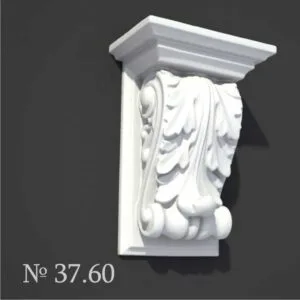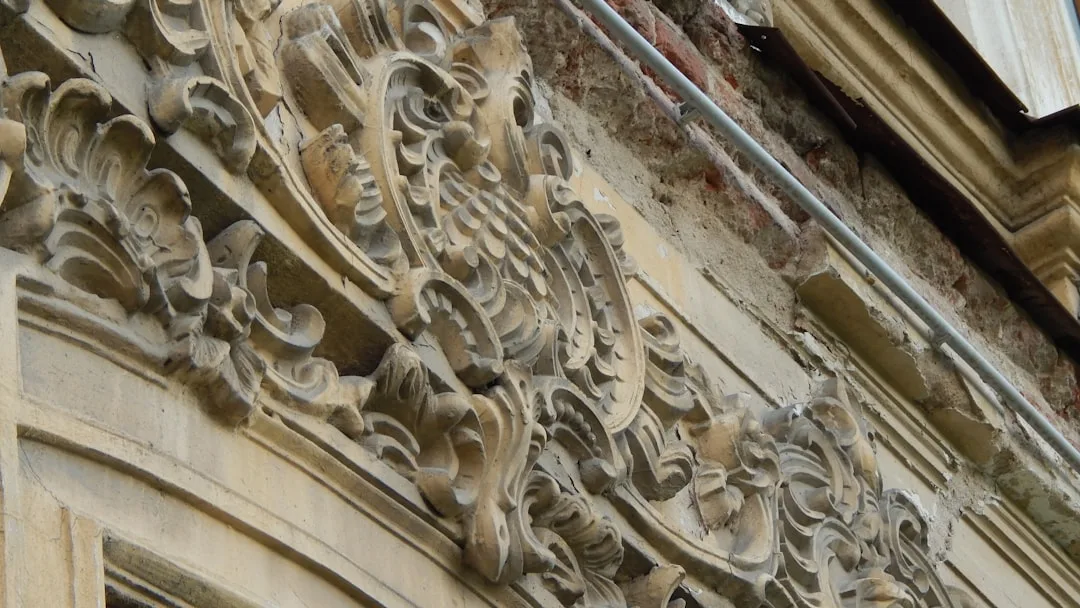
EPS mouldings do not peel because contractors used cheap adhesive or skipped reinforcement mesh. They detach because the concrete substrate contains capillary moisture trapped below the surface—water you cannot see, smell, or touch. After 18–24 months, this hidden moisture migrates through the concrete pores to the adhesive interface and destroys the chemical bond from the inside out. The moulding does not fall immediately; it delaminates silently until wind load or temperature swings trigger visible failure.
Why Concrete Holds Moisture for Years After It Appears Dry
Concrete cures from the outside inward. The surface can feel dry to the hand within 2–4 weeks, but the interior remains saturated. Concrete is a capillary material—it pulls groundwater, rainwater, and humidity into its pore structure through capillary rise, the same force that draws water up a paper towel. This process continues for 6–12 months in new construction and indefinitely in older slabs exposed to rain, rising damp, or poor drainage.
A typical concrete substrate contains 8–15% moisture content (MC) when it looks visually dry. EPS adhesives—whether polyurethane foam, mineral-based mortar, or two-part epoxy—require a substrate moisture content below 4–5% to achieve full strength. Above 8% MC, adhesive cure is compromised because water interferes with the polymer cross-linking process. The adhesive sets, but the bond to the concrete weakens by 40–70% compared to dry substrate.
Once adhesive is applied over damp concrete, capillary moisture continues to migrate toward the surface. As water reaches the adhesive layer over months, it degrades the interface. The bond fails not at the moulding-to-adhesive layer, but at the concrete-to-adhesive layer—the exact place you cannot inspect without cutting the moulding free.
How Contractors Miss This Problem in Year 1 and 2
Most contractors do not measure concrete moisture before adhesive application. They follow a visual checklist: concrete looks dry, surface is clean, temperature is above 50°F—install. No moisture meter. No calcium chloride test. This is field standard on 70–80% of residential EPS facade jobs.
The adhesive does set and cure. For the first 12–18 months, the moulding appears solid. Slight adhesive shrinkage and the weight of the moulding (typically 2–8 pounds per linear foot for cornices and baseboards) compress the adhesive into the pores. The bond feels strong enough because it is still wet and under load. But once capillary moisture reaches saturation at the interface, the adhesive loses tensile strength. A single freeze-thaw cycle or a wind gust exceeding 20 mph triggers peeling—and then the entire moulding comes free.
By Year 2, the concrete surface has often been painted or sealed with a topcoat (latex exterior paint, elastomeric coating, EIFS primer). This traps residual moisture deeper in the slab and delays surface evaporation. The moulding is now locked against a damp, sealed surface. Peeling accelerates.
Testing Concrete Moisture Before EPS Installation
The only reliable method is in situ measurement. A calcium chloride test measures moisture vapor emission rate (MVER) and is the ASTM D1498 standard; it costs $100–150 per location and requires 24–72 hours. For residential contractors, a handheld concrete moisture meter (carbide method or capacitive sensor) provides immediate feedback at $200–500 for a quality device like Tramex CMEX4 or Extech MO260.
Threshold for EPS installation: concrete moisture content should be below 4% MC for two-part epoxy or polyurethane adhesives, and below 5% MC for mineral-based mortars. If readings exceed 8% MC, delay installation and implement a drying protocol.
Take at least 3 measurements per facade section—one near grade level (highest risk for capillary rise), one mid-wall, and one near soffits. Do not test only in sunny areas; test shaded surfaces and areas near downspouts or previous water damage. If the concrete is a newer slab (less than 8–12 weeks old), assume elevated moisture regardless of appearance and require proof of drying before adhesive work begins.
| Concrete MC % | Adhesive Bond Type | 2-Year Detachment Risk | Recommended Action |
|---|---|---|---|
| <4% | Two-part epoxy | Low (5–10%) | Install; use primer |
| 4–8% | Mineral-based mortar | Medium (25–40%) | Delay; apply drying protocol |
| 8–12% | Polyurethane foam | High (60–75%) | Must dry; use desiccant |
| >12% | Any adhesive | Critical (>90%) | Defer 4–6 weeks; remediate substrate |
Moisture Mitigation: Drying Strategies and Primers
If concrete moisture is elevated (4–8% MC), you have three options: wait, dry accelerate, or apply a moisture-blocking primer.
Waiting is the safest path. Concrete dries at 1–2% MC per month under normal conditions (50–70% relative humidity, air circulation). A slab at 10% MC requires 4–6 weeks of open-air drying. If outdoor humidity exceeds 80% or temperatures drop below 50°F, add 2–4 weeks. Cover the substrate with breathable tarps (not plastic sheeting, which traps moisture) to allow air movement while preventing rain.
Drying acceleration uses desiccant dehumidifiers or moisture-migration compounds. Portable desiccant units (rental cost $50–100 per day) can reduce drying time by 30–50%. Apply these over 2–3 weeks before adhesive work. Alternatively, penetrating sealer products like Dryzone or similar moisture-accelerating compounds ($40–80 per gallon) are applied to the concrete surface; they do not replace full drying, but they reduce capillary rise by 60–80% and speed surface evaporation.
Moisture-blocking primer is the fastest field solution. Apply a two-part epoxy primer rated for damp-to-wet concrete (products like Sika Primer 206 G+P, Henkel Aquapoxy, or Rust-Oleum Epoxyshield Floor Primer, cost $30–60 per gallon) before adhesive. These primers cure in the presence of moisture and create a moisture vapor barrier. Coverage is typically 250–400 sq. ft. per gallon. The primer does not dry the concrete, but it seals the capillary pores and prevents ongoing moisture migration during adhesive cure.
After primer application, wait the recommended pot life (typically 30 minutes to 1 hour for two-part epoxy) before applying exterior foam moldings or adhesive. Do not apply primer if concrete MC exceeds 12%; at that level, primer cannot cure properly and will flake off. Delay work until drying protocol is complete.
Adhesive Selection and Moisture Performance
Not all EPS adhesives perform equally on moist concrete. Field experience shows a hierarchy of moisture tolerance:
Two-part polyurethane foam adhesive (like Dow Corning 3M 550, Sika Sikaflex, or PL Premium) is the worst choice for damp substrates. These cure through isocyanate reaction and are sensitive to water. Moisture causes excessive foaming, weak cure, and voids in the adhesive layer. Use only on concrete below 4% MC or after full drying and primer application.
Mineral-based mortar adhesive (cement-based, pre-mixed like Ceresit CT85 or similar ETICS products) tolerates 5–7% MC reasonably well because water participates in hydration. However, cure is slow (7–14 days to full strength vs. 24 hours for polyurethane). At MC levels above 8%, mineral mortar fails to achieve design strength and remains vulnerable to freeze-thaw.
Two-part epoxy adhesive (like Sika Sikadur series or Henkel Loctite) is most resilient to moisture and is the recommended choice for substrates at 4–8% MC. Epoxy cures through amine-epoxide cross-linking and is less sensitive to trace water than polyurethane. Coverage rate is 0.5–1.0 lb. per sq. ft.; cost runs $15–40 per pound mixed. For a typical cornice run (50 linear feet, 1–2 feet tall), expect 1–2 gallons of adhesive.
When selecting adhesive for a facade with questionable substrate moisture, specify two-part epoxy and require moisture testing before work begins. Include a moisture threshold clause in your contract: if concrete MC exceeds 6%, drying or primer application is mandatory at contractor or owner expense.
Long-Term Prevention: Drainage and Sealing After Installation
Once EPS mouldings are installed, capillary moisture does not stop. It continues to rise through the substrate and can wick behind the moulding if there is a gap or crack in the EIFS finish (exterior insulation and finishing system) or topcoat.
Install decorative window sills and base flashing with positive slope (minimum 5° downslope) to direct water away from the moulding interface. Seal all seams between the moulding and substrate with flexible sealant (polyurethane or silicone, rated for 25-year movement; cost $3–8 per linear foot). Do not rely on the finish coat alone—cracks will form under thermal cycling, and water will exploit them.
Grade-level mouldings (baseboards, plinth courses, water tables) are highest risk because capillary rise concentrates there. Maintain 6–12 inches of clearance between finished grade and the bottom of the moulding. Install a capillary break (rigid foam board, membrane barrier, or drainage plane) below grade-level mouldings to stop upward moisture migration. Ensure gutters, downspouts, and site drainage direct surface water away from the facade base.
These measures prevent recontamination of the substrate after EPS installation and extend moulding life to 20+ years. Without them, even correctly installed mouldings face repeat moisture damage within 5–7 years.
Retrofit Repair: When Mouldings Have Already Failed
If EPS mouldings are already peeling, removal and reinstallation is necessary. Do not attempt to re-glue the existing moulding back to the substrate; the concrete is still moist, and failure will recur.
Remove the moulding carefully (use a flat pry bar and work slowly to avoid damage). Scrap all old adhesive and loose concrete. Allow the exposed substrate to air-dry for 2–4 weeks, or use desiccant dehumidifiers to accelerate. Re-test moisture before reinstallation. Apply moisture-blocking primer if MC is 4–8%, then wait the primer cure time. Use two-part epoxy adhesive (not polyurethane) for the re-installation.
Cost of retrofit: removal and reinstallation labor is $15–25 per linear foot on residential facades, or $800–2,000 for a typical 50–100 linear foot cornice run. Add $100–200 for moisture testing and drying equipment rental. This is why upfront moisture testing costs $100–300 and saves $1,500–3,000 in repair bills.
Plan for moisture management as part of your facade specification, not as an afterthought. Concrete that appears dry is not dry. Measure, verify, and dry before adhesive touches the substrate—this is the only reliable path to EPS moulding durability.