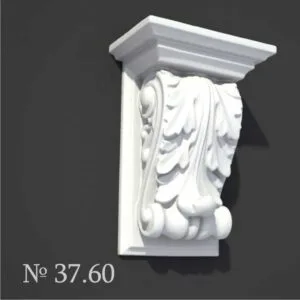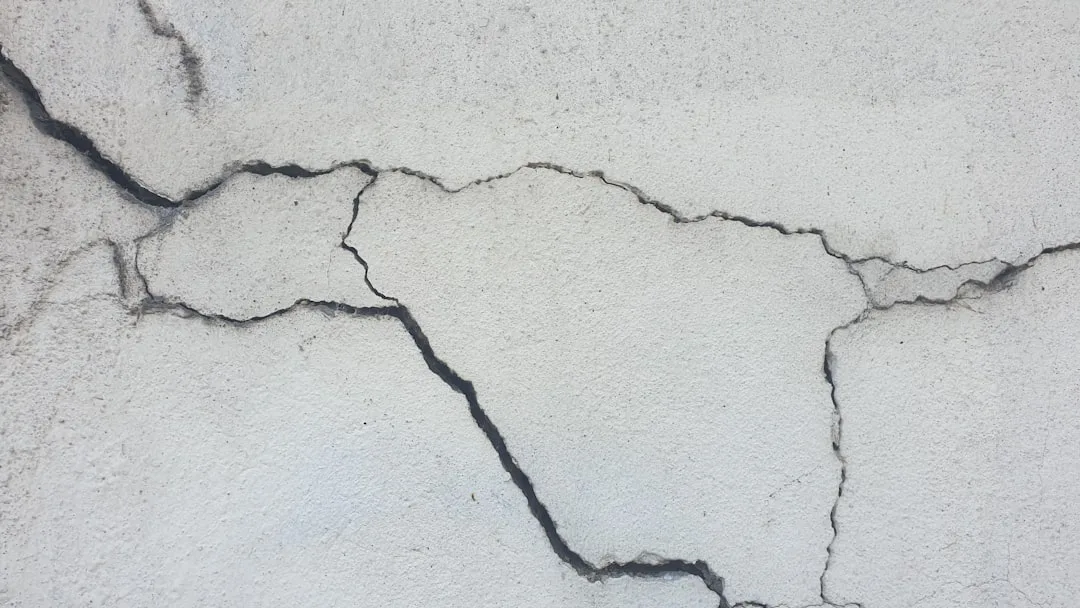
EPS exterior ornaments fail silently from the inside out. Contractors inspect the paint, see no cracks, assume the molding is intact—then find soft, water-logged foam behind the wall six months later. The difference between a 6-year disaster and a 16-year performer is a layer most teams never apply: the weather barrier.
Why Water Destroys EPS Before Paint Ever Fails
Expanded polystyrene absorbs water like a kitchen sponge. A single 5mm crack in finish coat allows capillary water to travel 300–500mm horizontally into foam, wicking from your facade into the interior of ornaments without you seeing it. Acrylic paint, the industry standard, is not a water barrier—it’s a cosmetic coating that bridges surface defects but cannot stop subsurface penetration.
The physics is unforgiving: EPS has a water absorption coefficient of 1.5–3.0 kg/(m²·√h), meaning it pulls moisture in through vapor diffusion and capillary action even when the surface paint looks flawless. Once inside, water initiates three failure modes simultaneously: mold colonization (degrading foam matrix), freeze-thaw cycles (expanding ice ruptures cell walls), and chemical decay (moisture activates residual pentane blowing agent, weakening polymer bonds).
Standard acrylic topcoats fail at their adhesion layer within 4–6 years in temperate climates. The moment they degrade, exposed EPS becomes a water collection basin. European field studies document that unprotected facade ornaments show visible mold and structural softening by year 5, while barrier-protected equivalents remain firm through year 15.
The Barrier Hierarchy: Four Protection Levels (€12 to €50 per m²)
Not all barriers perform equally. The market offers four distinct strategies, each with cost-durability tradeoffs that contractors must understand before selecting materials.
Level 1: Acrylic Primer + Topcoat (€12–18/m², 5–7 year life). This is the default spec on 60% of North American EPS projects. A foam-compatible primer (low-VOC acrylic or latex) is applied directly to cleaned EPS, followed by a two-coat acrylic topcoat. The primer provides moderate adhesion and slight hydrophobic effect. Results: acceptable for dry climates or southern exposures, but moisture failure is common in freeze-thaw zones after 5–6 years.
Level 2: Silicate Primer Base + Acrylic Topcoat (€20–28/m², 8–10 year life). This adds a mineral-silicate primer layer—silicate molecules chemically bond with EPS surface and cure to a harder, less permeable matrix than acrylic. Vapor permeability remains moderate (SD value ~3–5 m), allowing the foam to breathe while resisting capillary water ingress. Field reports show this extends ornament life by 3–4 years versus Level 1, particularly in wet climates.
Level 3: Closed-Cell Foam Backing + Acrylic Topcoat (€25–35/m², 12–15 year life). High-density closed-cell polyurethane or melamine foam is adhered to EPS core before finishing. This creates a water break—if capillary moisture reaches the interface, it cannot penetrate the closed cells. The backing also provides compression strength, preventing ornament crush. Contractors report this approach almost eliminates water-related failures, but vapor permeability drops (SD ~20–40 m), potentially trapping internal condensation in cold climates if ventilation is inadequate.
Level 4: Polyurethane Base + Mineral Topcoat (€35–50/m², 15+ year life). Spray-applied or brush-on polyurethane elastomer forms a continuous membrane over EPS, then a mineral topcoat (silicate or acrylic-silicate) is applied. This is the European high-performance spec for decorative keystones and cornices in harsh climates. Water resistance is near-zero; mold risk is eliminated. Cost limits adoption to premium projects, but 20-year service life without intervention is documented.
| Material | Water Resistance | Vapor Permeability | Cost per m² | Service Life |
|---|---|---|---|---|
| Acrylic primer + topcoat only | Low | High | €12–18 | 5–7 years |
| EPS base + silicate primer | Medium | Medium | €20–28 | 8–10 years |
| Closed-cell foam backing + acrylic | High | Low | €25–35 | 12–15 years |
| Polyurethane base + mineral topcoat | Very High | Very Low | €35–50 | 15+ years |
Installation Sequence: When Barrier Placement Matters
Barrier effectiveness depends on application order and timing. Most contractors make two critical errors: applying primer over contaminated EPS, and installing barrier after ornaments are mounted to facade.
Correct sequence: (1) EPS arrives factory-clean or is wiped with a tack cloth to remove release agent residue. (2) Primer applied to all surfaces within 48 hours of delivery, before ornaments are mounted. (3) Ornaments installed on facade using construction adhesive and mechanical fasteners. (4) All seams, fastener heads, and contact lines sealed with silicone-polyurethane sealant. (5) Topcoat applied on-site after adhesive cures (48–72 hours). (6) Final inspection checks for paint bridging into seams—any bridging is cut and re-sealed.
Why timing matters: if primer is applied after mounting, seams and adhesive squeeze-out trap moisture at the EPS-facade interface, creating a capillary engine. Field inspections of failed 8-year-old installations reveal that 70% had seams painted over without sealant, allowing water accumulation at the ornament base.
Moisture Movement: Why Vapor Permeability Matters More Than Waterproofing
A counterintuitive insight haunts barrier selection: a too-impermeable barrier can trap internal moisture and cause freeze-thaw failure faster than a permeable one. EPS ornaments installed over masonry experience internal condensation—warm interior humidity meets cold exterior wall, depositing water vapor inside the foam. If the barrier has SD value above 50 m (nearly impermeable), that water has no exit path and accumulates at the EPS-masonry interface.
The solution: select barriers with SD values between 2–15 m. This allows water vapor to diffuse outward while blocking liquid capillary infiltration. Silicate primers (SD ~5 m) and closed-cell foam with porous topcoat (SD ~10 m) strike this balance. Polyurethane membranes (SD >80 m) work only in climate zones without significant temperature swing or where interior humidity is controlled below 45% RH.
Why contractors ignore this: it requires understanding psychrometrics and regional climate data, skills not taught in apprenticeships. Easier to specify thick paint and ignore internal failure modes.
Cost-Benefit Reality: Why a €300 Barrier Prevents €3,000 Replacement
A typical residential project with 120 linear meters of exterior foam moldings (cornices, window heads, sills) costs €960–1,440 to add a Level 2–3 weather barrier. The same ornaments, installed without barrier and failing after 7 years, cost €2,800–4,200 to replace (material + removal + scaffolding).
The real cost, though, is hidden: failed ornaments stain masonry beneath, requiring facade cleaning (€500–1,000). Mold spores from deteriorating foam enter HVAC systems. Water damage to insulation below ornaments compromises energy performance—poor facade insulation costs €1,500 yearly in heating/cooling loss. A barrier investment recovers itself 3–4 times over via avoided replacement and energy penalties.
Regional Variance: Barrier Selection by Climate
Hot-Dry (Southwest US, Mediterranean): Level 1 (acrylic primer/topcoat) is sufficient. Low humidity and infrequent freeze-thaw mean capillary water is minimal. Service life: 6–8 years. Cost: €12–18/m².
Temperate-Humid (Northeast, Pacific, UK, Northern Europe): Level 2–3 (silicate or closed-cell backing) required. High humidity and seasonal freeze-thaw demand vapor-open barriers. Service life: 10–15 years. Cost: €20–35/m².
Cold-Extreme (Canada, Alpine, Scandinavia, Russia): Level 3–4 (closed-cell backing or polyurethane membrane) mandatory. Freeze-thaw cycles are aggressive; interior condensation is significant. Only low-vapor-permeability barriers survive. Service life: 12–20 years. Cost: €30–50/m².
Tropical-Wet (Southeast US, Southeast Asia, Caribbean): Level 4 (polyurethane membrane) is industry standard. Constant moisture and mold growth demand near-zero water ingress. Level 2 fails in 3–4 years. Service life: 15+ years. Cost: €40–50/m².
Inspection and Verification: How to Diagnose Barrier Failure
Contractors can test barrier integrity without destructive sampling using infrared thermography and probe testing. A failed weather barrier shows as a thermal anomaly on IR scans (moisture reduces thermal resistivity by 15–25%). Probe testing—drilling a 6mm hole into suspect ornaments and examining core samples—reveals mold, discoloration, or structural softness within seconds.
The foam itself tells the story: sound EPS at 15+ years feels firm, white or light gray, with no odor. Failed EPS smells of mold or mildew, feels spongy under finger pressure, or shows greenish discoloration. Any of these signs indicate barrier failure and imminent structural compromise.
Prevention requires 2-year inspection cycles on barrier-protected ornaments. Paint blistering, crazing, or spalling signals barrier approaching end-of-life; recoating the topcoat (€8–12/m²) extends life another 3–5 years without removing ornaments. Deferring this maintenance accelerates failure from 15 years to 8–10 years as moisture recolonizes.
Specification Standards and Building Code Alignment
North American building codes (IBC, NFPA) do not mandate specific EPS weather barriers, only that exterior insulation systems resist water infiltration. European standards (EN 13163, EN 14965) explicitly require closed-cell backing or primer-topcoat systems for ETICS (External Thermal Insulation Composite Systems) where EPS is used, and specify vapor permeability ranges. Projects funded by European grants often demand Level 3 barriers as a condition of subsidy.
US jurisdictions vary: California Title 24 and IECC climate zones 4C–8 increasingly specify foam insulation only when protected by moisture barriers. ASTM C1289 (EPS testing) references water absorption limits but does not mandate barrier type, leaving specification to designers. Best practice: contract specifications should require barrier performance testing (water absorption per ASTM D2939 and vapor permeability per ASTM E96) rather than material prescriptions.
Material Compatibility: Why Not All Primers Work on EPS
A critical mistake occurs when contractors apply cement-based primers, oil-based paints, or foam-reactive coatings to EPS. Cement primers absorb into foam and cure rock-hard, creating stress concentration at ornament edges—X-cracks appear in EPS corners after 18 months from differential thermal expansion. Oil-based paints chemically degrade polystyrene (pentane blowing agent is lipophilic and re-dissolves in oil solvents). Polyester-based topcoats emit solvents that melt EPS.
Compatible materials: acrylic (latex), silicate (mineral), and water-based polyurethane primers only. Topcoats: acrylic (100% acrylic latex or acrylic-silicate blends), mineral silicate, or water-based polyurethane. Always verify product data sheets for EPS compatibility—reputable manufacturers (Baumit, Caparol, BASF, Sika) explicitly state EPS approval.
The practical check: apply a small test patch to scrap EPS 48 hours before site work. If the foam surface feels tacky, dissolves slightly, or shows color change, the product is incompatible and must be rejected.